
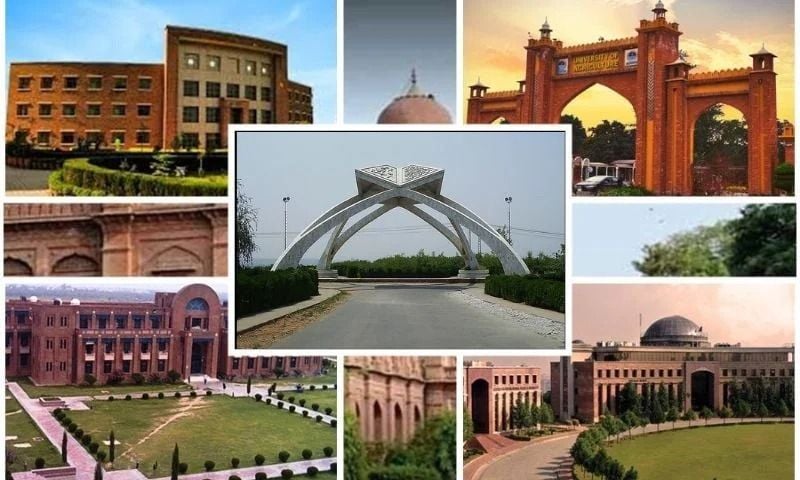
ISLAMABAD: Pakistan’s universities are strengthening their presence on the global academic stage, with the number of institutions featured in the QS Asia University Rankings increasing nearly threefold since 2020, while the Higher Education Commission (HEC) is pursuing reforms to improve research standards, international collaboration and graduate employability.
The progress was highlighted by HEC Chairman Dr Niaz Ahmad Akhtar while briefing the National Assembly’s Standing Committee on Federal Education and Professional Training during its 27th meeting at the HEC Secretariat on Tuesday.
HEC briefed the National Assembly’s Standing Committee on Federal Education and Professional Training during its 27th meeting on Pakistani universities’ growing global presence and key higher education initiatives. https://t.co/apVwxYwA6Z
— HEC Pakistan (@hecpkofficial) November 3, 2026
Presenting a comparative assessment of Pakistan’s performance in international university rankings, the HEC chairman said the number of Pakistani universities featured in the QS Asia University Rankings had increased from 29 in 2020 to 83 in 2026.
Similarly, Pakistan’s representation in the Times Higher Education (THE) Asia Rankings rose from 14 universities in 2020 to 48 in 2026.
He further informed the committee that the number of Pakistani universities featured in the World University Rankings increased from 14 in 2020 to 56 in 2027, while representation in the QS World University Rankings grew from seven institutions in 2020 to 18 in 2027.
According to the chairman, two Pakistani universities secured positions among the world’s top 500 institutions in the QS World University Rankings 2027, while 12 entered the top 1,000. Meanwhile, 22 Pakistani universities featured among the top 1,000 institutions in the World University Rankings 2026.
Pakistan targets research, funding and global academic collaboration
HEC Chairman Dr Niaz Ahmad Akhtar said improving international rankings was not the sole objective, stressing the need to strengthen academic quality, research, graduate employability and institutional performance.
Read Also: From Islamabad to Oxford: World University Rankings Reflect Global Shifts
He added that around 20 task forces had been constituted to recommend reforms in undergraduate education, computing, curriculum development, joint degree programmes and the integration of Artificial Intelligence into academic studies.
Chairman HEC Prof. Dr. Niaz Ahmad Akhtar highlighted Pakistan’s representation in QS Asia (83), THE Asia (48), QS World (18) and THE World (56) Rankings, with two universities among QS’s top 500 and 22 among THE’s top 1,000.
— HEC Pakistan (@hecpkofficial) November 3, 2026
HEC expands scholarships and AI training initiatives
Highlighting international cooperation, Dr Akhtar referred to scholarship programmes including the Pak-US Knowledge Corridor, Fulbright, DAAD, Quaid-i-Azam Memorial and Stipendium Hungaricum programmes.
He also highlighted Allama Iqbal Scholarships for international students, partnerships with Chinese universities and technology companies, and the HEC Global Scholar Network Portal to connect Pakistani researchers abroad with local academic institutions.
The HEC is also providing free Artificial Intelligence training to faculty members and administrative staff of public and private universities.
Additionally, an online and paperless degree attestation system has been introduced in collaboration with the Ministry of Foreign Affairs and IBCC to improve accessibility and efficiency.
Dr Akhtar reiterated the commission’s commitment to improving academic standards, institutional capacity and Pakistan’s global competitiveness through sustained reforms and international partnerships.