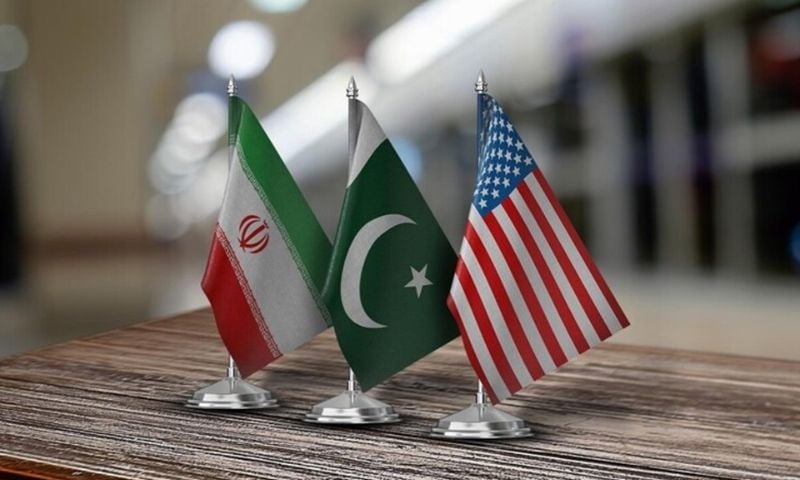



ISLAMABAD: The United States and Iran are edging closer to a limited, temporary agreement to halt their war, Reuters reported on Thursday, citing sources and officials, as Pakistan intensified diplomatic efforts to end the conflict through dialogue and diplomacy.
Washington and Tehran are working toward a short-term memorandum rather than a comprehensive peace accord, reflecting continuing disagreements over Iran’s nuclear programme, Reuters reported while citing sources familiar with the negotiations.
The proposed arrangement is aimed at formally ending the conflict, stabilising the Strait of Hormuz and creating space for broader negotiations, Reuters reported.
The war began on February 28 after the United States and Israel launched strikes on Iran, triggering Iranian attacks across the region and severe disruptions in the Strait of Hormuz, a critical route for global energy supplies.
Three-stages peace framework
According to Reuters, the new framework would unfold in three stages: a formal declaration ending the war, measures to resolve the crisis in the Strait of Hormuz, and a 30-day negotiation period aimed at reaching a broader settlement.
A source briefed on the mediation process, cited by Reuters, said that a one-page memorandum formally ending the conflict was close, although differences remained between the two sides.
Washington and Tehran had scaled back expectations for a sweeping agreement as disputes persisted over Iran’s highly enriched uranium stockpiles, the future of its nuclear activities and the duration of any suspension of enrichment work, according to Reuters.
US news outlet Axios reported on Wednesday, citing official sources, that Washington and Tehran were nearing a preliminary deal to end the conflict and establish a framework for future nuclear negotiations.
Axios said the proposed memorandum could include 14 points under which Iran would halt uranium enrichment for at least 12 years and commit not to develop nuclear weapons, while the United States would ease sanctions and release frozen Iranian assets.
The report also said both sides would reopen the Strait of Hormuz within 30 days of signing the agreement.
CNN reported that Iran was expected to deliver its response to the latest US proposal to Pakistani mediators on Thursday.
A regional source quoted by CNN said the one-page proposal would trigger a 30-day negotiation period to resolve key disputes, including nuclear safeguards, frozen Iranian assets and maritime security in the Gulf.
Trump voices optimism
On Wednesday, US President Donald Trump expressed optimism about the talks with Iran while warning that military action could resume if negotiations failed.
“They want to make a deal … it’s very possible,” Trump told reporters at the White House on Wednesday.
“We’ve had very good talks over the last 24 hours, and it’s very possible that we’ll make a deal,” he added.
Later, in comments to PBS, Trump said he believed there was a “very good chance” the conflict would end before his planned visit to China next week.
“I think it’s got a very good chance of ending, and if it doesn’t end, we have to go back to bombing the hell out of them,” he said.
Speaking later to supporters, Trump added: “It’ll be over quickly.”
Iran reviewing US proposal
Iranian Foreign Ministry spokesperson Esmaeil Baghaei on Wednesday said Tehran had not yet finalised its response and that “the investigation into the exchanged texts is ongoing”.
Ebrahim Rezaei, spokesperson for the Iranian parliament’s Foreign Policy and National Security Committee, described the US proposal as “more of an American wish list than a reality”.
“The Americans will not gain anything in a war they are losing that they have not gained in face-to-face negotiations,” he wrote on social media.
A foreign ministry spokesperson later said Tehran would respond to the proposal “in due course”.
Pakistan’s diplomatic efforts
Pakistan has emerged as a key intermediary in efforts to end the US-Iran conflict.
Pakistan’s Foreign Office spokesperson Tahir Andrabi said Islamabad remained hopeful that a US-Iran agreement would be reached “sooner rather than later”.
Speaking during the Foreign Office’s weekly press briefing, Andrabi said Pakistan would welcome any settlement reached between Washington and Tehran, regardless of where the agreement was finalised.
“If an agreement is reached in Pakistan, it would be an honour for us,” Andrabi said, reiterating Islamabad’s support for dialogue and diplomacy.
He declined to comment on whether the draft agreement under discussion was limited to a single page.
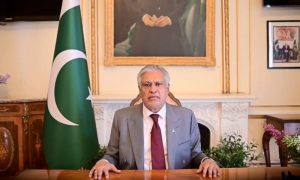
Andrabi said Pakistan’s Deputy Prime Minister and Foreign Minister Ishaq Dar had remained engaged with regional counterparts throughout the past week in support of diplomatic efforts.
According to the spokesperson, Dar held a telephone conversation with Iranian Foreign Minister Abbas Araghchi on May 4 to discuss the regional situation and Pakistan’s mediation role.
“The Iranian side appreciated Pakistan’s constructive and mediation role, while the Deputy PM reaffirmed that dialogue and diplomacy remain the only path to lasting peace and stability,” Andrabi said.
He also said Pakistan had facilitated the evacuation of 22 crew members from the seized Iranian container vessel MV Touska.
“This was a major confidence-building measure by the United States of America. These returns were coordinated in tandem with the support of both the Iranian and US sides,” he said.
The spokesperson added that Prime Minister Shehbaz Sharif had welcomed the suspension of the US military operation known as “Project Freedom”, launched to reopen the Strait of Hormuz.
PM Sharif, the spokesperson said, hoped the current diplomatic momentum would lead to a durable agreement securing long-term regional peace and stability.
Islamabad talks and ceasefire
Pakistan hosted the first direct talks between US and Iranian officials in Islamabad on April 11 and 12 following a Pakistan-brokered ceasefire announced on April 8.
Although the talks ended without a final agreement, both sides continued diplomatic engagement.
Hostilities between Washington and Tehran have since eased considerably, with Pakistan continuing to facilitate communication between the two sides.
Financial markets reacted positively to growing expectations of a diplomatic breakthrough.
Oil prices fell on Thursday while global stock markets traded mixed as investors monitored developments in the negotiations.
Brent crude futures fell 1.8 percent to $99.43 a barrel by around 1045 GMT, while US West Texas Intermediate crude dropped 2.1 percent to $93.04 a barrel after both benchmarks had plunged more than 10 percent on Wednesday amid hopes of easing supply disruptions.
European stock markets retreated after strong gains in the previous session, while major Asian indexes closed higher.
Tokyo’s Nikkei 225 surged 5.6 percent as trading resumed following public holidays in Japan.