WASHINGTON/TEHRAN: The United States said on Wednesday it had completed a new wave of air strikes against Iran, targeting military surveillance capabilities, communication systems and air-defence sites across the country as tensions between the two nations continued to escalate.
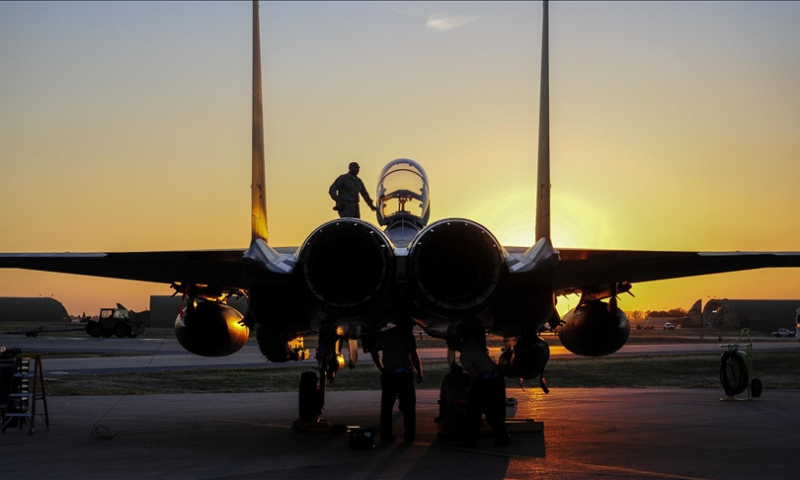
US Central Command (CENTCOM) said American military assets carried out precision strikes against Iranian targets that it said posed a threat to US forces and international shipping in the region.
“US Marine Corps, Air Force and Navy assets fired precision munitions on Iranian targets that posed a threat to US forces and international commercial ships transiting regional waters,” CENTCOM said in a statement posted on X.
— U.S. Central Command (@CENTCOM) June 11, 2026
The operation marked the second consecutive day of US military action against Iran and came amid faltering diplomatic efforts to end the more than three-month conflict.
Earlier, CENTCOM said American forces launched what it described as “additional self-defence strikes” against multiple targets in Iran, beginning at 5:15 p.m. Eastern Time. The military said the attacks were in response to Tehran’s “unwarranted and continued aggression.”
President Donald Trump signalled a tougher stance ahead of the operation, accusing Iranian negotiators of delaying progress in talks aimed at ending the war.
“We hit them hard yesterday. We’re going to hit them again hard today,” Trump told reporters. “We were really close to a deal, but they keep tapping us along.”
Iranian media reported explosions in several locations in the country’s south near the Strait of Hormuz, where US forces had already targeted radar installations, air-defence systems and other military facilities a day earlier.
Iranian sources said “enemy projectiles” struck the areas of Qeshm, Kargan and Sirik.
The renewed strikes prompted fresh international concern, with world leaders urging restraint amid fears that the conflict could spread across the region.
UN Secretary-General Antonio Guterres warned against a return to “full war”, while Iran’s ambassador to the United Nations, Amir Saeid Iravani, said a lasting agreement could not be achieved through “threats, intimidation, or the use of force.”
Despite the escalation, diplomatic channels remained open. A diplomat familiar with the negotiations said Qatari mediators had travelled to Tehran in an effort to bridge remaining differences between the two sides.
The conflict began in late February with large-scale US-Israeli strikes on Iran, triggering regional instability and market volatility before a ceasefire was reached. That truce has come under increasing strain in recent weeks.
The fighting has also raised concerns over global energy supplies. Iran’s actions in and around the Strait of Hormuz have disrupted maritime traffic through the strategic waterway, which normally carries about one-fifth of the world’s oil trade.
Trump claimed on Wednesday that US military operations had helped ensure the passage of 100 million barrels of oil through the contested route.
Financial markets reacted cautiously to the latest developments. Global stock markets mostly declined, while oil prices rose by around two percent amid growing concerns over regional security and energy supplies.