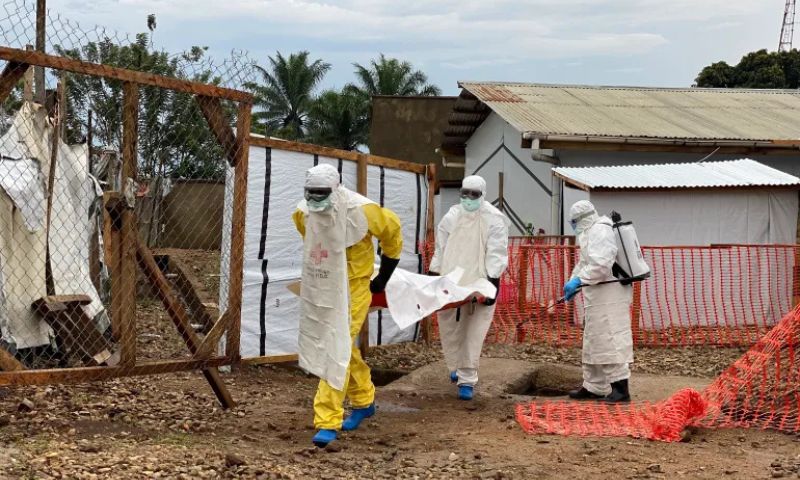
GENEVA: The United Nations’ migration agency has warned that transporting the bodies of Ebola victims across different parts of the Democratic Republic of Congo for burial could accelerate the spread of the virus.
The International Organisation for Migration (IOM) said that more than 2,000 Ebola cases and 700 deaths had been recorded in the Democratic Republic of Congo and neighbouring Uganda as of July 14.
The agency said nearly two-thirds of the fatalities occurred outside hospitals or health facilities, complicating efforts to ensure safe burials and contain the outbreak.
Ebola is a highly infectious viral disease that spreads through direct contact with the body fluids of infected people or animals. Symptoms include high fever, vomiting, and internal and external bleeding. The current outbreak is linked to the Bundibugyo strain of the virus.
Health experts warn that the virus remains highly contagious after death, making the safe handling and burial of victims a crucial part of efforts to prevent further transmission.
“If we don’t really manage the dead bodies well, if we don’t engage the community … then it means there will be more spread within the community,” said Andrew Mbala from IOM.
Transportation of bodies remains a major challenge
IOM officials said the transportation of Ebola victims’ bodies between districts remains a major challenge, as many families seek to bury their relatives in their home communities, increasing the risk of further transmission.
“There hasn’t been any crossing of dead bodies to another country, but we have seen a lot of crossings of dead bodies within the country,” said Mbala.
Democratic Republic of the Congo: Due to the Ebola outbreak in the Democratic Republic of the Congo (DRC), the Department of Homeland Security has implemented new restrictions under Title 49 of the U.S. Code which prevent U.S. citizens and nationals who have been in the DRC… pic.twitter.com/d0J6Elw7jy
— TravelGov (@TravelGov) July 16, 2026
During Ebola surveillance operations at border crossings and entry points between health control zones in the Democratic Republic of Congo, the International Organization for Migration (IOM) said officials intercepted 105 bodies.
Also Read: DR Congo Ebola Death Toll Reaches 600
The agency warned that transporting bodies between regions without proper safety measures could introduce the virus into new areas. The intercepted bodies were referred for laboratory testing and investigation before being handed over to specialised teams for safe and dignified burials.
IOM officials cited one case in which the movement of a body from one area to another contributed to the spread of Ebola into the newly affected Tshopo province.
“The outbreak has grown by approximately 70 percent in just two weeks, with an average of more than 40 new cases reported each day,” IOM Regional Director Frantz Celestin said.
The agency also warned that community resistance continues to hamper efforts to contain the outbreak. Teams responsible for handling bodies and carrying out safe burials have encountered opposition and, in some cases, have come under attack.
“We have seen that in the community there is an element of resistance during the burials,” Mbala said.