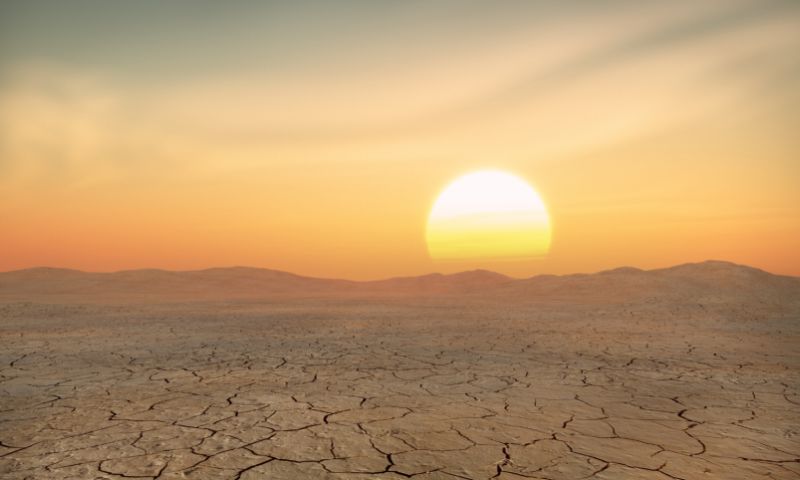
GENEVA: The United Nations has warned governments and communities worldwide to prepare for a potentially powerful El Niño weather event that could trigger extreme heat, droughts, heavy rainfall and significant disruptions to food production across several regions of the world.
The warning came as the World Meteorological Organisation (WMO) announced that warming ocean temperatures in the Pacific are driving the development of El Niño conditions, raising the likelihood of above-average global temperatures and more frequent weather extremes in the coming months.
According to the UN weather agency, the climate phenomenon is expected to persist until at least November and could become moderate to strong in intensity, although forecasts vary regarding its ultimate strength.
El Niño is characterised by a periodic warming of sea surface temperatures in the central and eastern Pacific Ocean. The phenomenon typically develops every few years and can last between nine and twelve months, influencing weather patterns worldwide.
The WMO forecasts that temperatures from June to August will remain above normal across most parts of the globe. While uncertainty remains regarding the severity of the event, officials stressed that countries should prepare for potentially serious impacts.
“We need to prepare for a potentially strong El Niño event, which will exacerbate drought and heavy rainfall and increase the risk of heatwaves both on land and in the ocean,” WMO Secretary-General Celeste Saulo said.
El Niño has officially returned and could be severe. The UN is warning the world to prepare.
The Pacific Ocean-warming phenomenon will bring above-average temperatures “nearly everywhere” and fuel more extreme weather, according to @WMO.
Here are 5️⃣ facts you need to know⤵️ pic.twitter.com/XRDMx0qJR9
— United Nations Geneva (@UNGeneva) June 4, 2026
Growing threat of extreme weather
Meteorologists say El Niño has the potential to disrupt climate systems across multiple continents. The phenomenon is generally associated with increased rainfall in southern regions of South America, parts of the United States, parts of eastern Africa and areas of Central Asia. At the same time, it can bring prolonged dry conditions to Australia, Indonesia, Central America and parts of South Asia.
The WMO also noted that El Niño can contribute to more active hurricane formation in the central and eastern Pacific Ocean. The previous strong El Niño episode, which developed between 2023 and 2024, played a significant role in pushing global temperatures to record levels. According to the WMO, its effects contributed to making 2024 the hottest year ever recorded.
Beyond heat and rainfall extremes, the organisation warned that higher temperatures could accelerate the spread of diseases transmitted by mosquitoes, ticks and other vectors while placing additional pressure on food and water supplies.
“Communities that were already struggling will be pushed farther beyond their limits,” Saulo said, highlighting the disproportionate impact on vulnerable populations.
Climate and economic pressures
The developing weather pattern comes at a time when many countries are already grappling with inflationary pressures, supply chain disruptions and rising living costs. Analysts warn that weather-related damage to crops could further increase food prices worldwide.
The cocoa industry is among the sectors closely monitoring developments. Hein Schumacher, chief executive of cocoa processor Barry Callebaut, warned that adverse weather linked to El Niño could affect production in Ecuador and West Africa, regions that together account for roughly 60 per cent of global cocoa output.
Industry observers fear lower harvests could tighten global supplies and place upward pressure on commodity prices. Although London cocoa futures are currently trading well below the record highs seen in 2024, market participants remain cautious about the potential impact of prolonged drought and excessive heat on future harvests.
Some national meteorological agencies have projected that the emerging El Niño could become the strongest in a decade. However, the WMO has adopted a more measured approach, noting that climate models continue to differ regarding the event’s likely intensity.
Nevertheless, scientists have observed exceptionally warm subsurface waters throughout the tropical Pacific Ocean, with temperatures exceeding seasonal averages by more than six degrees Celsius in some areas. These unusually warm waters are acting as a reservoir of heat that is fuelling surface warming and strengthening El Niño conditions.
UN Secretary-General António Guterres said the latest developments should serve as a reminder of the urgent need to accelerate the transition from fossil fuels to renewable energy sources. “The world must treat it as the urgent climate warning it is. El Niño conditions will pour fuel on the fire of a warming world,” Guterres said.
Asian agriculture under pressure
Meanwhile, farmers across Asia are already experiencing the consequences of unusually dry weather, with crop planting disrupted in several major agricultural regions.
Agricultural experts, traders and growers report that insufficient rainfall and high temperatures are affecting cultivation from India’s grain-producing north-western plains to Australia’s eastern wheat belt, as well as rice-growing regions in Southeast Asia and palm oil plantations in Indonesia.
The situation has raised concerns about food supplies in the world’s most populous region, particularly as El Niño is expected to intensify later in the year. Farmers are facing additional challenges due to shortages of fertilisers and diesel, further increasing production costs and reducing planting capacity.
Global grain markets have reacted to the growing uncertainty. Wheat prices have climbed significantly since the beginning of 2026 amid concerns over drought conditions in key producing areas, while rice prices across Southeast Asia have also increased sharply as traders anticipate tighter supplies.
Climate specialists believe one of the strongest El Niño events on record could emerge during the second half of the year, bringing hot and dry conditions to much of Asia while increasing rainfall in parts of the Americas.
Chris Hyde, a meteorologist with satellite data and imagery firm SkyFi, said the earliest impacts of El Niño are often felt in Southeast Asia, India and Australia before weather disruptions spread to other parts of the world. According to Hyde, satellite imagery is already showing signs of developing drought conditions in several Asian regions.
India faces delayed planting season
In India, weather officials recently lowered their forecast for the annual monsoon season, which normally provides around 70 per cent of the country’s yearly rainfall. Agricultural traders say the combination of elevated temperatures and delayed rains is creating unfavourable conditions for the planting of summer crops.
Concerns are growing not only about the delayed arrival of monsoon rains but also about the possibility of below-average rainfall and extended dry spells once the season begins.
India’s summer cropping season is particularly important because it includes rice, soybeans, pulses, maize and sugarcane, all of which are vital to domestic food security and global agricultural markets.
Southeast Asia monitors water supplies
Across Southeast Asia, farmers are becoming increasingly concerned about water availability. In Thailand, growers fear drought conditions could force them to abandon second harvests if reservoir levels decline significantly.
Rice-producing nations including Thailand, Vietnam, Indonesia and the Philippines are entering critical planting periods, making weather conditions over the coming weeks particularly important.
Indonesia’s meteorological agency reported that parts of Java, northern Sumatra, South Kalimantan and Sulawesi have already experienced extended periods without rainfall.
Forecasts indicate that many regions may continue to receive below-normal precipitation during June. Although reservoir levels remain relatively strong in some countries, analysts caution that prolonged dryness could eventually reduce agricultural output.
Food prices could rise further
Market participants are increasingly worried that weather-related disruptions could translate into higher food prices globally. Rice prices have continued to rise despite substantial stockpiles in India, which accounts for roughly 40 per cent of global rice exports.
Traders say the market is becoming increasingly sensitive to any indication that India may consider restrictions on exports if monsoon conditions deteriorate. The possibility of tighter supplies has fuelled speculation and contributed to recent price increases in major exporting countries.
Analysts at Thailand’s KKP Research noted that existing water reserves may help mitigate some immediate impacts of drought. However, they identified fertiliser availability as a potentially greater threat. According to the research unit, a severe fertiliser shortage could reduce rice production by as much as 15 to 20 per cent in a worst-case scenario.
Australia and the Americas
In Australia, recent rainfall has allowed some wheat growers to begin late sowing, but concerns remain over the outlook for the coming months. The country’s Bureau of Meteorology expects many agricultural areas in New South Wales and Queensland to receive significantly less rainfall than normal during the next three months.
Farmers say uncertainty surrounding El Niño has already reduced planting areas in some regions. Elsewhere, climate experts expect El Niño to bring wetter-than-average conditions to parts of the Americas while having a more neutral impact on China and the Black Sea region.
Weather specialists caution, however, that El Niño does not guarantee specific outcomes in every region, as local climate patterns and broader global warming trends continue to influence weather behaviour.
With climate change amplifying natural weather cycles, scientists warn that the developing El Niño could become a major test for governments, farmers and emergency planners worldwide as they prepare for another period of heightened climate volatility.