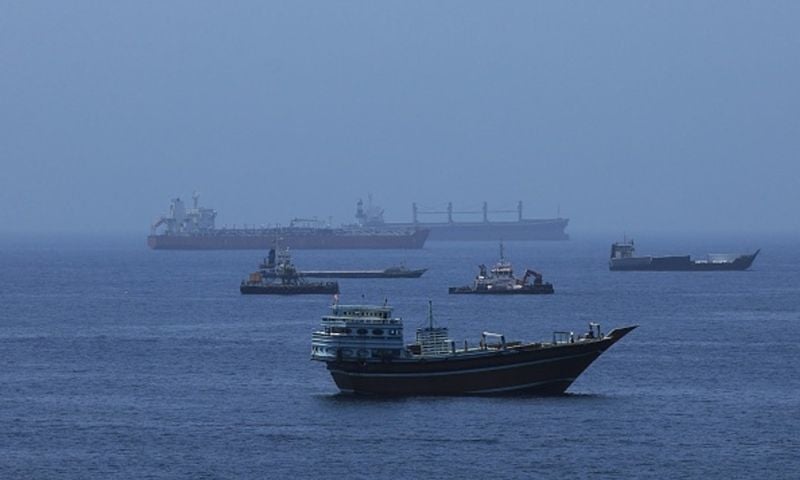
GENEVA: The United Nations (UN) on Friday appealed for urgent international action to evacuate and repatriate around 6,000 sailors stranded in the Strait of Hormuz, warning that they are facing an increasingly severe humanitarian and human rights crisis as hostilities in the Middle East continue to disrupt one of the world’s busiest maritime corridors.
Speaking in Geneva, UN human rights office spokesperson Shabia Mantoo said High Commissioner for Human Rights Volker Türk had called on all parties involved in the conflict to ensure the safe passage of civilian vessels and facilitate the evacuation of stranded crews.
According to the International Maritime Organization (IMO), at least 6,000 sailors aboard hundreds of commercial vessels remain unable to leave the strategic waterway despite the ceasefire, leaving many without certainty over when they will be able to return home.
“The parties to the conflict should urgently work to facilitate the safe passage of stranded sailors so they can safely evacuate and disembark, while also ensuring the delivery of essential supplies,” Mantoo told reporters.
She stressed that attacks on civilian shipping are unacceptable and must cease immediately, noting that merchant vessels are protected under international humanitarian law.
Mantoo added that Türk had urged governments, shipowners and other relevant stakeholders to take immediate steps to protect stranded sailors by providing consular assistance, ensuring access to food, water and other essential supplies, and arranging their evacuation and repatriation as soon as conditions allow.
The UN appeal came as tensions in the region escalated further. The United States carried out fresh strikes on Iran on Friday after Houthi rebels reportedly attacked oil tankers in the Red Sea, raising fears of a wider disruption to global energy supplies and pushing crude oil prices above 100 US dollars per barrel.
Although the US military maintained that the Strait of Hormuz remains open to commercial navigation, Iran has continued targeting tankers using the strategic route in an apparent attempt to pressure shipping companies into paying for safe passage.
The Strait of Hormuz is one of the world’s most critical maritime chokepoints, handling roughly one-fifth of global oil shipments before the conflict intensified.
Any prolonged disruption to traffic through the narrow waterway could have significant consequences for international trade, energy markets and global supply chains.