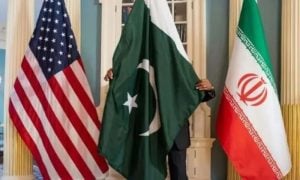



WASHINGTON: US President Donald Trump is dispatching a high-level US negotiating team led by Vice President JD Vance to Islamabad for upcoming talks with Iran this weekend, the White House confirmed on Wednesday, signalling Washington’s intent to advance diplomatic efforts following a Pakistan-brokered two-week ceasefire between the two sides.
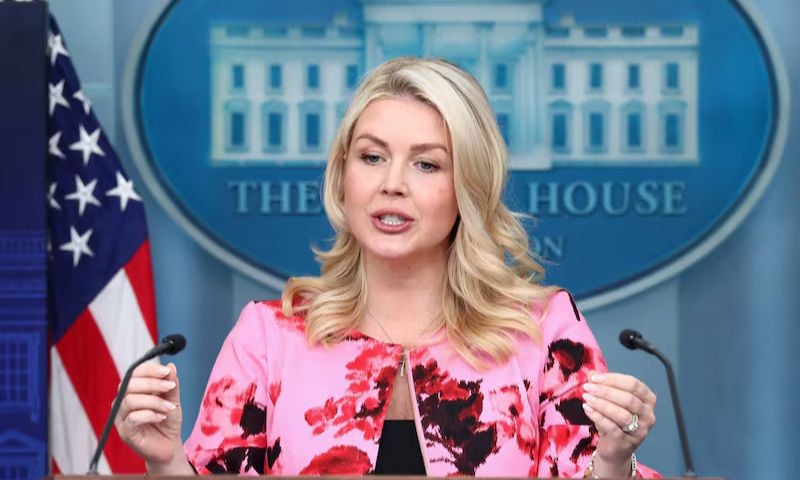
“I can announce that the president is dispatching his negotiating team led by the Vice President of the United States, JD, Vance, special envoy Witkoff and Mr. Kushner to Islamabad for talks this weekend,” Leavitt told reporters in the White House briefing room.
Leavitt said that the first round of talks will take place on Saturday morning local time.
Iran’s negotiation team is expected to be led by the parliament speaker Mohammad Baqer Qalibaf, with Foreign Minister Abbas Aragchi, according to reports.
Earlier, JD Vance said that President Trump has instructed the entire US negotiation team to go and work in good faith to come to an agreement.
“The president of the United States has told me, and he’s told the entire negotiating team … go and work in good faith to come to an agreement,” Vance said during a visit to Hungary.
“That is what he has told us to do. If the Iranians are willing in good faith to work with us, I think we can make an agreement.”
Karoline Leavitt said that Israel’s Prime Minister Benjamin Netanyahu supports President Trump, when asked if the Israeli leader backs the ceasefire deal.
The White House Press Secretary said that Trump spoke with Netanyahu privately last night and “relayed exactly what he said to the world publicly: that he supports the president and Israel remains a key ally and partner to the United States.”
Pakistan-brokered US-Iran truce
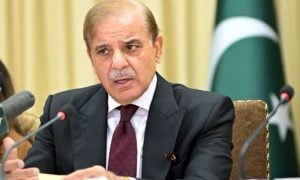
On Wednesday morning, Pakistan’s Prime Minister Shehbaz Sharif announced that the United States, its allies, and Iran had agreed to a ceasefire “everywhere”, including Lebanon, following mediation by his government to stop weeks of fighting.
“I am pleased to announce that the Islamic Republic of Iran and the United States of America, along with their allies, have agreed to an immediate ceasefire everywhere, including Lebanon and elsewhere, EFFECTIVE IMMEDIATELY,” Sharif posted on X.
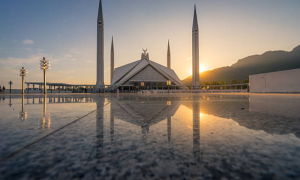
He added that Pakistan’s capital, Islamabad, would welcome delegations from both countries on Friday to hold negotiations aimed at reaching a “conclusive agreement”.
“We earnestly hope that the ‘Islamabad Talks’ succeed in achieving sustainable peace and wish to share more good news in the coming days,” he said.
Both Tehran and Washington announced they had agreed to a two-week ceasefire barely an hour before President Donald Trump’s deadline to obliterate Iran was set to expire.
Accepting Pakistan’s suggestion of a two-week ceasefire, US President Donald Trump announced a two-week suspension of military action against Iran following discussions with Pakistan’s leadership.
With the greatest humility, I am pleased to announce that the Islamic Republic of Iran and the United States of America, along with their allies, have agreed to an immediate ceasefire everywhere including Lebanon and elsewhere, EFFECTIVE IMMEDIATELY.
I warmly welcome the…— Shehbaz Sharif (@CMShehbaz) April 7, 2026
US-Iran talks in Islamabad
The White House Press Secretary, during press briefing, said that a second Iranian proposal was viewed as a “workable” starting point for intense negotiations set to begin this weekend.
The 10-point plan that the Iranians had initially pitched was “fundamentally unserious, unacceptable, and completely discarded,” White House press secretary Karoline Leavitt said.
Then, in the hours before President Trump’s 8 p.m. ET deadline, Iran “put forward a more reasonable and entirely different and condensed plan,” she said.
Trump and his team, she said, viewed the alternative plan as a “workable basis on which to negotiate” and that it could be aligned with the US 15-point proposal.
Negotiators will work to merge those frameworks into an agreement over closed-door talks starting in Islamabad on Saturday, the White House Press Secretary said.
“The president’s red lines, namely, the end of uranium enrichment in Iran, have not changed,” Leavitt said.
Earlier, Trump said the negotiations would focus on a specific set of terms deemed acceptable to Washington.
“There is only one group of meaningful ‘POINTS’ that are acceptable to the United States, and we will be discussing them behind closed doors during these Negotiations…” President Trump said.
"There is only one group of meaningful 'POINTS' that are acceptable to the United States, and we will be discussing them behind closed doors during these Negotiations…" – President Donald J. Trump pic.twitter.com/PP4jlW8LAJ
— The White House (@WhiteHouse) April 8, 2026
Shipping traffic already increased in Strait of Hormuz
Karoline Leavitt said that Iran has assured the US that it is allowing traffic through the Strait of Hormuz, adding that shipping traffic through the strait has already increased.
Leavitt added that President Trump’s willingness to negotiate with Iran is contingent on the Strait of Hormuz remaining open “with no limitations or delays” and that any closure would be “completely unacceptable” to him.
Leavitt clarified that the US would consider Iran charging tolls to cross the strait as a limitation.
“So long as the Strait of Hormuz remains open with no limitations or delays, these extraordinarily sensitive and complex negotiations will take place behind closed doors over the course of the next two weeks,” she said.
President Trump has “floated” the idea that the US should earn revenue from the Strait of Hormuz, and it will be discussed over the next two weeks, Karoline Leavitt said.
“It’s something that will continue to be discussed over the course of the next two weeks. But the immediate priority of the president is the reopening of the Strait without any limitations, whether in the form of tolls or otherwise,” she told reporters during the White House press briefing.
Trump’s threat to wipe out ‘whole civilization’
Karoline Leavitt defended Trump’s threat to wipe out a “whole civilization” in the war with Iran, telling reporters that his “very tough rhetoric and his tough negotiating style is what has led to the result that you are all witnessing today.”
On Tuesday, Trump said in an early morning Truth Social post, “A whole civilization will die tonight, never to be brought back again,” if Iran did not come to the negotiating table and reopen the Strait of Hormuz ahead of an evening deadline.
“Well, I understand the questions about the president’s rhetoric, but what the president cares most about is results, and in fact, his very tough rhetoric and his tough negotiating style is what has led to the result that you are all witnessing today,” Leavitt said Wednesday.
The White House press secretary said the world “should take his word very seriously in understanding that the president is always most interested in results.”