
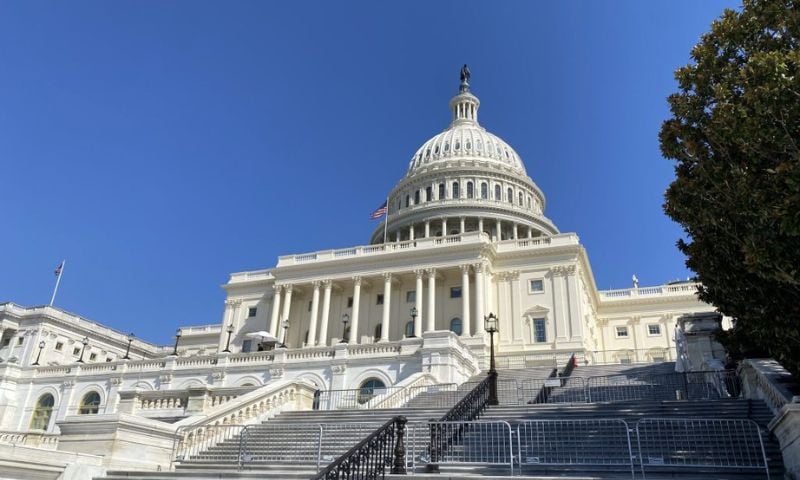



ISLAMABAD: The United States Congress is now positioned to determine the future of the Iran conflict as President Donald Trump’s unilateral war authority expires under federal war powers legislation on Friday, according to reporting by The Guardian.
The Trump administration has said that hostilities with Iran have been “terminated” for the purpose of a looming congressional war powers deadline, according to a senior US official, as reported by The Guardian.
The statement comes as the ceasefire, which began in early April, continues to hold after weeks of conflict. The administration argues that no exchanges of fire have occurred since the truce began, effectively marking the end of active hostilities.
War Powers deadline pressure
Under the US War Powers Resolution of 1973, the president must end military operations within 60 days unless Congress authorises continued action or formally declares war.
Donald Trump faced that deadline on Friday in relation to the Iran conflict. While legal options included seeking an extension or formal approval from Congress, officials indicated the administration was likely to allow the deadline to pass without major changes to policy.
A senior official said, “For war powers resolution purposes, the hostilities that began on February 28 have terminated.”
Ceasefire legal debate
Defence Secretary Pete Hegseth told lawmakers that the ceasefire effectively “pauses” the 60-day clock — a position disputed by legal experts and critics.
Harold Hongju Koh, a Yale Law School professor and former legal adviser to the US State Department, rejected the interpretation, saying: “There is no pause button in the War Powers Resolution,” according to reporting cited by The Guardian.
Congressional tensions
The dispute has deepened political divisions in Congress, where Republicans hold a narrow majority in both chambers.
Senate Republican leader John Thune said he did not expect a vote to authorise force or further restrict Trump’s actions. Other Republicans, including Senator Kevin Cramer, signalled conditional support for authorisation but questioned whether the War Powers framework remains constitutional.
Senator Lisa Murkowski has indicated plans to introduce a limited authorisation of military force if the White House fails to present what she called a “credible plan.”
Repeated Senate rejections
Lawmakers have repeatedly attempted to rein in presidential authority through War Powers resolutions, but all efforts have failed.
The most recent vote rejected a Democratic resolution aimed at restricting US military action in Iran, with the Senate voting 50–47 against the measure.
Democratic Senator Adam Schiff, who authored the resolution, said the vote underscored the urgency of congressional oversight, as Friday marked 60 days since the administration first notified Congress of military strikes.
Constitutional dispute
The US Constitution grants Congress the sole authority to declare war, but administrations have historically bypassed this requirement by framing military actions as limited or defensive operations.
The current dispute centres on whether the ceasefire legally ends “hostilities” or merely suspends them — a distinction that could determine whether Trump must seek congressional approval to continue military engagement.