


BEIRUT: The near-term risk of a broader conflict in the Middle East has eased somewhat following Israel and Lebanon’s Hezbollah exchanged fire without further escalation but Tehran still poses a significant danger as it weighs a strike on Israel, America’s top general claimed on Monday.
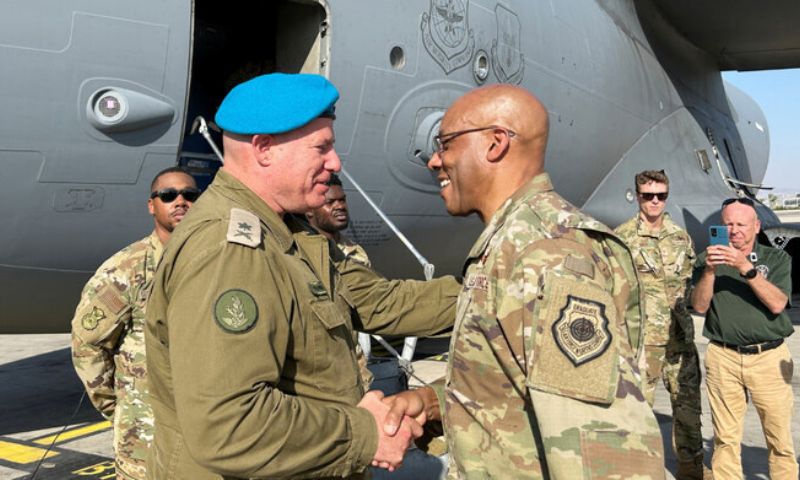
Air Force General C.Q. Brown, chairman of the Joint Chiefs of Staff, spoke to Reuters news agency following emerging from a three-day visit to the region that saw him fly into Israel just hours following Hezbollah launched hundreds of rockets and drones at Israel, and Israel’s army struck Lebanon to thwart a larger strike.
Reuters reported that it was one of the biggest clashes in more than 10 months of border warfare, but it ended with limited damage in Israel and without immediate threats of more revenge from either side.
C.Q. Brown noted Hezbollah’s attack was just one of two major threatened strikes against Israel that emerged in recent weeks. Tehran is also threatening a strike over the killing of a Hamas political leader in Tehran last month. Asked if the immediate risk of a regional conflict had reduced, Brown stated: “Somewhat, yes.”
“You had two things you knew were going to occur. One’s already occurred. Now it depends on how the second is going to play out,” Brown stated. Her said, “How Iran answers will dictate how Israel replies, which will dictate whether there is going to be a broader war or not.”
Brown cautioned that there was also the risk posed by Iran’s militant allies in Iraq, Jordan and Syria who have attacked US forces as well as Yemen’s Houthis, who have targeted Red Sea shipping and even fired drones at Israel.
Tehran has pledged a severe response to the killing of Hamas political leader Ismail Haniyeh, which took place as he visited Iran late last month and which it blamed on Israel.
Biden’s administration has been seeking to limit the fallout from the conflict in the Gaza Strip between Israel and Hamas, now in its 11th month. The war has leveled huge swathes of the Gaza Strip, triggered border clashes between Israel and Iranian-backed Hezbollah and drawn in Yemen’s Houthis.
The ongoing war in Gaza began on Oct. 7, 2023 and since then, Israel’s military offensive has driven nearly all of the Palestinian enclave’s 2.3 million people from their houses, giving rise to deadly hunger and disease and killing around 40,000 people, Palestinian health ministry said.