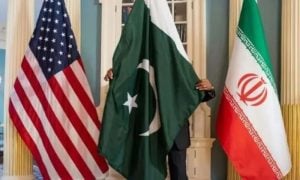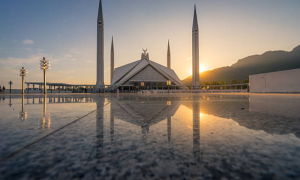



ISLAMABAD: A weeks-long conflict between Iran and the United States, triggered by the US and Israeli strikes on February 28, spiralled into a wider regional war before a Pakistan-mediated breakthrough secured a two-week ceasefire on April 8, opening the door for high-stakes peace talks in Islamabad.
Timeline of key developments:
February 28: War erupts
The United States and Israel launched coordinated air and sea strikes on Iran, including in Tehran, targeting sites near the residence of the supreme leader.
Iran retaliated by launching drones and missiles towards Gulf countries that were not part to the conflict, targeting civilian infrastructure including airports in the UAE and Kuwait.
March 1–3: Leadership loss and escalation
Iran confirmed the killing of Supreme Leader Ayatollah Ali Khamenei and other top officials in the February 28 strikes.
On March 3, an Israeli strike hit the state broadcaster complex and the UNESCO-listed Golestan Palace.
March 5: Naval strike
A US submarine torpedoed the Iranian frigate IRIS Dena near Sri Lanka, killing around 80 sailors, Iranian authorities said.
March 9: Leadership transition
Iran’s Assembly of Experts appointed Ayatollah Mojtaba Khamenei as the new supreme leader.
March 11–12: Strait of Hormuz flashpoint
The conflict shifted to maritime tensions in the Strait of Hormuz, with multiple attacks on commercial vessels reported.
March 13–14: Regional spillover
A US air refueller was shot down over Iraq, killing all four crew members. Iran-aligned militias claimed responsibility.
US forces struck Iran’s Kharg Island, a major oil export hub.
March 17: High-level assassinations
Israeli Prime Minister Benjamin Netanyahu announced the killing of senior Iranian official Ali Larijani.
Iran’s Revolutionary Guards also confirmed the death of Basij chief Gholamreza Soleimani in strikes.
March 22: Trump warns of targeting Iran’s power plants
On March 22, US President Donald Trump threatened to “obliterate” Iran’s power plants if the Strait of Hormuz was not reopened within 48 hours.
March 23–27: Diplomatic openings
Trump announced a temporary pause in strikes, citing “productive” talks.
Pakistan’s Deputy Prime Minister Ishaq Dar confirmed on March 26 that indirect US–Iran talks were taking place through Pakistan.
March 29–April 1: Pakistan takes centre stage
Ishaq Dar said both Washington and Tehran trusted Pakistan to facilitate talks.
On April 1, Pakistan and China proposed a five-point initiative for de-escalation during talks in Beijing, according to official statements.
April 2–5: Mixed signals
Trump said the US was close to completing its military objectives but warned of further strikes.
Iranian Foreign Minister Abbas Araghchi rejected reports that Tehran was unwilling to attend talks in Islamabad, stating on X that Iran supported a “conclusive and lasting end” to the war.
April 7: Brink of escalation
Trump warned of devastating consequences if Iran did not accept US demands, saying “a whole civilisation will die”.
Iran reportedly sent a response via Pakistan, reinforcing Islamabad’s role as a key intermediary.
April 8: Pakistan announces ceasefire
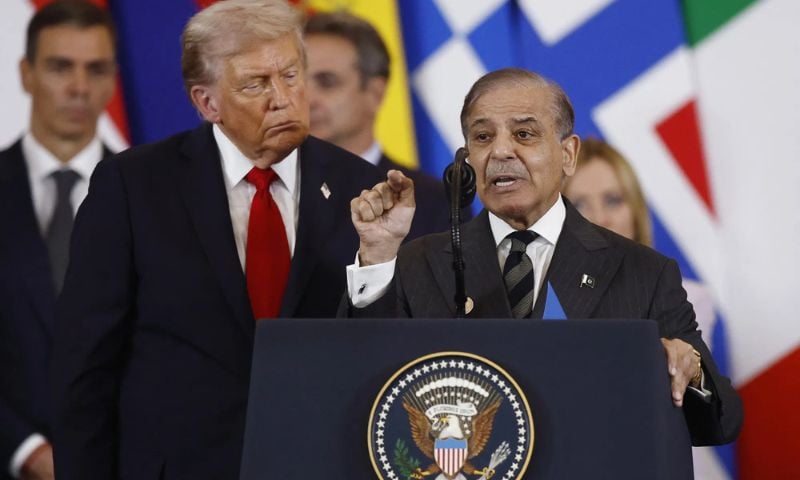
Pakistan’s Prime Minister Shehbaz Sharif announced that Iran, the United States and their allies had agreed to an immediate ceasefire “everywhere”, including Lebanon.
In a post on X, PM Sharif said Pakistan would host talks between the two sides in Islamabad on April 10 to reach a “conclusive agreement”.
Both Tehran and Washington confirmed a two-week ceasefire shortly before a US deadline for potential escalation expired.
Trump said the pause in military action followed discussions with Pakistan’s leadership and was contingent on Iran reopening the Strait of Hormuz.
Iranian officials confirmed the ceasefire and acknowledged Pakistan’s diplomatic efforts.
Islamabad Talks
The ceasefire has paved the way for negotiations in Islamabad, with both sides indicating willingness to engage.
The talks will focus on a comprehensive settlement, including sanctions relief and regional stability.
Pakistan’s mediation, supported by regional and global partners, has been widely acknowledged as central to the diplomatic breakthrough.