WASHINGTON: Afghanistan remains a safe haven for terrorist groups 25 years after the September 11 attacks, despite major changes in the nature and organisation of global terrorism, experts at the Atlantic Council have warned.
The US think tank made the assessment in a report published on Thursday, titled The State of Terrorism, 25 Years After 9/11. The report brings together the views of 25 Atlantic Council experts on how terrorist threats have evolved over the past quarter-century and what they could look like in the future.
The experts said al-Qaeda and Islamic State (ISIS) are no longer as centralised or powerful as they once were. But networks linked to the terrorist groups have adapted to changing conditions.
On September 11, 2001, the US suffered the deadliest terrorist attack in its history.
A quarter century after, Atlantic Council experts reflect on the state of terrorism today and the outcomes of the war on terror.
THREAD 🧵 https://t.co/OydWfivFtS
— Atlantic Council (@AtlanticCouncil) September 11, 2026
The report said the September 11, 2001 attacks killed nearly 3,000 people and fundamentally reshaped the US national security system. They triggered the US-led “war on terror” and major changes to American intelligence and homeland security structures.
But terrorism did not disappear.
Taliban ties with terrorist groups
One of the report’s key sections focuses on terrorism in Afghanistan and South Asia.
Michael Kugelman, a senior fellow for South Asia at the Atlantic Council, wrote that the terrorism landscape in South Asia appeared better than it did in the years leading up to September 11.
Al-Qaeda is weaker, while many of the more than a dozen terrorist groups are active in Afghanistan with operational capabilities, he said.
But Kugelman warned that the regional terrorist threat should not be underestimated.
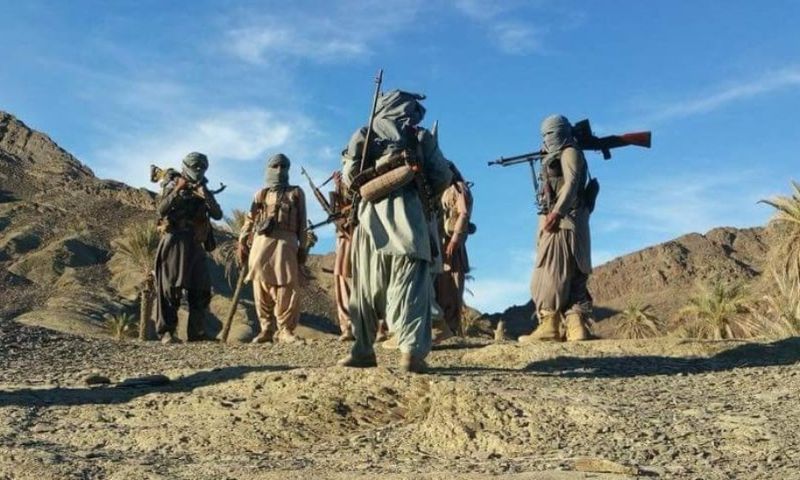
According to him, the Taliban regime, which has controlled Afghanistan again for the past five years, has ties and alliances with many terrorist groups operating in the region. These range from the banned Tehrik-i-Taliban Pakistan (TTP) and Balochistan Liberation Army (BLA) terrorist groups to Central Asian terrorist organisations.
He concluded that continued Taliban rule had created an environment favourable to terrorist groups.
Atlantic Council experts did not share a single view on whether the US-led war on terror was successful. They argued that it could not simply be described as either a success or a failure.
Omer Rafiq, a non-resident senior fellow at the Atlantic Council, wrote that the United States achieved many tactical successes over the past 25 years.
However, successive US administrations never clearly defined when or under what conditions victory in the war on terror would be achieved.
Al-Qaeda and ISIS remain active
The Atlantic Council said al-Qaeda and ISIS were no longer the large, highly organised and centralised organisations they once were.
However, both terrorist groups had adapted by creating and strengthening networks of affiliates and associated terrorist groups.
According to the experts, the two groups still have the ability to recruit members, distribute propaganda, inspire attacks and establish local networks.
Digital tools have also enabled them to spread extremist messages more quickly to people in different parts of the world.
The report described Islamic State-Khorasan Province (IS-K) as one of the few genuinely powerful terrorist groups operating in the region.
The report identified the Taliban’s reluctance to prevent terrorist groups from operating inside Afghanistan as one of the region’s biggest security challenges.
It also pointed to the activities of the East Turkestan Islamic Movement and IS-K. The latter continues to recruit in Central Asian countries as well as Afghanistan, it said.
Some recruits from Tajikistan have been involved in IS-K-linked plots and attacks in Europe, the Philippines and the United States, according to the report.
Experts predicted that Afghanistan would remain a favourable environment for terrorist groups in the near future.
AI and drones used by terrorist groups
The use of artificial intelligence by terrorist groups was identified as an emerging concern.
According to the report, terrorist organisations can use AI to produce propaganda, translate material, recruit members and target vulnerable audiences.
Experts also warned that advanced AI models could make some forms of technical knowledge more accessible to people without specialist expertise. This could reduce technical barriers for terrorist groups in the future, they said.
The report said ISIS-linked groups had already used AI to produce and distribute propaganda. Advances in generative and automated models could allow them to create targeted content on a much larger scale.
Drones were also identified as a potential future threat.
Experts said small, inexpensive and widely available drones could become effective tools for terrorist groups. They could be used against crowded places, infrastructure and symbolic targets.
Cryptocurrencies for terrorist financing
Water, energy, transport, communications, healthcare and other critical infrastructure are becoming more vulnerable because of their growing dependence on digital systems, according to the Atlantic Council.
Weak digital security systems and outdated technology could increase the possibility of remote attacks.
Such attacks could involve malware, ransomware, disruption of navigation systems or AI-based tools, the experts said.
The report also examined the role of cryptocurrencies in terrorist financing.
Experts stressed that cryptocurrencies were still not the main source of funding for terrorist organisations. Cash, state support and informal financial networks remained more important, they said.
However, new technologies have made it easier to transfer money outside traditional monitoring systems.
The report said terrorist groups such as IS-K had also used some privacy-focused cryptocurrencies to solicit donations.
International cooperation remains vital
The Atlantic Council concluded that counterterrorism efforts over the past 25 years had depended heavily on cooperation between countries, intelligence sharing and coordination in security, diplomacy and finance.
The report said international cooperation must evolve as terrorism changes, particularly to address radicalised individuals, terrorist groups, social media and new methods of terrorist financing.
Experts predicted that attacks by inspired individuals, lone attackers and terrorist groups could increase in the future.
They said this would require greater international cooperation on technology, intelligence and the regulation of digital platforms.