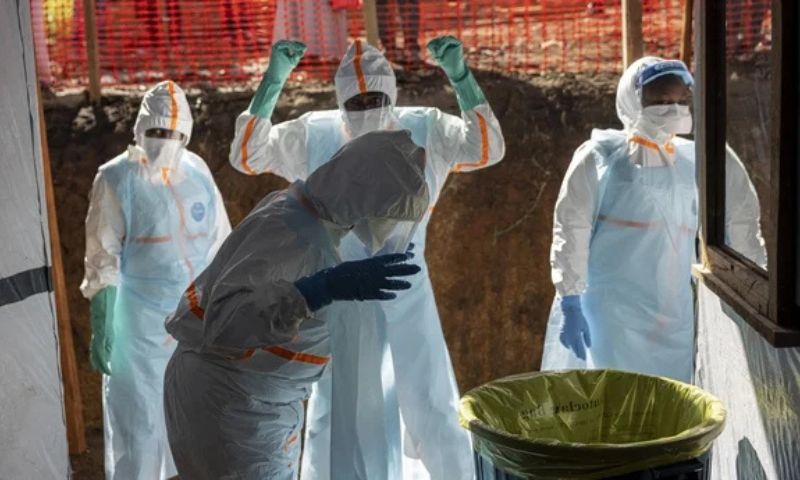
GENEVA: The World Health Organization (WHO) on Tuesday revised down the number of suspected Ebola cases linked to the ongoing outbreak in the Democratic Republic of Congo (DRC), saying hundreds of previously reported cases had been ruled out following further investigation.
The UN health agency said 116 suspected cases of Ebola had been recorded in the DR Congo as of May 31, down from 906 suspected cases reported late last week.
At the same time, the number of confirmed infections continued to rise.
WHO spokesman Christian Lindmeier told reporters in Geneva that 321 cases had now been confirmed in the DRC, including 48 deaths. Six people have recovered from the disease.
In neighbouring Uganda, nine confirmed cases and one associated death had been recorded, Lindmeier said.
Later on Tuesday, Uganda’s Health Ministry announced six additional confirmed infections among contacts of previously identified patients, bringing the country’s total number of confirmed cases to 15.
Lindmeier said the dramatic reduction in suspected cases reflected the result of laboratory testing rather than a sudden improvement in the outbreak.
“They have been cleared out and have either other diseases or have just had fever and nothing else,” he said.
According to the WHO, anyone identified through surveillance systems or presenting at a health facility with symptoms consistent with Ebola is initially classified as a suspected case until testing is completed.
Lindmeier said many individuals initially suspected of having Ebola were later found to be suffering from illnesses with similar symptoms, including malaria, meningitis and other febrile diseases.
“So they then of course drop off the suspected cases list and don’t appear in that statistic any more,” he said. Those who test positive are subsequently added to the confirmed case tally.
The WHO noted that fluctuations in the number of suspected cases are common during outbreak investigations, while confirmed cases may continue to increase as testing progresses.
The outbreak, declared on May 15 in Ituri province in northeastern Congo, is caused by the Bundibugyo strain of the Ebola virus.
Health officials believe the virus may have circulated undetected for weeks before the outbreak was formally identified.
One reason is that early symptoms of Bundibugyo Ebola often resemble those of influenza, malaria or typhoid fever, making initial diagnosis difficult.