


Key points
- Junta seeks uranium sale after nationalising Orano-linked Somair mine.
- Regional tensions and jihadist violence complicate land transport routes.
- Air transport considered amid sightings of Russian-made cargo aircraft.
- France launches legal probe as Orano claims ownership of shipment.
ABIDJAN, Ivory Coast: More than 1,000 tonnes of uranium that left northern Niger in late November have remained stranded for weeks at Niamey airport, creating a complex diplomatic, security, and legal challenge for the country’s military rulers as they seek new buyers after breaking with longtime partner France.
The shipment, linked to uranium mined at the Somair site formerly operated by French nuclear group Orano, comes amid Niger’s push to assert control over its natural resources following the 2023 coup. With land routes blocked by regional tensions and jihadist violence, air transport has emerged as a possible option, even as France launches a legal probe and questions mount over ownership of the cargo.
The cargo has created a diplomatic headache for the government that seized power in 2023 and has since turned away from traditional ally France and closer to Russia, reports AFP.
– Shipment at airport –
Nigerien uranium — long mined by French firm Orano (formerly Areva) — is at the heart of the junta’s push to assert sovereignty over its resources.
In June, the military leadership announced the nationalisation of the Somair mine, an Orano subsidiary located in Arlit in the north.
Weeks later, it said it would sell Niger’s uranium on the international market.
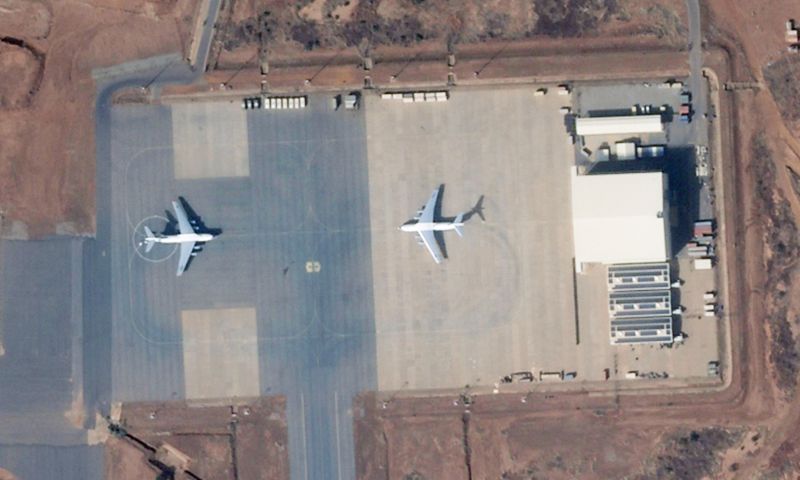
Using satellite images, AFP has established that 34 trucks arrived at Niamey airport between December 3 and 5. While the contents cannot formally be confirmed, several sources — including Wamaps, a group of west African journalists specialising in Sahel security — say it is the uranium shipment that left Arlit in late November.
The trucks remained within the military zone of the airport for nearly a month, before being moved over several days in the middle of this month.
By January 17, no trucks were visible anymore. “The cargo is entirely within the airport; it has been moved to secure locations,” a source familiar with the matter told AFP.
“It is not intended to leave the country anytime soon,” the source added.
– A risky route –
Moving goods out of landlocked Niger usually requires access to a neighbouring country’s port. Niger shares borders with Nigeria and Benin. But the junta’s relations with Abuja are tense and ties with Cotonou are even worse.
Niger accuses Benin of seeking to destabilise the country and has closed the border. That means that the most direct route via Benin’s port of Seme-Kpodji is not an option.
The alternative would be to move the “yellowcake” — a concentrate of uranium — through Togo. But that entails crossing western Niger and Burkina Faso, which is rife with jihadist violence.
The route would go through Torodi in southwestern Niger where the local prefect was killed earlier this year.
“Niger is hesitating because of growing security risks,”, the source said.
The Tillaberi region bordering Burkina Faso became the “deadliest region across central Sahel” in 2025, according to ACLED, an NGO that monitors conflicts.
– The air option –
The uranium could also be transported by air. Satellite images show two Russian-made Ilyushin Il-76 cargo planes at Niamey between January 9 and 13. But flight-tracking data analysed by AFP to identify the aircraft owners revealed no registered movements.
At this stage, the buyer of the uranium remains unknown and Moscow has not officially expressed interest in the shipment. Russian foreign ministry spokeswoman Maria Zakharova said she would “look into the matter” and would respond “without fail”, when she was asked by AFP during a briefing.
During a visit to Niamey in the summer, Russia’s energy minister declared Moscow’s “main goal is to mine uranium” in Niger.Russian atomic agency Rosatom later also signed a memorandum on civilian nuclear cooperation with Niger.
– Legal challenge –
In December, France launched a probe into the suspected theft of this uranium “in the interests of a foreign power”. Orano says the cargo still belongs to it, a claim Niamey rejects and accuses the company in turn of owing 58 billion CFA francs ($102 million) in debts and unpaid bills.
The legal case could complicate matters for any country through which the shipment might transit — starting with Togo. “This complaint has changed the balance of power,” the source said.
“Togo is now hesitating because, under its international commitments, the cargo would have to be seized immediately if it entered its territory,” the source added.On Wednesday, the French company vowed to pursue legal action against Niger, as well as against “anyone who tries to get their hands” on the stock stranded in Niamey.