COLOMBO: Sri Lanka has deployed its armed forces in a nationwide emergency campaign to curb a sharp rise in dengue infections, as hospitals struggle with a growing influx of patients and health authorities warn of mounting pressure on the system.
The office of President Anura Kumara Dissanayake announced that personnel from the army, navy and air force will be integrated into a special task force focused on locating and destroying mosquito breeding sites across the country.
Health officials say the move comes after a significant surge in cases since early June, with daily hospital admissions exceeding 1,000 at peak levels. Authorities fear the situation could worsen further if breeding conditions persist during the ongoing monsoon period.
The mosquito-borne illness Dengue fever causes high fever, severe headache, nausea, vomiting and muscle pain. In serious cases, it can lead to internal bleeding and death.
Nearly 50,000 dengue cases, 29 deaths reported this year
According to official data, nearly 50,000 cases have been recorded this year so far, along with 29 deaths. While the figures remain below the 2017 outbreak—when the country saw 186,000 infections and 440 fatalities—officials warn the current trend is concerning.
Health experts attribute the spread to stagnant water caused by heavy monsoon rains, recent flooding in several districts, and poor waste management, all of which have created ideal breeding conditions for mosquitoes, particularly the Aedes species.
The government has also announced strict enforcement measures against households and premises found to be harbouring mosquito breeding sites. A nationwide clean-up and inspection campaign is set to begin immediately.
Hospitals, both state-run and private, are reportedly under increasing strain, with health officials cautioning that capacity could soon be stretched beyond safe limits if infection rates continue to climb.
The World Health Organization has repeatedly warned that dengue and other mosquito-borne diseases are expanding geographically and intensifying due to climate change, increasing the risk of larger and more frequent outbreaks globally.
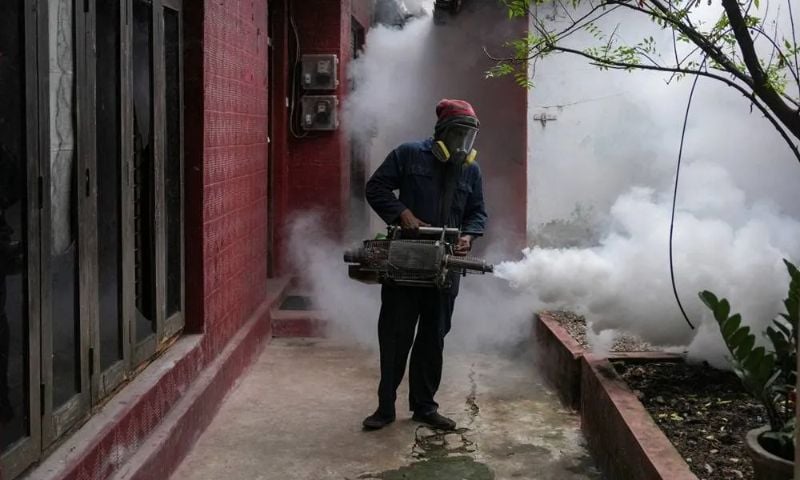
Officials say the military-led operation will work alongside civilian health teams to intensify fumigation, public awareness drives, and inspections in high-risk neighbourhoods across Colombo and other affected regions.