
DHAKA: Nobel laureate Dr. Muhammad Yunus, who is a longtime political rival of Bangladesh’s ousted prime minister Sheikh Hasina, has been named the South Asian country’s interim leader.
Deposed Sheikh Hasina’s Last Hours
Sheikh Hasina seems to have been in denial that her time was up as prime minister of the county when she called crisis security talks to end growing unrest in Bangladesh on Sunday.
Within a few hours, Sheikh Hasina would be swept away by masses power, certainly, few could have already predicted the speed of her flee. BBC cited her son that in the last moment, it was the advice of close family member instead of top security officials that convinced her to flee the country. BBC reported that she made her mind up just in time – a large number of angry protestors entered her house within a couple of hours of her absconding.
BBC reported that the National Security Committee meeting called for late on Sunday morning – brought the besieged Sheikh Hasina together with the Bangladesh’s top three military chiefs, police and security officials but the attitude was sober.
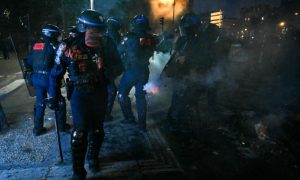
Pressure on Sheikh Hasina had been mounting for weeks as anti-government protest demonstrations raged around the South Asian country. Hundreds of people have been killed in the worst violence Bangladesh during last few days.
Only, on Sunday alone, more than 90 people have been killed, mostly protestors shot by security personnel but also a growing number of police men also killed by the protestors.
BBC Bangla reported that Sheikh Hasina wanted to keep two options open as on one side she wished to stay in power until the last minute by force while on the other side there were arrangements for her to flee the country.
According to BBC, military leadership did not agree to take action against protesters and following reviewing the situation, senior military leadership realized things were completely out of control. Similarly, individually, the military top leadership at the meeting told Sheikh Hasina that soldiers could not shoot at civilian population. She, however, would not listen but no person was willing to disagree with her to her face.
BBC reported that intelligence inputs recommended the students’ demands were gaining traction and thousands of citizens were planning to descend on Dhaka following day. So, Bangladesh’s army chief Waker-Uz-Zaman decided to speak to the prime minister again but she did not take their advice, but journalists in the capital said they could sense power was already shifting. On Monday morning, large crowds had started moving towards the country’s capital. Gen Zaman was at Hasina’s residence once again explaining to her the severity of the situation. Gen Zaman told Sheikh Hasina they could not prevent the crowd from reaching the PM’s official residence in Dhaka, for much longer. At this point, military leadership decided to call on family members to intervene and they then held discussion with Sheikh Hasina’s sister, to see if she could convince her to flee the country.
Sheikh Rehana then held talks with Sheikh Hasina but she was determined to hold on to power,” a local newspaper reported. Then Hasina’s son and daughter, who both live abroad, spoke to her via phone and insisted she should go.
A senior military official told BBC Bangla on the condition of anonymity that only the Special Security Force, the Presidential Guard Regiment and some top military officers at army headquarters knew when Sheikh Hasina signed the resignation and boarded the military helicopter that would fly her out of her house.