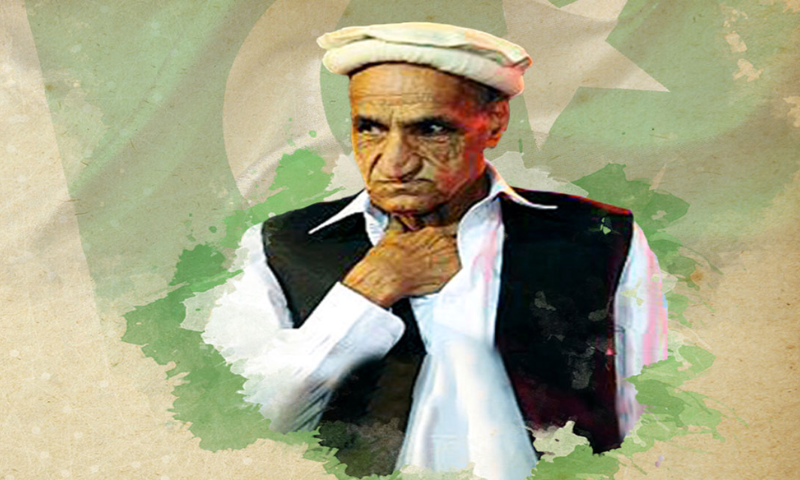
MUZAFFARABAD: The eighth death anniversary of Sepoy Maqbool Hussain has brought renewed focus on his extraordinary legacy of sacrifice and endurance, while highlighting a stark contrast with the politics of protest associated with the Joint Awami Action Committee (JAAC) in Azad Jammu and Kashmir.
Hussain, a soldier of the 4 Azad Kashmir Regiment, was wounded and captured by Indian forces during the 1965 Indo-Pakistani war.
This year, his death anniversary highlights two entirely different concepts of patriotism before the people of Azad Jammu and Kashmir: one in which a person sacrifices his entire existence for the country, and the other in which the consequences of the politics of terrorism are borne by ordinary citizens.
He spent almost four decades in Indian military prisons before returning to Pakistan on 17 September 2005 during a prisoner exchange at the Wagah border.
Hussain was captured while wounded in August 1965 and was not initially registered as an official prisoner of war.
He was subjected to severe physical and psychological abuse during his captivity, including torture intended to force him to disclose military information. He refused to reveal military secrets or abandon his allegiance.
After nearly 40 years in captivity, he returned to Pakistan in 2005.
He was later awarded the Sitara-e-Jurat for his bravery and was remembered for his resilience and commitment to duty. He died on 28 August 2018 at the Combined Military Hospital in Attock and was buried with full military honours.
His story also inspired the 2008 television miniseries Sipahi Maqbool Hussain, bringing his life to a wider Pakistani audience.
Nearly four decades of imprisonment could neither buy his loyalty nor break his resolve; he returned home with his head held high on September 17, 2005, and passed away on August 28, 2018.
He did not ask his country for unnecessary privileges, road closures or the holding of people hostage; he simply performed his duty.
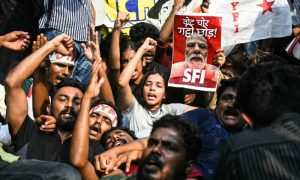
In contrast, the terrorist Action Committee has affected the lives of ordinary citizens, food supplies, medicines, education, businesses and transport through protests, blockades, clashes and attacks on government and public installations.
The people of Azad Jammu and Kashmir have to decide whether their true identity lies in the loyalty of heroes like Maqbool Hussain or in such disruptive politics that, dancing to external signals, weakens their own country and destroys the peace of ordinary people.
Sepoy Maqbool Hussain was a great son of Azad Jammu and Kashmir who proved that a true Kashmiri son stands not to take from his country, but to sacrifice everything for it; neither demanding privileges, nor blocking roads, nor using the public as a tool of pressure.
Despite being wounded in the 1965 war, captured by the Indian army and subjected to decades of mental and physical torture, Maqbool Hussain’s resolve never broke; this character, this loyalty, is true patriotism.
After returning home, following nearly four decades in Indian captivity, this hero remains a symbol of courage and perseverance around the world, because he built his identity through sacrifice, not disruption.
The terrorist Action Committee, forgetting the sacrifices of its forefathers, has today turned Azad Jammu and Kashmir into an arena of hatred and unrest.
Attacks on police, attacks on hospitals and sowing seeds of hatred among innocent people are the real agenda of the Action Committee’s hooligans.
Sepoy Maqbool Hussain continues to leave a clear standard for the youth of Azad Jammu and Kashmir: true greatness lies not in creating disorder, increasing pressure or seeking privileges, but in duty and sacrifice.