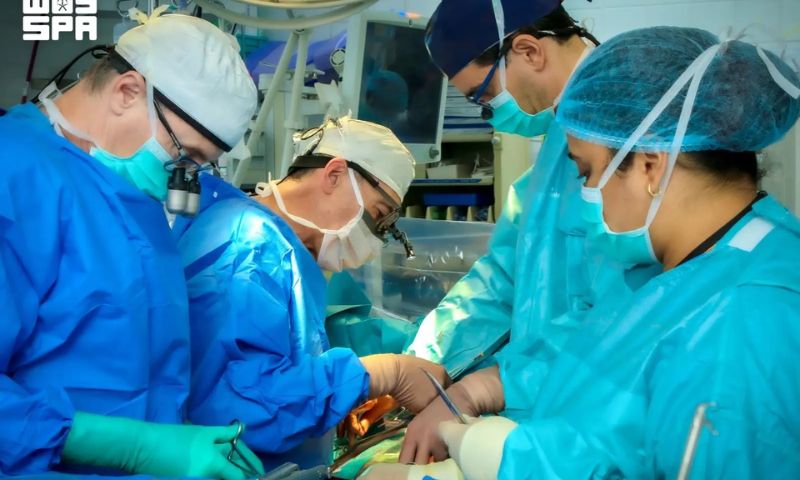
RIYADH: Saudi Arabia’s King Faisal Specialist Hospital and Research Centre (KFSH) has reduced hospital stays for children undergoing surgery for congenital heart defects by 44% through its minimally invasive pediatric heart surgery programme.
Children eligible for the procedure now spend an average of five days in hospital, compared with nine days following conventional open-heart surgery, the Saudi Press Agency (SPA) reported on Tuesday.
Launched in mid-2023, the programme allows surgeons to access the heart through a small incision between the ribs instead of dividing the breastbone, significantly reducing the impact of surgery and speeding up recovery.
#التخصصي بالرياض يخفض مدة إقامة الأطفال بعد جراحات عيوب القلب الخلقية بنسبة 44% للحالات المؤهلة للجراحة طفيفة التوغل، مقارنةً بنتائج الجراحة التقليدية.
للمزيد من المعلومات: https://t.co/74DiPu0yI2 pic.twitter.com/RZ58NcmNix
— مستشفى الملك فيصل التخصصي ومركز الأبحاث (@KFSHRC) August 4, 2026
Regional leader in minimally invasive pediatric heart surgery
KFSH said the initiative has positioned the hospital as a regional leader in minimally invasive pediatric congenital heart surgery and the only center in the region performing such procedures for left-sided congenital heart defects.
Executive Director of the Heart Centre of Excellence, Dr. Hani Al-Sergani, said the successful treatment of 54 pediatric patients demonstrates the programme’s ability to manage complex congenital heart conditions using advanced minimally invasive techniques.
He said the approach reduces trauma to the chest wall, eases post-operative pain, supports earlier breathing and mobility, and shortens recovery time, making the treatment process less stressful for children and their families.
Exceptional precision
Dr. Maryam Alomair, who leads the programme, said minimally invasive heart surgery in children requires exceptional precision because of the small size of pediatric anatomy and the complexity of operating on the heart at an early age.
Also Read: Saudi Hospital Performs Kingdom’s First Laser Interstitial Thermal Therapy Procedure
She noted that the procedures rely on close coordination among cardiac surgeons, anesthesiologists, and intensive care specialists.
Among the patients treated under the programme was a three-month-old infant weighing just four kilograms, highlighting the team’s ability to perform highly specialised procedures on even the youngest and most vulnerable patients.
Saudi health system secures four accreditations in 2026
Last month, Saudi Arabia’s health system secured four global accreditations, 27 international awards, and more than 17 certificates since the beginning of 2026.
The achievements reflect improvements in institutional efficiency, service quality, and adherence to global healthcare standards, the Saudi Press Agency reported.
They are part of the Health Sector Transformation Programme under Saudi Vision 2030, which aims to enhance the efficiency and competitiveness of the healthcare system through advanced operational and regulatory frameworks.
The developments also highlight ongoing efforts to strengthen Saudi Arabia’s standing in international health indicators and forums, and to position the Kingdom among leading countries in the global healthcare sector.