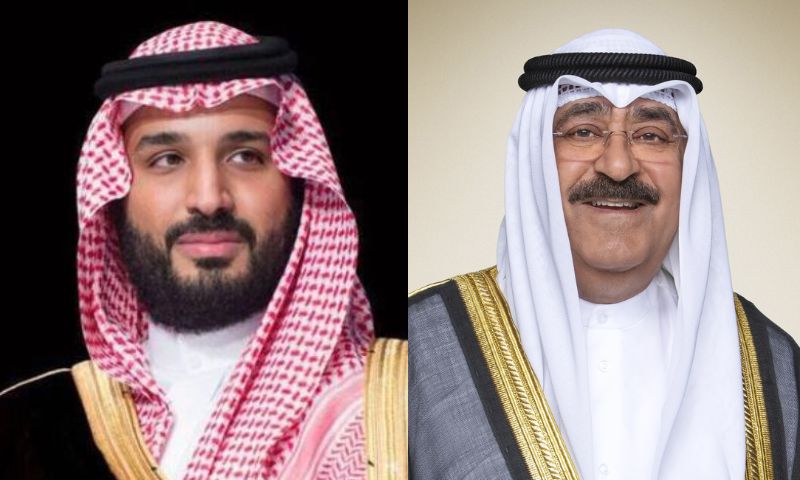
JEDDAH: Saudi Arabia’s Crown Prince and Prime Minister, Prince Mohammed bin Salman, on Wednesday held a telephone call with the Amir of Kuwait, Sheikh Meshal Al-Ahmad Al-Jaber Al-Sabah, and strongly condemned the continued and blatant Iranian attacks on Kuwaiti territory.
He expressed Saudi Arabia’s full solidarity and support for Kuwait, the Saudi Foreign Ministry said in a statement.
The two leaders also discussed the latest regional developments and ongoing efforts to achieve security and stability.
🇸🇦📞🇰🇼 | HRH the Crown Prince holds phone call with Amir of Kuwait, condemns Iranian attacks. pic.twitter.com/65XjzsSw8z
— Foreign Ministry 🇸🇦 (@KSAmofaEN) July 22, 2026
Iran launched waves of drones and missiles at Kuwait, Bahrain and Jordan on Sunday. Authorities in all three countries reported multiple rounds of attacks, while Kuwaiti officials said one strike sparked a fire at a power and water plant.
Kuwait’s Foreign Ministry expressed Kuwait’s condemnation of the “Iranian aggression” that targeted the country’s territories this morning, striking another power generation and water desalination station, facilities affiliated with the oil sector, and a number of vital installations, resulting in outbreaks of fires and the infliction of severe damage to vital installations, civilian facilities, and residential buildings.
Saudi cabinet backs Gulf allies, urges end to regional escalation
The Cabinet of Saudi Arabia on Tuesday also reaffirmed its solidarity and full support for Kuwait, Bahrain, and Jordan, backing the measures taken by the three countries in response to the blatant Iranian aggression violating international law and principles of good neighborliness.
The Cabinet stressed the urgent need to end all military escalation to protect regional stability, security, and the safety of affected populations.
Earlier on Saturday, the Saudi Foreign Ministry condemned Iranian attacks against Kuwait, Bahrain and Jordan.
#Statement | The Foreign Ministry expresses the Kingdom of Saudi Arabia’s strongest condemnation of Iran’s continued flagrant aggression against the State of Kuwait, the Kingdom of Bahrain, and the Hashemite Kingdom of Jordan, and reaffirms its full support for the brotherly… pic.twitter.com/s7Il3LMvyQ
— Foreign Ministry 🇸🇦 (@KSAmofaEN) July 18, 2026
The Kingdom reiterated its complete rejection of Iran’s attacks on civilian infrastructure and vital facilities, including a power and water desalination plant in Kuwait.
In a statement, the Ministry of Foreign Affairs reaffirmed the full support of the Kingdom for the three countries in all measures they take in response to the Iranian attacks, saying the strikes violate international law and the principles of good neighborliness.
Also Read: Saudi Arabia Condemns Iran’s Continued Aggression on Kuwait, Bahrain, Jordan
The Kingdom also stressed the need for an immediate halt to all forms of military escalation in order to safeguard the security and stability of countries across the region and protect their people.

US military redirects eight ships to enforce Iran blockade: Pentagon
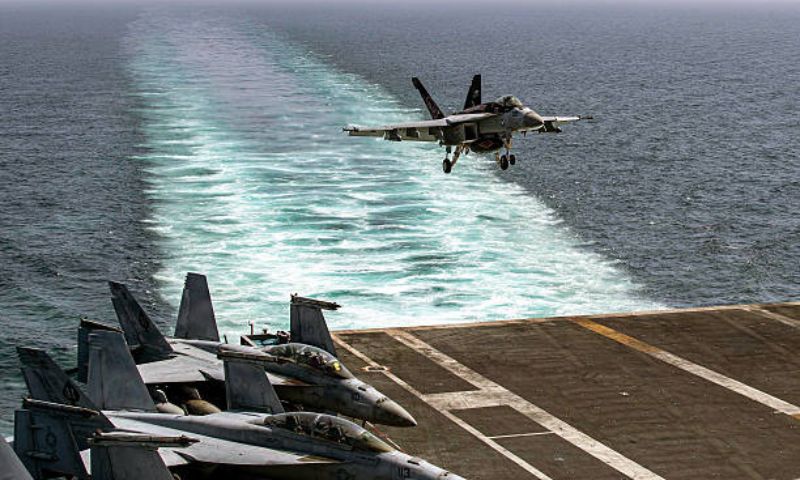
The United States military said on Wednesday that it had redirected eight commercial vessels and disabled another as part of operations to enforce its naval blockade against Iran.
Every operational success in the Middle East begins and ends with service members focused on their missions, including the U.S. blockade against Iran. As of July 21, U.S. forces have redirected 8 commercial vessels and disabled 1 to fully enforce the blockade. pic.twitter.com/e9020BcaCQ
— U.S. Central Command (@CENTCOM) July 21, 2026
In a statement posted on X, the US Central Command (CENTCOM) said its forces had taken the action to ensure the blockade was fully implemented, describing the operation as part of its ongoing mission in the Middle East.
“Every operational success in the Middle East begins and ends with service members focused on their missions, including the US blockade against Iran,” CENTCOM said.
Pakistan urges all sides to exercise restraint
Pakistan’s Prime Minister Shehbaz Sharif, expressing deep concern over the recent escalation in the Gulf region, urged all sides to exercise restraint and avoid actions that could further destabilise the region.
He said that Islamabad would continue playing the role of an “honest and sincere mediator and facilitator” amid heightened tensions in the Gulf region.
The premier reiterated Pakistan’s unwavering commitment to regional peace and stability, stressing that Islamabad would continue supporting dialogue and diplomatic engagement.
The Islamabad MoU, brokered by Pakistan, was signed in June to end hostilities between the two countries and pave the way for a lasting peace agreement to permanently end the conflict.
The Islamabad MoU was signed on June 18 by US President Donald Trump, Iranian President Masoud Pezeshkian, and Pakistan’s Prime Minister Shehbaz Sharif, following Islamabad brokered a ceasefire between Washington and Tehran.
Under the Islamabad MoU, the US and Iran committed to halt military operations, reopen the Strait of Hormuz to commercial shipping, and negotiate a comprehensive agreement covering Iran’s nuclear programme, US sanctions, and a permanent ceasefire within 60 days.