Key Points
- Shipping firms review transit routes
- Energy markets monitor maritime risks
ISLAMABAD: Commercial shipping through the Red Sea has slowed after Yemen’s Houthi movement issued fresh threats to vessels transiting the Bab al-Mandab Strait, according to maritime tracking data, raising concerns over the security of a key global trade artery.
Ship-tracking data showed a noticeable decline in traffic through the strategic chokepoint in recent days after the Yemeni group warned that ships linked to Saudi ports could be targeted.
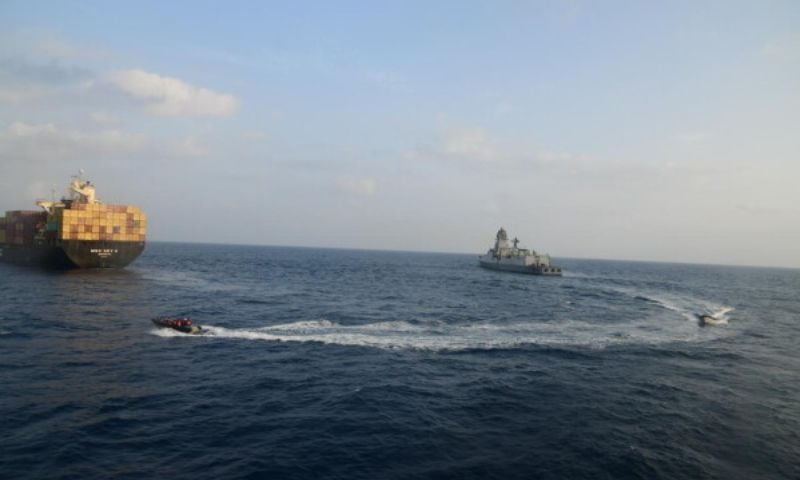
The latest Houthi threats have prompted some operators to reassess voyages through the region. Some vessels are opting for longer routes around the Cape of Good Hope to avoid potential attacks.
According to maritime intelligence firms and shipping data, vessel crossings through the Bab el-Mandeb fell to 29 on July 21, down from 44 two days earlier.
Before the Red Sea crisis erupted in late 2023, the waterway regularly handled between 65 and 72 ships per day, according to the Wall Street Journal. Several tankers carrying Saudi crude have altered course, with some opting for the Suez Canal or longer routes around Africa to avoid the heightened risk.
The Bab al-Mandab Strait, which connects the Red Sea to the Gulf of Aden, is a vital maritime passage for container traffic and oil shipments between Asia and Europe. Industry estimates indicate that roughly 12 per cent of global trade passes through the Red Sea corridor.
ALSO READ: Yemen’s Houthis Threaten to Shut Key Red Sea Shipping Route
Maritime security analysts said the latest threats have heightened concerns among shipowners and insurers, with some vessels reportedly diverting around the Cape of Good Hope despite the additional time and fuel costs involved.
The situation escalated after Red Sea shipping had notably recovered from disruptions that began in late 2023, when repeated Houthi attacks on commercial vessels forced major shipping lines to suspend transits through the area.
Although traffic had shown signs of improvement earlier this year, the renewed escalation has revived fears of prolonged disruptions to global supply chains and energy markets.
Market participants are closely monitoring developments in both the Bab al-Mandab and the Strait of Hormuz, warning that instability at either chokepoint could affect oil flows and shipping costs worldwide.
The Bab al-Mandab Strait has emerged as one of the world’s most vulnerable maritime chokepoints since Yemen’s Houthi movement began targeting commercial shipping in late 2023.
Red Sea crisis
The narrow waterway, linking the Red Sea with the Gulf of Aden and the Indian Ocean, handles roughly 10-12 per cent of global trade and a significant share of seaborne oil and liquefied natural gas shipments.
The Houthis first threatened international shipping following the outbreak of the Israel-Hamas war in October 2023. The group, which controls much of northern Yemen and is aligned with Iran, declared that it would target vessels linked to Israel in solidarity with Palestinians in Gaza.
Initially, the attacks focused on ships with real or perceived ties to Israel. However, the campaign later expanded to include vessels associated with the United States and Britain after both countries launched military strikes against Houthi positions in Yemen.
Using drones, anti-ship ballistic missiles, cruise missiles and explosive-laden boats, the Houthis carried out dozens of attacks in the Red Sea and the Bab al-Mandab Strait.
Houthi attacks have forced major shipping companies, including Maersk, MSC and Hapag-Lloyd, to suspend transits through the region.
Many vessels instead rerouted around the Cape of Good Hope, adding up to two weeks to voyages between Asia and Europe and significantly increasing fuel, freight and insurance costs.
Although a US-led multinational naval coalition helped reduce the frequency of attacks, the Houthis have repeatedly demonstrated their ability to disrupt maritime traffic.
Analysts warn that the group’s latest threats underscore how regional conflicts can quickly jeopardise critical global supply chains and energy security.