Key Points
- Digital and vocational skills open new opportunities
- Second batch of 163 women begins this week
- Initiative highlights changing role of women in South Balochistan
ISLAMABAD: In the rugged mountains of Pakistan’s southwestern Balochistan province, where economic opportunities have long been scarce, especially for women, who faced barriers to education and employment, a modest vocational training centre is quietly reshaping lives and challenging perceptions.
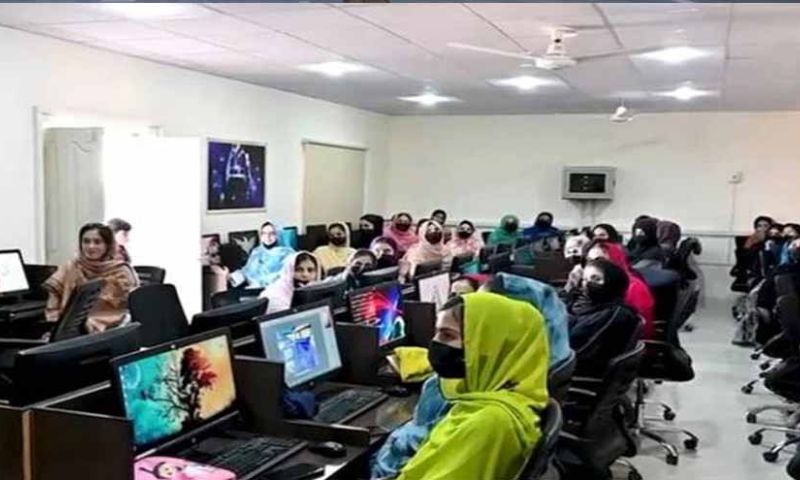
Just months after opening its doors in the remote district of Panjgur, the Women’s Skill Development Centre has produced its first class of 162 graduates.
The graduating batch is offering a glimpse into how targeted skills training can expand economic participation in one of Pakistan’s least-developed regions.
The centre, inaugurated by the Chief Minister of Balochistan on April 9, was established to provide women with vocational and digital education that can translate into sustainable sources of income.
Within three months, participants completed courses ranging from information technology and sewing to beautician training, arts and crafts, and Nazra (Reading) Quran.
For many graduates, the qualifications represent their first opportunity to acquire professional skills that can help generate an independent income.
Equipped with practical training, they are expected to launch home-based businesses, explore digital work opportunities and contribute more actively to household incomes. Beyond doubt, it is an important step in a region where female labour force participation remains limited.
The programme reflects a broader recognition that women’s economic empowerment can play a vital role in improving living standards in remote communities.
In districts such as Panjgur, where geography, limited infrastructure, and social constraints have historically restricted access to formal education and employment, particularly for women, locally delivered training programmes can help bridge gaps.
ALSO READ: Balochistan Development Drive Gains Momentum with China-Pakistan Economic Corridor-Phase-II
The momentum has already prompted expansion. A second training cycle is scheduled to begin on August 5. The next round of courses would equip another 163 women with vocational and digital skills, nearly matching the inaugural cohort.
Beyond the graduation figures, the initiative illustrates how relatively small investments in education and skills can generate wider social and economic dividends.
Pakistani women who previously had few avenues to develop marketable expertise are now better positioned to establish micro-enterprises.
They are now fully capable of providing services within their communities or accessing online work, creating new pathways for financial independence.
Development specialists have long argued that investing in women’s education and workforce participation strengthens local economies by increasing household incomes.
Such an investment empowers women to pursue better education for their children and foster resilient communities.
In Pakistan’s regions facing persistent development challenges, such programmes can also help reduce economic disparities by enhancing access to opportunity.
Although the Women’s Skill Development Centre is only in its early stages, its rapid uptake and expansion suggest growing demand for vocational and digital education among women in South Balochistan and other remote areas of the province.
If replicated across other underserved districts, similar initiatives could contribute to a gradual transformation of local economies by equipping women with skills that remain relevant in both traditional and digital marketplaces.
For Panjgur, the graduation of its first cohort marks more than the completion of a training programme.
It signals the emergence of a new generation of women prepared to turn knowledge into livelihoods and ambition into economic opportunity.
The venture offers a hopeful narrative from a region more often associated internationally with hardship than with stories of progress.
Pakistan’s largest province, Balochistan
Balochistan is Pakistan’s largest province by area but least populated and among the least developed as compared to other parts of the country.
Rich in natural resources and strategically located along the Arabian Sea, the province has long faced challenges.
Over the years, communities grew a sense of deprivation due to limited infrastructure, poverty, low literacy rates and uneven access to education and healthcare, particularly in remote districts such as Panjgur.
Initiatives focused on education, vocational training and women’s economic participation are increasingly viewed as important drivers of inclusive development in the region.