Key Points
- Pakistan’s economy expands 3.7pc in FY2025-26
- Per capita income increases by $150 to $1,901
- Industry and construction sectors remain under pressure
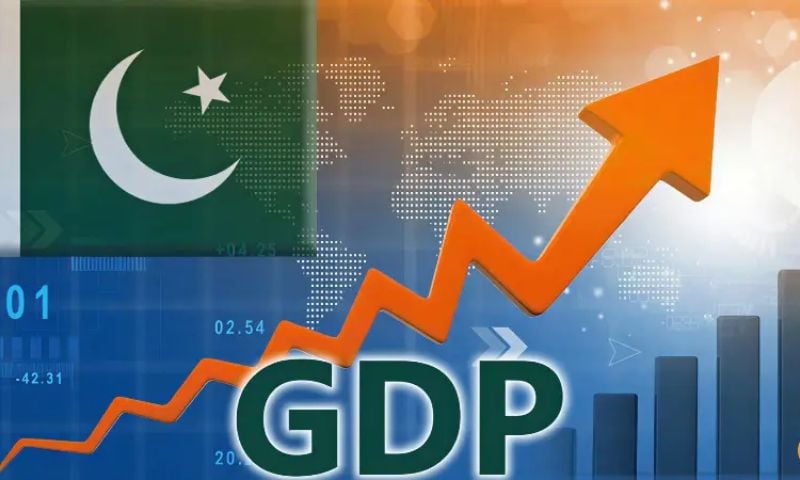
ISLAMABAD: Pakistan’s per capita income increased by $150 to $1,901 in fiscal year 2025-26 as the country’s economy expanded by 3.7 per cent, missing the official annual growth target amid continued weakness in the industry and construction sectors.
The provisional estimates were approved by the National Accounts Committee (NAC), chaired by Planning Secretary Awais Manzur Sumra. The meeting deliberated on economic data for the first three quarters of the fiscal year.
According to the Planning Ministry, the economy grew by 3.7 per cent, below the official target of 4.2 per cent and the State Bank of Pakistan’s projection of up to 4.8 per cent.
Pakistan’s economy reached Rs 126.9 trillion in size, equivalent to $452.1 billion, making it the world’s 42nd-largest economy by nominal output, according to the official estimates presented to the NAC meeting.
Per capita income increased to Rs 533,629, up by Rs 44,511 over the previous fiscal year. In dollar terms, income per person rose to $1,901 due to higher remittances, improved economic activity and a relatively stable exchange rate.
The services sector remained the largest contributor to growth, expanding by 4.1 per cent during the outgoing fiscal year. Industry grew 3.5 per cent and agriculture expanded 2.9 per cent.
Agriculture performance improved from last year’s 1.5 per cent growth, supported by increases in wheat, rice and sugarcane production.
Wheat output rose 4.6 per cent to 29.6 million tons, rice production increased 2.8 per cent to 10 million tons, and sugarcane production climbed up to 6.2 per cent to 89.5 million tons.
However, cotton production declined nominally by 0.5 per cent to 7.1 million bales, and maize output fell 2.7 per cent to 8.8 million tons.
The industrial sector remained under pressure due to high taxation, elevated energy costs, expensive borrowing and policy uncertainty, according to data compiled for the upcoming Economic Survey.
Large-scale manufacturing posted 6.1 per cent growth, supported by gains in food, petroleum products, automobiles and electrical equipment.
However, electricity and gas output contracted 10.6 per cent due to lower subsidies and weaker energy demand.
Construction sector growth slowed to 5.7 per cent from 8.8 per cent last year, reflecting continued economic stabilisation and tight capital control under the International Monetary Fund-supported reform programme.
Pakistan has pursued stabilisation policies over the past four years aimed at controlling inflation and narrowing fiscal deficits. However, economists say these measures have contributed to higher unemployment, poverty and income inequality, according to The Express Tribune.