
Key points
- Turkish Petroleum to bring seismic vessel to Pakistan
- 23 offshore blocks awarded after two-decade hiatus
- Government sees significant but unproven hydrocarbon potential
- Exploration investment could reach $1 billion
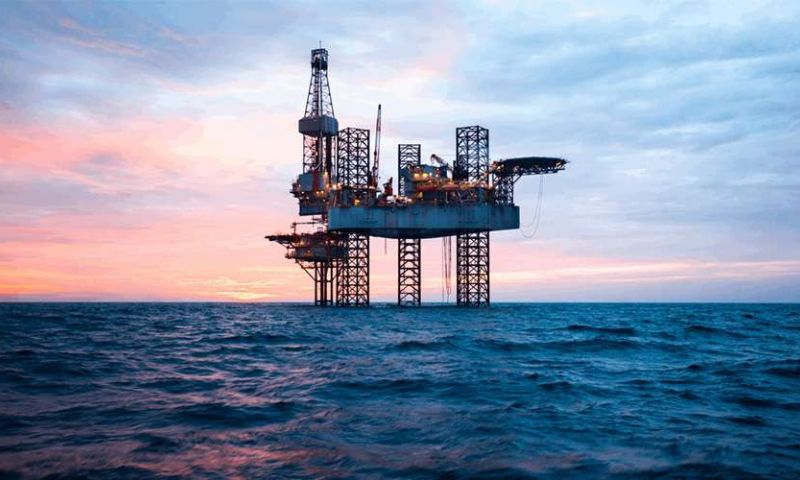
ISLAMABAD: Pakistan is set to resume offshore drilling after a 20-year hiatus, with Türkiye’s state-owned Turkish Petroleum expected to bring a seismic vessel for an exploratory expedition within the next two months.
Turkish Petroleum is one of the companies already awarded 23 offshore blocks with a petroleum concession agreement with the government of Pakistan for investment in seismic survey and drilling.
The firm is anticipated to start work in Pakistani waters in September or October, Petroleum Minister Ali Pervaiz Malik told a press conference.
“Turkish Petroleum is also bringing its seismic survey vessel to Pakistani waters,” Malik said at the conference in Lahore.
“Together with us, they are going to inaugurate offshore drilling in Pakistan, which has been suspended for 20 years, sometime in September or October.”
The return to drilling marks the next stage in Pakistan’s effort to revive an offshore exploration programme that has produced no commercial oil or gas discovery despite 18 exploratory wells drilled since independence.
Pakistan formally reopened its offshore frontier in May after nearly two decades, signing production-sharing agreements and exploration licences for 23 blocks in the Indus and Makran offshore basins.
The blocks are adjoining the territorial waters of Sindh and Balochistan, and cover about 54,600 square kilometres.
The latest exploration campaign is considerably more equipped and better financed than previous efforts.
Pakistan’s offshore area spans about 282,623 square kilometres, but activity has remained limited because of several complex reasons.
On top of them is the high cost and technical complexity of deep-water exploration, with limited geological data as well as an operational climate window available from one monsoon to another.
A government development document has previously identified the need for large amounts of risk capital and the complex geology of the offshore area as major constraints.
Earlier exploration efforts also produced disappointing results. Pakistan told its Senate in 2022 that 18 offshore wells had been drilled without discovering oil or gas reserves. The briefing to the Senate body had noted that deep-sea exploration required advanced technology and substantial financial resources. That is why initial deep-sea exploration efforts had failed.
The most prominent recent setback came in 2019, when the Kekra-1 ultra-deepwater well drilled by a consortium including ExxonMobil, Eni, Oil and Gas Development Company and Pakistan Petroleum failed to establish a commercial hydrocarbon discovery.
The result contributed to another prolonged slowdown in offshore exploration.
Pakistan commissions fresh study
The government believes conditions are now more favourable for a fresh attempt.
A recent basin study by US-based DeGolyer and MacNaughton identified significant “yet-to-find” hydrocarbon potential in Pakistan’s offshore basins.
The study prompted the government to structure a new bidding round designed to systematically test geological prospects in both the Indus and Makran basins.
The 2025 offshore bidding round attracted bids for 23 of 40 blocks offered. The successful companies committed about $82 million for the initial three-year exploration phase. The primary investment plan would include seismic data acquisition, processing and geological and geophysical studies.
In case the results justify drilling, total investment could rise to about $1 billion.
ALSO READ: Pakistan Reopens Offshore Exploration After Two Decades With $1 Billion Awards
That staged approach is important because Pakistan is still far from proving that commercially recoverable reserves exist offshore.
The initial seismic and geological work is intended to identify the most promising structures before companies commit the much larger sums required for exploratory wells.
Turkish Petroleum has a direct stake in the new campaign. Its overseas subsidiary, Turkish Petroleum Overseas Company, partnered with Pakistan’s Mari Energies and Fatima Petroleum on Offshore Deep-C and Offshore Deep-F.
The two blocks were among the first agreements executed under the new offshore programme.
According to Petroleum Minister Malik, an offshore well can cost about $100 million, compared with roughly $25 million for an onshore well, highlighting the financial risk of drilling in unexplored waters.
For Pakistan, the potential payoff is significant. The country imports around 90 per cent of its oil requirements, according to Malik, leaving it heavily exposed to international energy prices and supply disruptions.
New domestic oil or gas discoveries could reduce import dependence, strengthen energy security and attract additional foreign investment.
The government is also seeking to bring major international oil companies into the next phase. Several global energy firms are already evaluating available offshore data, the minister claimed.
The new drilling campaign, therefore, represents both an opportunity and a test.
After two decades of limited activity and a string of unsuccessful wells, Pakistan now has better geological information, a new regulatory framework and foreign participation.
But whether those improvements translate into a commercial discovery will depend on what the seismic surveys reveal beneath the seabed — and ultimately on the drill bit.