Key Points
- Vehicle exports targeted at $6 billion, auto-parts exports at $1.2 billion by 2030-31
- Proposed lower sales taxes and longer financing periods aim to accelerate electric vehicle adoption
- Export-linked incentives, localisation targets and new testing standards seek to strengthen domestic manufacturing
ISLAMABAD: Pakistan has approved a new automotive policy for 2026-31, to expand vehicle and auto-parts exports, promote electric vehicles (EVs) and strengthen domestic manufacturing through tariff reforms, tax concessions and export-linked incentives.
Prime Minister Shehbaz Sharif approved the policy, which sets a target of $6 billion in vehicle exports and $1.2 billion in auto-parts exports by 2030-31.
The framework sets mandatory export targets for manufacturers, financial incentives for companies expanding overseas sales and imposes penalties for failing to meet their commitments.
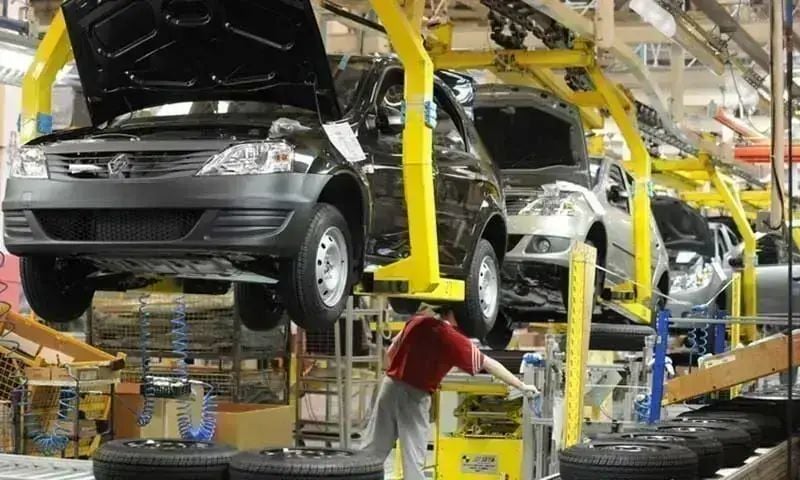
The policy seeks to shift Pakistan’s automobile industry from dependence on domestic sales towards a more competitive export-oriented manufacturing base.
Lower taxes proposed for electric vehicles
The policy proposes differentiated sales tax rates for electric vehicles rather than a uniform 18 per cent, as recommended by the International Monetary Fund.
Under the proposed framework, battery electric vehicles would attract a 1 per cent sales tax, range-extended electric vehicles 6 per cent and plug-in hybrid vehicles 9 per cent.
The policy also proposes a 10 per cent federal excise duty on the electric vehicles valued above $75,000. The framework envisages lower import tariffs for EVs, including a reduced-tariff category for smaller models priced below $15,000.
The proposed tax structure aims to make cleaner vehicles more affordable while encouraging manufacturers to expand local production.
Financing limits to increase
To improve access to electric vehicles, the policy proposes raising the maximum financing limit from Rs3 million to Rs10 million and extending the maximum loan tenure from three years to five years.
It also emphasises access to smaller, more affordable vehicles for lower-income consumers.
Import duties would be reduced gradually to increase competition in the domestic market, with the government targeting a tariff rate of 15 per cent by 2030-31.
Export incentives tied to performance
Under the proposed incentive mechanism, manufacturers who expand exports would receive compensation equivalent to 5 per cent of their export value. Exports exceeding the previous year’s level would be entitled to an additional incentive of 10 per cent
Companies that fail to achieve mandatory export targets could face financial penalties. Manufacturers missing their targets for two consecutive years could have their manufacturing certificates cancelled.
The policy also introduces targets for local production of auto parts. Companies failing to meet localisation requirements could lose government incentives.
The measures aim to encourage investment in domestic supply chains, reduce reliance on imported components and improve the international competitiveness of Pakistani-made vehicles and parts.
New levy to finance industrial development
The policy proposes an Automotive Development Levy on vehicles with engine capacities exceeding 1,000cc. The government estimates that the levy could generate more than Rs232 billion over five years.
The proceeds would support export incentives, industrial development programmes and technological upgrades for auto-parts manufacturers.
Testing institute and safety standards
The government has also approved a proposal to establish the Pakistan Automotive Testing Institute to strengthen vehicle testing, research, certification and transparency.
The policy envisages funding for research and certification, alongside independent third-party audits. International safety standards would apply to both locally manufactured and imported vehicles.
It also calls for consumer-protection provisions in vehicle sales agreements and twice-yearly audits to improve transparency. Third-party audits would additionally cover local production and export-incentive payments.
Training programmes for skilled workers are another component of the framework, reflecting the need to develop technical capabilities alongside manufacturing capacity.
Implementation will determine results
The policy’s targets will depend on implementation, investment in technology, access to affordable financing and manufacturers’ ability to meet export commitments and international quality standards.
For manufacturers, export targets and potential loss of manufacturing certificates for repeated non-compliance would enforce accountability.
At the same time, the proposed incentives could encourage investment in production capacity and locally sourced components.