ISLAMABAD: A senior official of the US Embassy in Pakistan said that the country’s vast critical minerals resources offer significant investment opportunities for both American and Chinese companies, adding that Washington is encouraging greater private-sector engagement in the sector.
During a briefing with a section of the Pakistani media on US investment in Pakistan’s critical minerals sector, the US Embassy official said the South Asian country has great potential and vast reserves of critical minerals, particularly copper, antimony and tungsten.
The Pakistani government is taking concrete steps to facilitate these projects and create opportunities for US and foreign companies in the country. Pakistan is working to remove bottlenecks for investors, and “we encourage Pakistan to make it easier for companies to come and invest,” the US official said. “As far as the security challenges are concerned, they are a reality in mining areas throughout the world, and investing companies understand the risks.”
To a question about the competing business interests of the US and China, the US Embassy official said that, from Pakistan’s perspective, it is not about giving exclusive access to either country. Pakistan is seeking investment from around the world while building a secure supply chain for critical minerals. “There are opportunities in Pakistan for US, Western and Chinese companies as well,” the official said.
The official acknowledged that security challenges in Balochistan are real but said they are part of the investment calculations. Khyber Pakhtunkhwa also faces security challenges, but mining activities have been successful there. The official noted that there are antimony deposits in Waziristan and copper deposits as well. Some American companies are also looking for critical minerals in Gilgit-Baltistan.
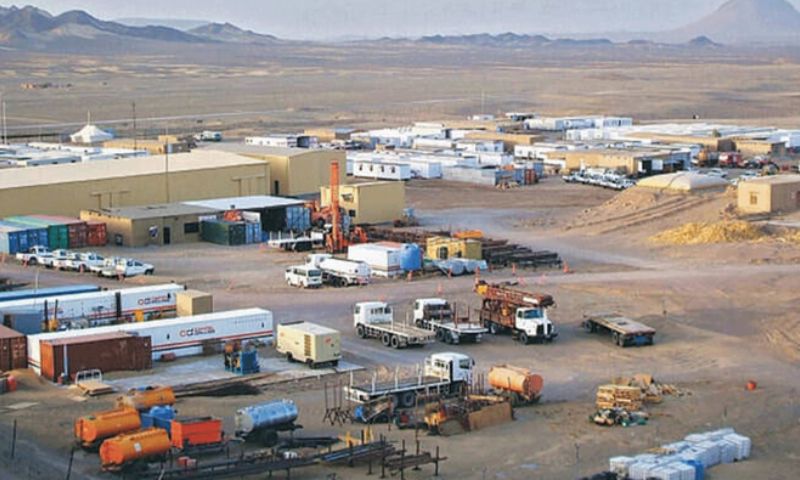
“Unfortunately, the critical minerals are not located in the easiest-to-access areas like Punjab. From a security perspective, we at the US Embassy are very honest with American companies that come here for investment, and they understand the challenges. A number of them are working with the Pakistan government on security plans and frequently coordinating with local partners on how to operate in these areas. Companies are taking those risks, and we encourage the Pakistan government to provide security for them. We are encouraging US companies to partner with Pakistani companies operating in Balochistan and Khyber Pakhtunkhwa, where these mineral deposits are located. The US Embassy helps American companies connect with the Ministry of Petroleum and the Special Investment Facilitation Council (SIFC). In the future, we are looking for partnership agreements between Pakistani and US companies,” the official said.
The US Embassy official said the Trump administration has made forging mining-sector deals around the world a key priority because of their importance to economic security, prosperity and national defence.
“We are really proud that Pakistan is joining the group of countries around the world working to establish a supply chain for critical minerals. We will continue to encourage Pakistan to provide a transparent and level playing field for US investors,” the US official said.
The US Embassy official said the Trump administration has been working to build critical mineral supply chains through initiatives such as “Project Vault”. The Export-Import (EXIM) Bank is offering $1.25 billion in financing for the Reko Diq copper and gold project. If there are other projects of a similar scale, US companies would also be interested in investing in them.
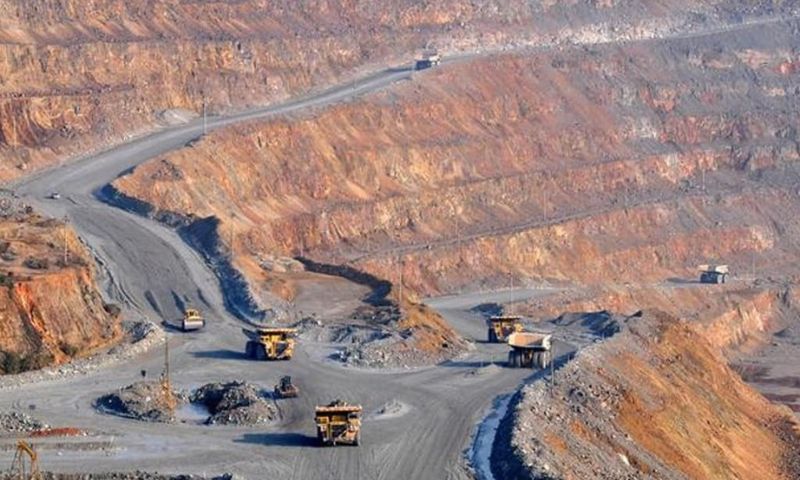
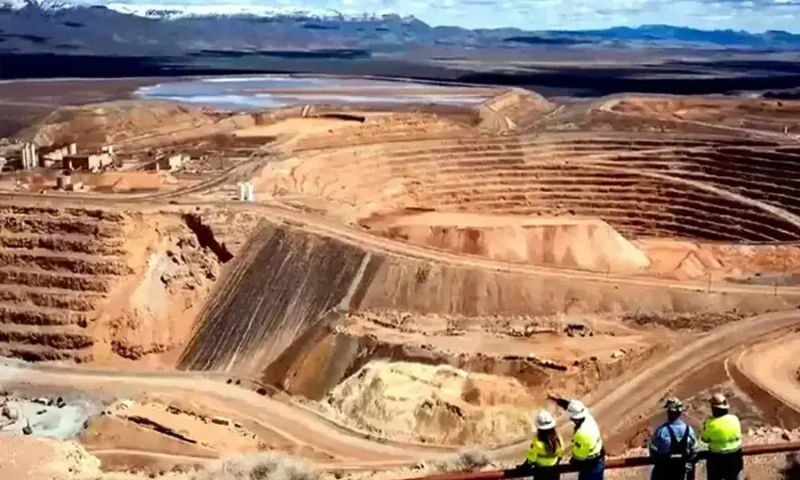
The US Embassy official said the Reko Diq project is moving forward at a slower pace than originally planned as some costs are being recalculated before the final investment package is completed. “It is normal for a copper mine anywhere in the world to take around 18 years from discovery to production. Reko Diq is not paused, but it is not moving at the pace originally planned. Once Reko Diq starts production, it will generate billions of dollars in cash flow, not only for the owners but also for local workers and the transportation sector,” the official said.
The US official said the economic section of the US Embassy has been working to advance US trade interests by increasing trade and investment through bilateral cooperation with Pakistan. Investment in Pakistan’s mineral sector could transform the country’s economy, which is why the government has focused on the sector over the past three years.
Currently, the mining sector accounts for about 3 percent of Pakistan’s GDP, while the Reko Diq copper project alone has the potential to add 0.5 percent to GDP. Exporting raw or processed minerals could also help Pakistan strengthen its foreign exchange reserves. American and other foreign companies have been showing interest in investing in Pakistan’s mineral sector, while Pakistan has been actively inviting international investors. The Pakistan Minerals Investment Forum (PMIF) has also been participating in major mining conferences in Saudi Arabia, Australia and Canada.
“We are working with American companies that are trying to invest in Pakistan. Some may begin by purchasing off-take from smaller mines in Pakistan for processing before being used in the US, while others may sell to Germany, South Korea and other countries that are part of supply chains supported by the US. Some companies are looking to acquire and develop smaller mines, while others are seeking to make significant investments in larger projects, particularly copper mines. In the next 10 to 20 years, mining could become a major sector of Pakistan’s economy,” the official said.
The US official said Pakistan has a high concentration of antimony, although the deposits are relatively small. “We are not going to develop a multi-billion-dollar project like Reko Diq for a single antimony mine,” the official added.
“There are around 60 critical minerals that are essential for modern technologies, including energy infrastructure, computing, defence industries, satellites, semiconductors and artificial intelligence. All of these require specific minerals. Demand for copper is expected to rise sharply over the next few years. There is a list of critical minerals maintained by the US Geological Survey and the Department of Energy. If you build a supply chain for these minerals, the world will depend on it for a wide range of technologies. Part of this effort also involves developing mines in the US by easing certain regulations,” the official said.
The US Embassy official said the US is partnering with countries such as Australia, Pakistan and several nations in Africa and South America to build critical mineral supply chains.
Regarding the purpose of the background briefing, the US Embassy official said the embassy is launching a year-long outreach initiative on economic issues. “This is just the beginning. We are focusing more on trade, prosperity and innovation,” the official said.