Key Points
- Pakistan targets 4 per cent economic growth next year with inflation projection at 8.2 per cent
- Economic Survey 2025–26 on 9 June.
- Public spending gap persists as Rs 1.126 trillion federal allocation falls far short of over Rs 4 trillion needs.
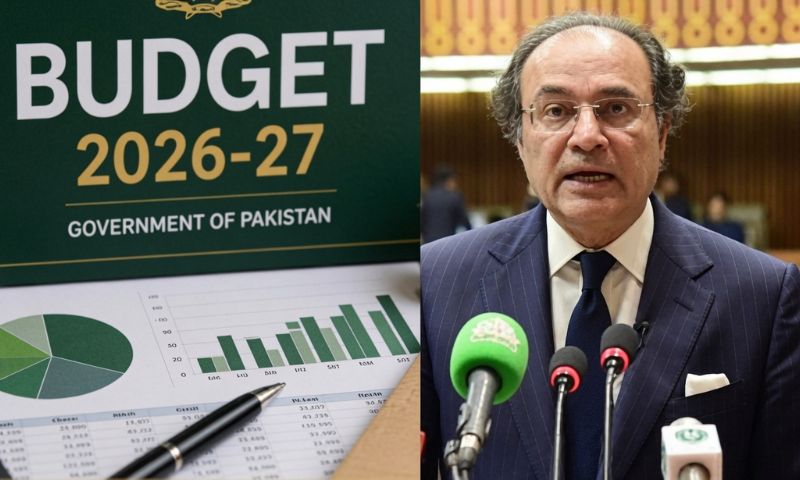
ISLAMABAD: The Federal Budget for FY2026–27 will now be presented before the National Assembly of Pakistan on Wednesday, 10 June 2026, following a brief postponement from the earlier scheduled date of 5 June.
The revised schedule was first formally confirmed in a post on X by Adviser to the Finance Minister Khurram Schehzad, marking the initial official public communication of the updated timeline.
The budget will be presented by the Federal Minister for Finance and Revenue, Senator Muhammad Aurangzeb, and is expected to outline key fiscal priorities, revenue measures, and policy directions for the upcoming financial year.
As a precursor to the budget, the Ministry of Finance and Revenue (Pakistan) will release the Pakistan Economic Survey 2025–26 on Tuesday, 9 June 2026.
The survey will provide a detailed assessment of economic performance during the outgoing fiscal year, covering growth trends, inflation, external sector, and sectoral outcomes.
Together, the Economic Survey and the Federal Budget would outline the government’s fiscal narrative for FY27, as policymakers continue to focus on macroeconomic stability, revenue mobilisation, and structural reforms.
According to official planning documents, Pakistan is targeting economic growth of 4 per cent in the next fiscal year, supported by projected expansion of 3.8 per cent in agriculture, 4 per cent in industry and 4.2 per cent in services. Inflation is projected at 8.2 per cent.
The government’s development plans, however, remain constrained by limited fiscal resources and IMF-backed budget discipline.
Planning Minister Ahsan Iqbal has publicly expressed concern about the size of the proposed federal PSDP, which stands at Rs 1.126 trillion compared to estimated development requirements of more than Rs 4 trillion.
He has warned that severe funding shortages could delay hundreds of ongoing projects and exacerbate what he described as a growing backlog of development commitments.
Despite those constraints, the government has proposed a record national development programme of Rs 4.715 trillion, comprising federal and provincial allocations as well as investments by state-owned enterprises.
Provincial development spending is projected to reach an all-time high of Rs 3.138 trillion, led by Punjab’s planned allocation of Rs 1.45 trillion.
ALSO READ: Pakistan Delays Budget as IMF Talks and Coalition Demands Persist
Federal authorities are also seeking to prioritise strategic infrastructure, transport, water and energy projects, with more than 98% of available PSDP resources earmarked for ongoing schemes.
Within the federal development programme, national highways and transport infrastructure remain among the largest beneficiaries.
Officials have also earmarked significant allocations for projects in Balochistan, Azad Jammu and Kashmir, Gilgit-Baltistan and the formerly merged tribal districts.
The budget is being prepared against a backdrop of strict IMF-mandated fiscal controls, rising debt-servicing obligations and external economic uncertainties, including concerns over higher global energy prices, following tensions in the Middle East.
Pakistan’s government argues that maintaining macroeconomic stability remains essential after years of financial turbulence. However, policymakers face growing pressure to balance fiscal consolidation with demands for higher development spending, economic growth and public welfare programmes.
The final shape of the budget is expected to provide the clearest indication yet of how Islamabad intends to navigate those competing priorities in the coming fiscal year.