



Key Points
- Report calls for urgent upgrades to handle distributed solar power
- Recommends smart metering, automation, and market reforms to boost investment
- Highlights need for quality standards, rural access, and domestic manufacturing
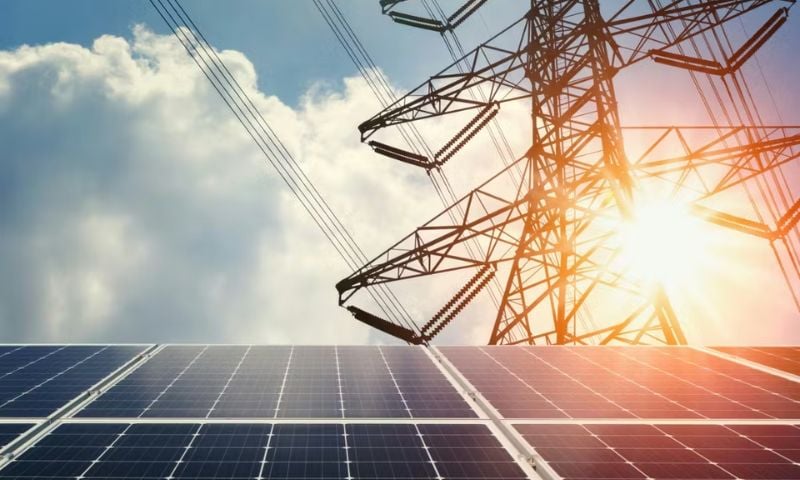
ISLAMABAD: Pakistan’s competition regulator has warned that outdated electricity grid infrastructure is holding back the country’s solar energy expansion, calling for urgent modernisation to support growing renewable capacity.
In a report titled “Unlocking Green Potential: A Market Competition Study of Solar Energy in Pakistan,” the Competition Commission of Pakistan said weak distribution systems are acting as a major bottleneck, limiting the integration of distributed solar generation.
The Competition Commission of Pakistan (CCP) said, “Outdated feeders and substations are ill-equipped to handle two-way power flows from distributed solar generation, leading to voltage fluctuations and constraining the expansion of net metering.”
The report noted that as more households and businesses install rooftop solar systems, the existing grid is struggling to manage electricity flowing both to and from the network, creating technical inefficiencies and limiting further growth.
The CCP said, “Urgent modernisation of distribution networks is essential to unlock the full potential of the solar sector and ensure reliable integration of renewable energy.”
The study identified broader structural challenges, including policy uncertainty, barriers to market entry, and limited investment incentives, which together are slowing the pace of solar adoption.
To address these issues, the CCP recommended the rollout of smart metering and grid automation technologies.
It said, “Deployment of advanced systems such as Supervisory Control and Data Acquisition and Distribution Management Systems can improve real-time monitoring, reduce losses, and enable efficient integration of renewable energy.”
The regulator also urged authorities to accelerate long-delayed power market reforms.
It said, “Fast-tracking the implementation of a competitive electricity market framework would enhance competition and allow renewable energy to be traded more efficiently.”
The report highlighted concerns about product quality and consumer protection, warning that the absence of strict standards has allowed substandard and counterfeit solar equipment to enter the market.
It recommended accredited testing laboratories, mandatory compliance with international standards, and digital verification systems.
The CCP also pointed to regional disparities in solar adoption, noting that most benefits are concentrated in urban areas.
It called for targeted subsidies, concessional financing, and off-grid solutions to expand access in rural regions.
The study emphasised the growing role of battery storage technologies in supporting renewable energy.
It said, “Incentivising solar-plus-storage systems can reduce pressure on the national grid and enhance energy reliability for industrial and commercial users.”
Amid rising global energy costs and geopolitical uncertainty affecting supply chains, the report recommended policies to reduce import dependence, including incentives for domestic solar panel manufacturing and the development of dedicated renewable energy zones.
The CCP further proposed the creation of a national solar registry to improve data transparency and support better policy planning across the sector.
The findings come as Pakistan seeks to expand renewable energy capacity to reduce reliance on imported fuels and manage rising electricity demand in a challenging global energy environment.