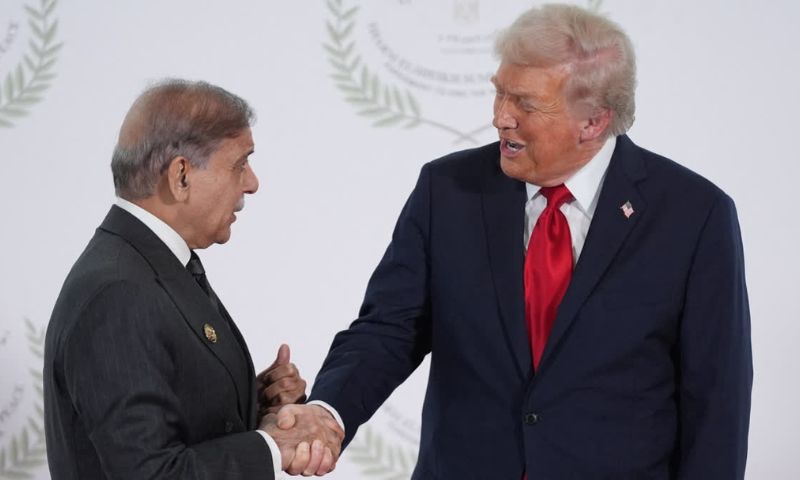
“I sincerely hope that both sides will continue to observe the ceasefire and be able to conclude a comprehensive ‘Peace Deal’ during the second round of talks scheduled at Islamabad for a permanent end to the conflict,” he maintained.
Key Points
- Shehbaz Sharif thanks Donald J. Trump for extending ceasefire with Iran
- Pakistan pledges to continue efforts for negotiated settlement
- Second round of talks expected in Islamabad
- Leadership urges both sides to uphold ceasefire
ISLAMABAD: Pakistan has welcomed the United States’ decision to extend its ceasefire with Iran. Prime Minister Shehbaz Sharif reaffirmed Islamabad’s commitment to facilitating a negotiated settlement to the US-Iran conflict.
In a statement posted on social media, Sharif thanked US President Donald J. Trump for “graciously accepting” Pakistan’s request to prolong the ceasefire, describing the decision as an opportunity for diplomacy to take its course.
On my personal behalf and on behalf of Field Marshal Syed Asim Munir, I sincerely thank President Trump for graciously accepting our request to extend the ceasefire to allow ongoing diplomatic efforts to take their course.
With the trust and confidence reposed in, Pakistan…
— Shehbaz Sharif (@CMShehbaz) April 21, 2026
He said the message was conveyed on his own behalf and on behalf of Pakistan’s army chief Asim Munir, underscoring a unified civil-military approach in ongoing diplomatic mediation efforts.
“On my personal behalf and on behalf of Field Marshal Syed Asim Munir, I sincerely thank President Trump for graciously accepting our request to extend the ceasefire to allow ongoing diplomatic efforts to take their course,” the Prime Minister wrote on his X handle.
“With the trust and confidence reposed in it, Pakistan shall continue its earnest efforts for the negotiated settlement of the conflict,” he added.
Pakistan emphasises a negotiated settlement
The prime minister said Pakistan would continue its “earnest efforts” to support a negotiated resolution, expressing confidence in the trust placed in Islamabad by international stakeholders.
He emphasised that sustained engagement and dialogue remain key to preventing further escalation in the region.
High hopes of highly likely talks in Islamabad
Sharif expressed hope that both sides would continue to observe the ceasefire and move towards a comprehensive peace agreement.
Unprecedented security and logistical arrangements in Islamabad, visible on the ground, also reveal a higher probability of not only talks but an unexpected breakthrough. Officials engaged in relevant duties and deployment also share the vibe of a breakthrough in the offing in Islamabad.
According to the Prime Minister, “a second round of talks is scheduled to take place in Islamabad, aimed at achieving a ‘permanent end’ to the conflict.
Diplomatic momentum builds
The development comes amid renewed tensions between the United States and Iran, after the Iranian side blamed US actions in the Strait of Hormuz, including blockade and halting of its ship, as the ceasefire violations.
Pakistan, not losing hope for peace, has emerged as a key intermediary seeking to bridge differences and create space for dialogue once again, as it did a fortnight ago, in mediating the 15-day ceasefire in the first place.
Analysts say Islamabad’s role reflects its strategic positioning and ability to engage with multiple stakeholders during periods of regional crisis.
Uncertain path ahead
Despite the extension, the situation remains fluid, with the ceasefire described as conditional and dependent on progress in negotiations.
Observers caution that sustained diplomatic momentum will be required to translate the temporary pause into a lasting agreement.
Pakistan works hard with both
Islamabad has intensified its mediation and peace-facilitation efforts after the US President announced the extension of the ceasefire deadline at the request of Pakistan’s civil and military leadership.
Senior officials in Islamabad said they were pursuing both parties simultaneously. “We are working with Iran to join the second round of talks with the US, which could be decisive, the officials said, requesting anonymity. “And requesting the US side to end the blockade of the Strait of Hormuz to let the talks scheduled in Islamabad proceed,” they added.