Key Points
- Vows cheaper industrial electricity and export financing
- Warns that population growth and climate change threaten long-term economic stability
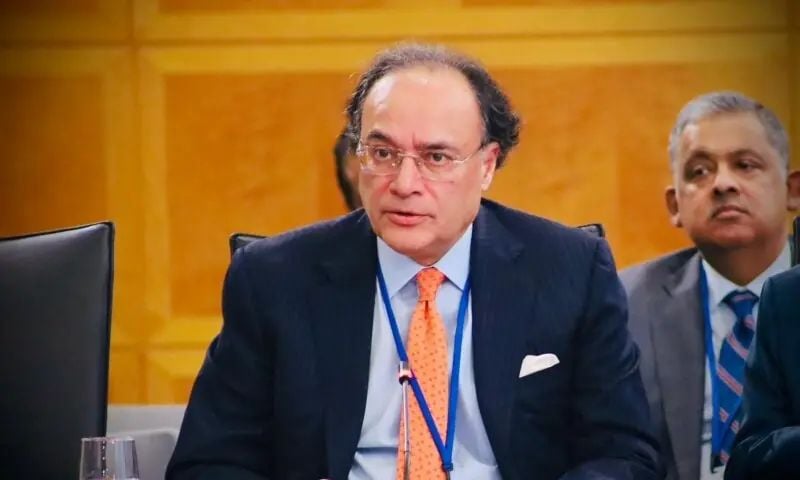
ISLAMABAD: Pakistan expects information technology (IT) exports to reach $5.5 billion and workers’ remittances to total $44 billion in the current fiscal year ending June 30, 2027, Finance Minister Muhammad Aurangzeb said.
Outlining the government’s strategy to sustain economic stability through export-led growth, structural reforms and greater private investment, he said Pakistan must break the boom-and-bust cycle.
Addressing a policy dialogue at the Lahore University of Management Sciences (LUMS), Aurangzeb said Pakistan “needed to break its recurring cycle of economic expansion followed by balance-of-payments crises, which had repeatedly forced the country into four to five years of stabilisation efforts.”
He said import-driven growth had left the economy vulnerable to external financing pressures, making higher exports, improved productivity and private-sector investment essential for sustainable expansion.
The minister said economic growth must generate employment, raise incomes and improve living standards rather than rely on short-term consumption-led demand.
Pakistan’s external position
Highlighting improvements in economic indicators, Aurangzeb said foreign exchange reserves had reached a historic high and were sufficient to cover more than three months of imports.
He said Pakistan’s credit rating had improved three times since April 2025, while the government was working to restore access to international capital markets.
The minister referred to a private placement completed in April 2026 and efforts to raise financing through Panda bonds, which are yuan-denominated bonds issued in China by foreign borrowers.
He said investor orders for Pakistan’s Eurobonds were twice the amount offered, with interest coming from Asia, the Middle East, Europe and the United States.
READ ALSO: Pakistan Finance Minister Projects Growth Above 4%
Aurangzeb said international investors were increasingly evaluating Pakistan’s economic prospects beyond its ongoing International Monetary Fund (IMF) programme, scheduled to conclude in October 2027.
Lower costs for exporters
The finance minister said the government was working to broaden the tax base, improve tax administration and reduce the cost of doing business to strengthen export competitiveness.
He also referred to export financing facilities carrying an interest rate of 4.5 per cent and discussions on supplying surplus electricity to industries at approximately Rs23 per unit.
He said lower energy costs and competitive tariffs were essential to enable Pakistani businesses to compete in regional and international markets.
He said the government intended to stimulate economic activity by facilitating investors, encouraging private-sector participation and improving the business environment.
Energy security and targeted relief
Turning to energy supplies, Aurangzeb said Pakistan had avoided major fuel shortages despite regional conflicts and disruptions in international energy markets.
On public relief, the minister said the government had shifted to targeted subsidies. He cited fuel assistance for motorcyclists, three-wheeler users and owners of vehicles with engine capacities below 800 cubic centimetres.
According to Aurangzeb, about 12 million unique individuals had directly benefited from the scheme, while the total number of beneficiaries, including family members, was estimated at 40 million to 50 million.
Population and climate challenges
The minister identified climate change and rapid population growth as major long-term challenges for Pakistan.
Referring to Bangladesh, Indonesia and Iran, Aurangzeb said these countries had reduced their population growth rates to below 1 per cent, highlighting the need for Pakistan to address its demographic challenges.
Women’s labour force participation in Pakistan stood at 22.7 per cent, he said, adding that raising the rate could contribute to productivity and economic growth.
Aurangzeb also warned that geopolitical tensions could disrupt energy supplies and drive commodity prices higher.
Pakistan therefore needed to maintain fiscal discipline and strengthen its capacity to withstand external shocks, he said.