Key Points
- Benchmark index drops more than 3,200 points in early session
- Selling pressure spreads across major sectors with volumes rising
- Oil price volatility and Iran conflict weigh on investor sentiment
- Higher interest rates and external risks intensify market weakness
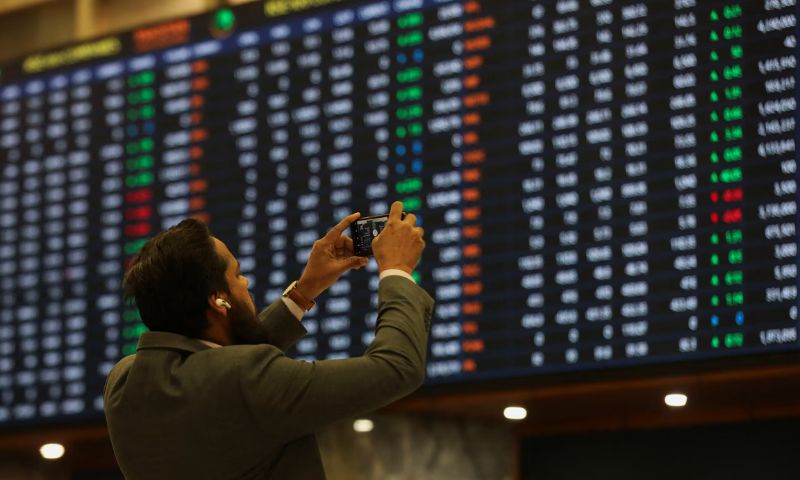
ISLAMABAD: Pakistan’s equity market came under heavy selling pressure on Wednesday, with the benchmark KSE-100 Index plunging more than 3,000 points in early trade as investors reacted to a mix of global and domestic headwinds.
According to official data from the Pakistan Stock Exchange, the index fell by 3,273.28 points, or 1.97 per cent, to 162,550.59 during early trading.
The market touched an intraday high of 164,357.47 and a low of 162,337.00, with volumes exceeding 65 million shares, according to data on the Pakistan Stock Exchange.
The sharp decline extended bearish momentum from the previous session, with selling seen across index-heavy sectors including oil and gas, banking, and cement.
Market participants said the scale of the drop reflected both profit-taking and rising risk aversion.
The sell-off comes amid heightened geopolitical uncertainty emanating from the ongoing Iran conflict and disruptions in key energy routes.
Elevated oil prices, combined with their extreme volatility, have raised investor caution, particularly in emerging markets such as Pakistan, which are sensitive to external shocks.
Recent global market analysis suggests investors are increasingly operating in a “permacrisis” environment, where geopolitical disruptions, energy shocks and policy uncertainty coexist.
In such conditions, markets may not react to individual events in isolation but remain structurally cautious, with periodic sharp corrections.
For Pakistan, the impact is more immediate. Higher global oil prices feed directly into inflation expectations, currency pressures and corporate input costs.
They prompt investors to reduce exposure during periods of uncertainty.
Domestic factors have also compounded the pressure. The recent policy rate hike has raised borrowing costs, dampening equity valuations and limiting appetite for risk assets, particularly in leveraged and cyclical sectors.
Analysts say the scale of early losses indicates fragile sentiment, with markets likely to remain volatile through the session as investors continue to track geopolitical developments and macroeconomic signals.