TEHRAN: Iran has rejected US claims that its oil infrastructure could be crippled under mounting pressure, asserting that production remains unaffected even as global crude prices climb sharply amid escalating regional tensions.
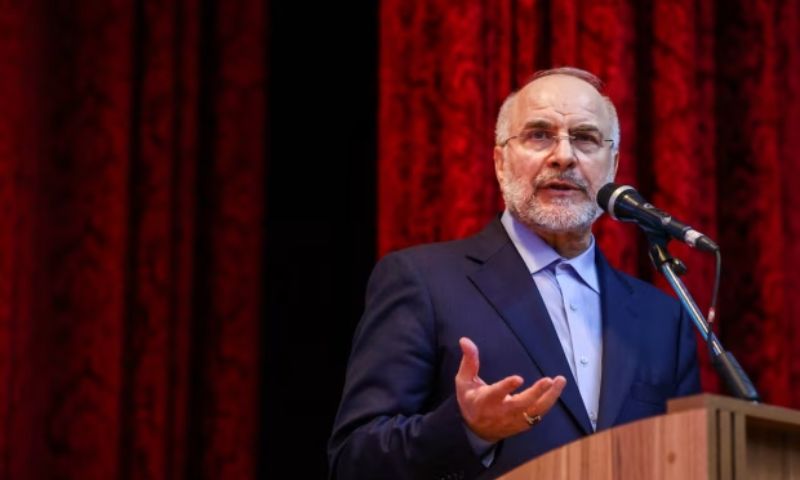
Speaking amid intensifying rhetoric, Iran’s parliamentary speaker, Mohammad Bagher Ghalibaf, publicly mocked Washington’s approach, describing it as misguided and ineffective.
3 days in, no well exploded.We could extend to 30 and livestream the well here.
That was the kind of junk advice the US admin gets from people like Bessent who also push the blockade theory and cranked oil up to $120+. Next stop:140. The issue isn’t the theory, it’s the mindset.— محمدباقر قالیباف | MB Ghalibaf (@mb_ghalibaf) April 29, 2026
His remarks came in response to warnings issued by US President Donald Trump, who had suggested that Iranian oil facilities could be severely damaged within days under a strengthened blockade strategy.
“Three days in, no well exploded,” Ghalibaf said in a pointed social media post, dismissing the credibility of US threats.
He went further, ridiculing American projections by suggesting Iran could “extend it to 30 days and livestream the well,” underscoring Tehran’s confidence that its oil output remains secure.
Ghalibaf also criticised US economic advisers, including Treasury Secretary Scott Bessent, accusing them of offering what he termed “junk advice” that has backfired by driving global oil prices higher rather than weakening Iran’s position. His comments coincided with a continued surge in international crude markets.
The benchmark Brent crude rose above $125 per barrel on Thursday morning, marking its highest level since the outbreak of the current conflict.
The sharp increase reflects growing fears of supply disruptions in the Middle East, a region critical to global energy flows.
Iranian officials have framed the price spike as evidence that US pressure tactics are not only failing but are also contributing to instability in global markets, according to media reports.
Ghalibaf suggested that prices could climb even further, warning of a potential rise to $140 per barrel if tensions persist.
The developments come amid broader geopolitical strain, with Tehran warning of “unprecedented military action” in response to what it describes as an unlawful US blockade.
Meanwhile, Washington maintains that its measures are designed to curb Iran’s regional influence and limit its economic capabilities.
Despite the heated exchanges, there has been no confirmed damage to Iran’s oil infrastructure, and exports appear to be continuing, albeit under heightened scrutiny.
As the situation evolves, markets remain highly sensitive to both military developments and political statements, with traders closely monitoring signals from Tehran and Washington alike.