


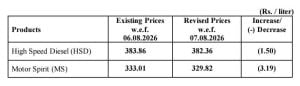
ISLAMABAD: Pakistan on Thursday reduced the prices of petrol and high-speed diesel (HSD) by Rs3.19 and Rs1.50 per litre, respectively, under its daily fuel pricing mechanism to adjust domestic rates in line with fluctuations in international oil markets.
According to a notification issued by the Petroleum Division, the ex-depot price of petrol was reduced to Rs329.82 per litre from Rs333.01, while the price of high-speed diesel was cut to Rs382.36 per litre from Rs383.86. The revised prices came into effect on Friday, August 7.
The revision comes after the government replaced its weekly fuel price review mechanism with a daily pricing system amid heightened volatility in global oil markets after the war between Iran and the United States.
Daily petrol and diesel pricing mechanism
Petroleum Minister Ali Pervaiz Malik had earlier said that the daily pricing mechanism is based on a rolling seven-day average of international oil prices to align Pakistan’s pricing framework with international standards.
The government had earlier shifted from a fortnightly to a weekly review system after the conflict in the Middle East started on February 28. It has now moved to daily adjustments to ensure domestic prices more closely reflect changes in global markets.
Under the new framework, OGRA will announce daily ex-depot prices without requiring prior approval from the prime minister or the federal government.
Prices announced on Fridays will remain unchanged on Saturdays and Sundays.
Also Read: From Brent to Arab Gulf: How Global Oil Prices Reach Pakistan’s Pumps
Despite recent volatility, fuel prices have declined significantly from the highs recorded during the Iran conflict.
High-speed diesel reached a peak of Rs520.35 per litre on April 3 after climbing from Rs281 per litre following the outbreak of the US-Iran conflict on February 28.
Petrol similarly peaked at Rs458.41 per litre on April 3 after rising from Rs266 per litre in early March.
The government had introduced weekly fuel price revisions and fuel conservation measures after the conflict disrupted energy markets. The government also announced targeted fuel subsidies in April to cushion the impact of higher prices on consumers.