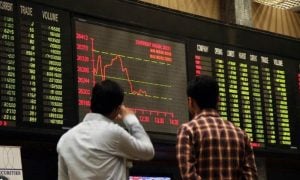



A drop in crude prices on an international exchange does not automatically mean cheaper petrol in Pakistan. Nor does a jump in Brent crude necessarily translate into an equal increase at the country’s filling stations.
The reason is simple but often misunderstood: Pakistan does not price petrol and diesel directly against Brent or West Texas Intermediate (WTI).
Its petroleum pricing system is linked primarily to the international prices of refined products in the Arab Gulf, with freight, premiums, exchange rates, taxes and domestic margins added along the way.
That distinction matters enormously for consumers trying to understand why petrol prices move — and why sometimes they do not move as much as the headline crude price suggests.
The oil benchmarks that rule the global market
Crude oil is not a single commodity with one worldwide price. Different grades are traded at different locations and are valued against regional benchmarks.
The best-known is Brent crude, the principal international benchmark and a reference for a large share of oil traded outside North America.
Brent represents a basket of North Sea crude grades and is widely used in contracts, government budgets and financial markets.
Then there is WTI, or West Texas Intermediate, the leading US benchmark.
It is a relatively light, sweet crude and is priced at the US delivery hub of Cushing, Oklahoma. WTI is therefore particularly important for the North American market.
For Asia and the Middle East, however, the story is different.
Dubai and Oman-linked crude prices are among the key benchmarks used to price Middle Eastern oil sold to Asian customers.
Other important regional grades include Abu Dhabi’s Murban and Saudi grades, but these often trade with premiums or discounts against established benchmark structures.
The distinction between crude benchmarks and refined-product benchmarks is crucial for Pakistan.
A refinery buys crude and turns it into products such as petrol, diesel, jet fuel and furnace oil.
Those products have their own international prices. In Pakistan’s case, the relevant reference is principally the Arab Gulf refined-product market assessed by Platts, now part of S&P Global Commodity Insights.
S&P Global continues to publish Arab Gulf assessments for products including gasoline, gasoil and jet fuel.
So, what does Pakistan actually import?
Pakistan imports both crude oil and finished petroleum products.
Crude is brought into the country for processing by domestic refineries, which then produce petrol, diesel, furnace oil and other products. Pakistan also imports finished products when domestic refinery output is insufficient to meet demand.
The country’s petroleum import bill, therefore, depends on several moving parts: the international price of crude, refinery economics, international prices of finished fuels, freight and insurance costs, the exchange rate, and the quantity of fuel Pakistan needs.
Official trade data identify petroleum crude and petroleum products among Pakistan’s major imports.
Pakistan’s supply chain is also heavily connected to the Gulf.
ALSO READ: Pakistan Slashes Petrol Price by Rs3.39 and Diesel by Rs4.07
The Economic Survey has previously shown major reliance on Gulf suppliers for products such as high-speed diesel, motor spirit and high-sulphur furnace oil, including supplies from Kuwait, the UAE and Saudi Arabia.
This regional dependence explains why the Arab Gulf product market, rather than Brent alone, is so important when calculating Pakistan’s domestic fuel prices.
The surprising part: Pakistan does not simply follow Brent
Suppose Brent falls by $10 a barrel.
It would be tempting to assume that petrol in Pakistan should immediately become cheaper.
But that conclusion can be wrong.
The international price used in Pakistan’s pricing mechanism is based on the relevant refined petroleum product, such as gasoline for petrol and gasoil for high-speed diesel.
The price is then converted into Pakistani rupees and adjusted for the costs of bringing that product to Pakistan.
Historically, Pakistan’s Import Parity Price (IPP) mechanism has used Arab Gulf prices published through Platts, with the actual import cost of Pakistan State Oil (PSO) cargoes also playing a role.
Government records explicitly state that domestic petroleum prices have been linked to international Arab Gulf petroleum-product prices rather than simply to Brent or WTI.
That means a consumer watching Brent on a financial news channel may be watching the wrong number for forecasting the next petrol-price announcement.
The new twist: Pakistan moves to daily pricing
Pakistan changed the mechanism in July 2026 as international petroleum markets became more volatile.
Under the revised system, the Free on Board (FOB) price for Motor Spirit (MS) and High-Speed Diesel (HSD) is calculated using a seven-working-day rolling average of Platts Arab Gulf assessments for MS 92 RON and HSD 10 parts per million.
The Oil and Gas Regulatory Authority (OGRA) is to calculate and announce the prices daily, with prices remaining unchanged on Saturdays and Sundays.
That is a significant change from the more familiar fortnightly cycle.
The purpose is to make domestic prices respond more quickly to international market conditions, rather than allowing a sharp rise or fall in global fuel prices to accumulate for weeks before reaching consumers.
What happens between the international price and the petrol pump?
This is where the price becomes much more complicated.
A simplified version of the process is:
Arab Gulf product price → exchange-rate conversion → import premium and incidentals → customs duty → ex-refinery/import price → inland freight → oil-company margin → dealer margin → petroleum levy and other taxes → consumer price
For imported fuel, the calculation can include the actual premium paid on cargoes, freight, marine insurance, port and banking costs and customs duties.
The rupee-dollar exchange rate is particularly important. Even if the international dollar price remains unchanged, a weaker rupee can increase the domestic cost of imported petroleum.
The next layer consists of domestic costs and government charges.
The Inland Freight Equalisation Margin (IFEM) helps equalise transportation costs across the country. Oil marketing companies and dealers receive regulated margins, and the government can impose the petroleum levy and other applicable taxes.
The final number at the pump is therefore not simply an oil price. It is a stack of international and domestic costs.
Why petrol can rise even when crude falls
This is perhaps the most important lesson for consumers.
Imagine crude oil prices decline, but gasoline prices in the Arab Gulf rise because refineries are experiencing tight supplies. Pakistan could still face a higher petrol pricing component.
The reverse can also happen.
Brent might rise sharply because of geopolitical fears, but if refined-product prices in Pakistan’s relevant market rise less — or if the rupee strengthens — the domestic increase may be smaller than expected.
Freight can produce another surprise.
A disruption around the Strait of Hormuz, for example, can raise shipping and insurance costs even before the underlying crude price fully reflects the disruption.
Pakistan’s Finance Division has specifically monitored international benchmark prices, cargo premiums, freight, insurance and shipping-route risks when assessing the domestic petroleum situation.
In other words, the price of oil in the ground is only the beginning of Pakistan’s petrol-price story.
The easiest way to read Pakistan’s petrol-price outlook
For someone trying to predict the next move in Pakistan’s fuel prices, the best checklist is not simply “Where is Brent?”
Instead, watch five things:
- Arab Gulf gasoline and gasoil assessments — the most direct international reference.
- Pakistan’s import premiums and cargo costs — what the country actually pays to bring fuel home.
- The rupee-dollar exchange rate — because international oil is priced in dollars.
- Freight, insurance and regional shipping risks — especially around the Arabian Gulf and Strait of Hormuz.
- Petroleum levy, margins and other domestic charges — which can amplify or cushion international price movements.
This also explains why two apparently contradictory headlines can both be correct: Brent may be falling, yet Pakistan’s petrol price may still be rising.
The global oil market has many price signals, and Pakistan listens to a particular one.
For the country’s motorists, the number that matters most is not necessarily the famous crude benchmark flashing across television screens.
It is the price of the finished fuel Pakistan needs, delivered through the supply chain, converted into rupees and then loaded with the domestic costs and government charges that ultimately determine what appears on the pump.
That is the journey from an oil market thousands of kilometres away to the price paid at a Pakistani filling station.