


Key points
- IMF chief briefed on Pakistan’s reform trajectory and macroeconomic position.
- Pakistan’s moved towards emergency structural reform, while remaining under IMF monitoring
- Pakistan’s inflation stayed within 5%–7%
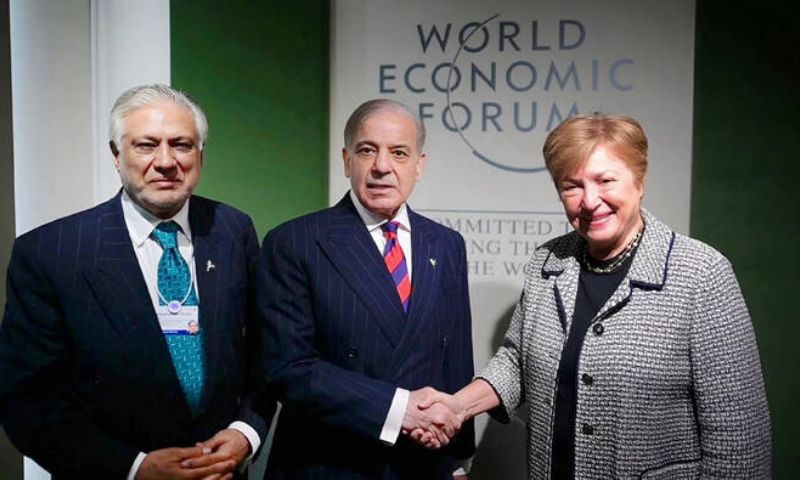
ISLAMABAD: Pakistan’s progress under an International Monetary Fund reform programme came into focus this week as Prime Minister Shehbaz Sharif met IMF Managing Director Kristalina Georgieva on the sidelines of the World Economic Forum in Davos, with Islamabad seeking to consolidate macroeconomic stability and shift from crisis management toward sustained, long-term growth.
Pakistan is operating under a $7 billion IMF stabilization program approved in September 2024, which underpins its efforts to rein in fiscal deficits, stabilize external accounts, curb inflation and restore investor confidence after repeated balance-of-payments crises. The program is widely seen as a key anchor for economic policy and external financing.
Pakistan’s emergency stabilization structural reforms
The Davos meeting comes as Pakistan’s government says it has moved from emergency stabilization toward structural reform, while remaining under close IMF monitoring. Authorities argue that adherence to program benchmarks is essential to avoiding a return to boom-and-bust cycles and maintaining access to multilateral and market financing.
“Very productive meeting with Pakistan PM,” Georgieva wrote on X. “Strong program implementation is anchoring stability and rebuilding confidence, with reforms laying the foundations for durable growth to lift living standards.”
Separately on Thursday, Sharif wrote on X that he had briefed the IMF chief on Pakistan’s reform trajectory and macroeconomic position.
Pakistan’s improving macroeconomic indicators
“Pakistan’s improving macroeconomic indicators, stabilization efforts, and progress on structural reforms,” were discussed, he said, noting that both sides “reaffirmed Pakistan’s strong commitment to fiscal discipline, revenue mobilization, and sustainable growth.”
Pakistan remains one of the IMF’s largest program countries, with officials stressing that continued compliance with reform conditions is central to safeguarding economic stability, strengthening external accounts and sustaining growth in a challenging global environment.
Pakistan’s government says macroeconomic conditions have improved over the past year under the IMF program. The consumer price inflation slowed to 5.6% year-on-year in December, while prices fell on a monthly basis, official data showed this month. Inflation eased from 6.1% in November and marked a sharp slowdown from levels that peaked above 30% in 2023, according to data.
State Bank of Pakistan rate cut
Pakistan’s central bank cut its key policy rate by 50 basis points to 10.5% last month, breaking a four-meeting hold, in a move that surprised markets.
The State Bank of Pakistan has said inflation stayed within its 5%–7% target range during the July–November period but warned that core inflation remains sticky and headline inflation could rise temporarily toward the end of this fiscal year, which ends in June, due to base effects.
Officials say foreign exchange reserves have stabilized, the current account deficit has narrowed, and exports and remittances have shown gradual recovery, allowing policymakers to shift focus from crisis management toward sustaining growth while remaining aligned with IMF reform benchmarks.