
ISLAMABAD: Pakistan’s economy has recorded a broad-based recovery in FY2026, with key indicators showing improvements in growth, inflation, fiscal management, external balances and investor confidence, according to the latest economic data released by the Ministry of Finance.
The figures paint a markedly different picture from the challenges faced during FY2022 and FY2023, when the country struggled with high inflation, shrinking industrial output, declining foreign exchange reserves and widening fiscal pressures. The latest data suggest that economic stabilisation efforts are gradually translating into growth and renewed confidence.
Growth Returns Across Major Sectors
Pakistan’s economy expanded by 3.7 per cent in FY2026, compared with a contraction of 0.2 per cent in FY2023. The recovery has been supported by stronger performance across agriculture, industry and services.
Agriculture recorded growth of 2.89 per cent despite weather-related challenges and flood impacts. Industrial growth reached 3.51 per cent, reversing the 3.9 per cent contraction witnessed in FY2023.
Large-scale manufacturing, a key measure of industrial activity, posted growth of 6.1 per cent, compared with a decline of 9.8 per cent three years earlier. The services sector remained the economy’s largest growth driver, expanding by 4.09 per cent.
The size of Pakistan’s economy has also reached a record US$452.1 billion, up from US$337 billion in FY2023, while per capita income increased to US$1,901 from US$1,547 over the same period.
Inflation Falls, Fiscal Position Strengthens
One of the most significant improvements has come in inflation. Average consumer inflation declined to 6.7 per cent during the current fiscal year, compared with 29.2 per cent in FY2023, easing pressure on households and businesses.
Public finances also showed notable improvement. The fiscal deficit narrowed to 0.7 per cent of GDP, compared with levels that had reached eight per cent in earlier years. Meanwhile, Pakistan recorded a primary surplus of 3.2 per cent of GDP, reflecting tighter fiscal discipline and stronger revenue management.
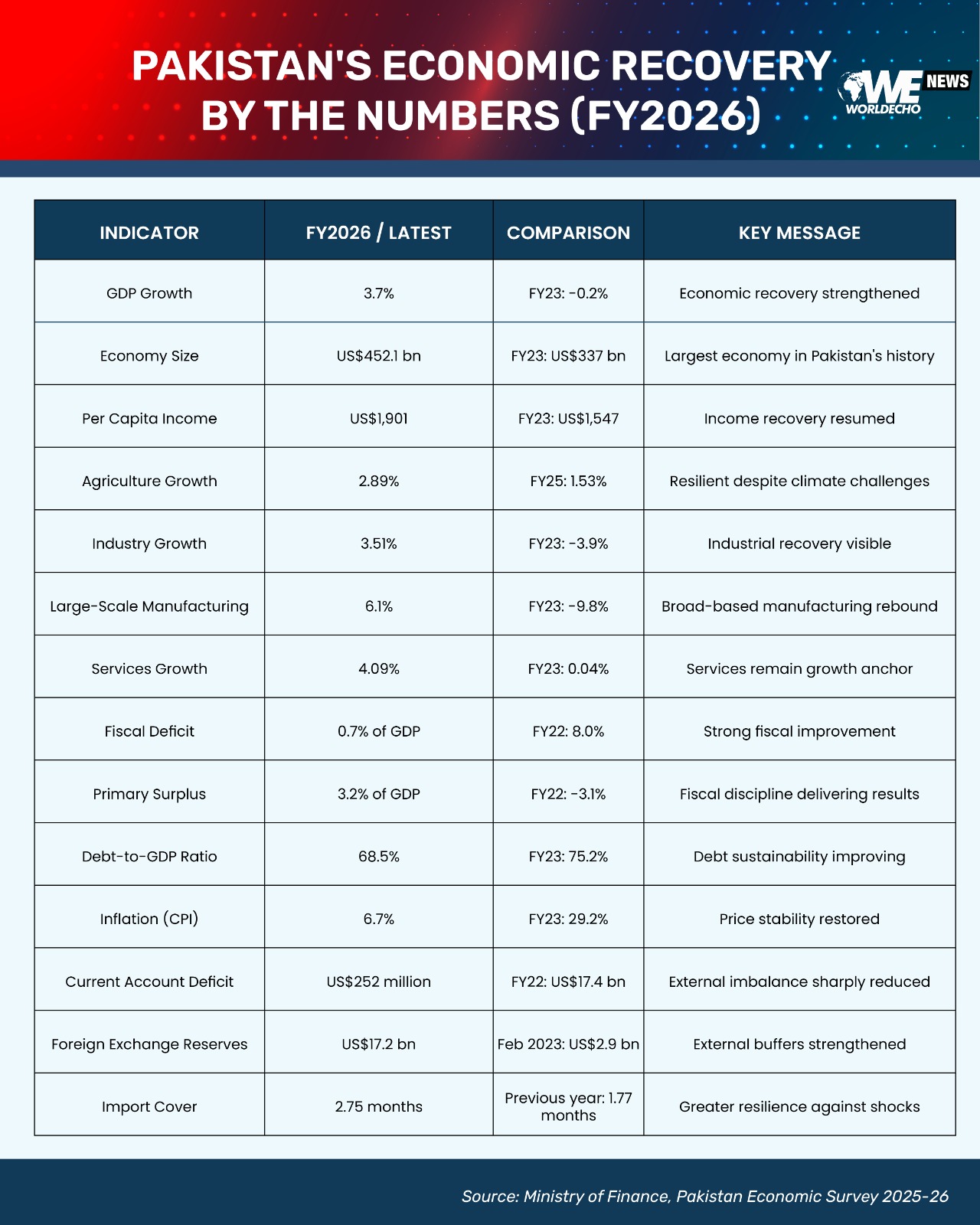
The debt-to-GDP ratio improved to 68.5 per cent, continuing a downward trend and supporting efforts to strengthen debt sustainability.
External Sector Shows Greater Resilience
Pakistan’s external position has strengthened significantly. The current account deficit narrowed sharply to US$252 million compared with US$17.4 billion in FY2022.
Foreign exchange reserves rose to US$17.2 billion by the end of May 2026, representing a substantial increase from US$2.9 billion recorded in early 2023. Import cover improved to 2.75 months, enhancing the country’s ability to absorb external shocks.
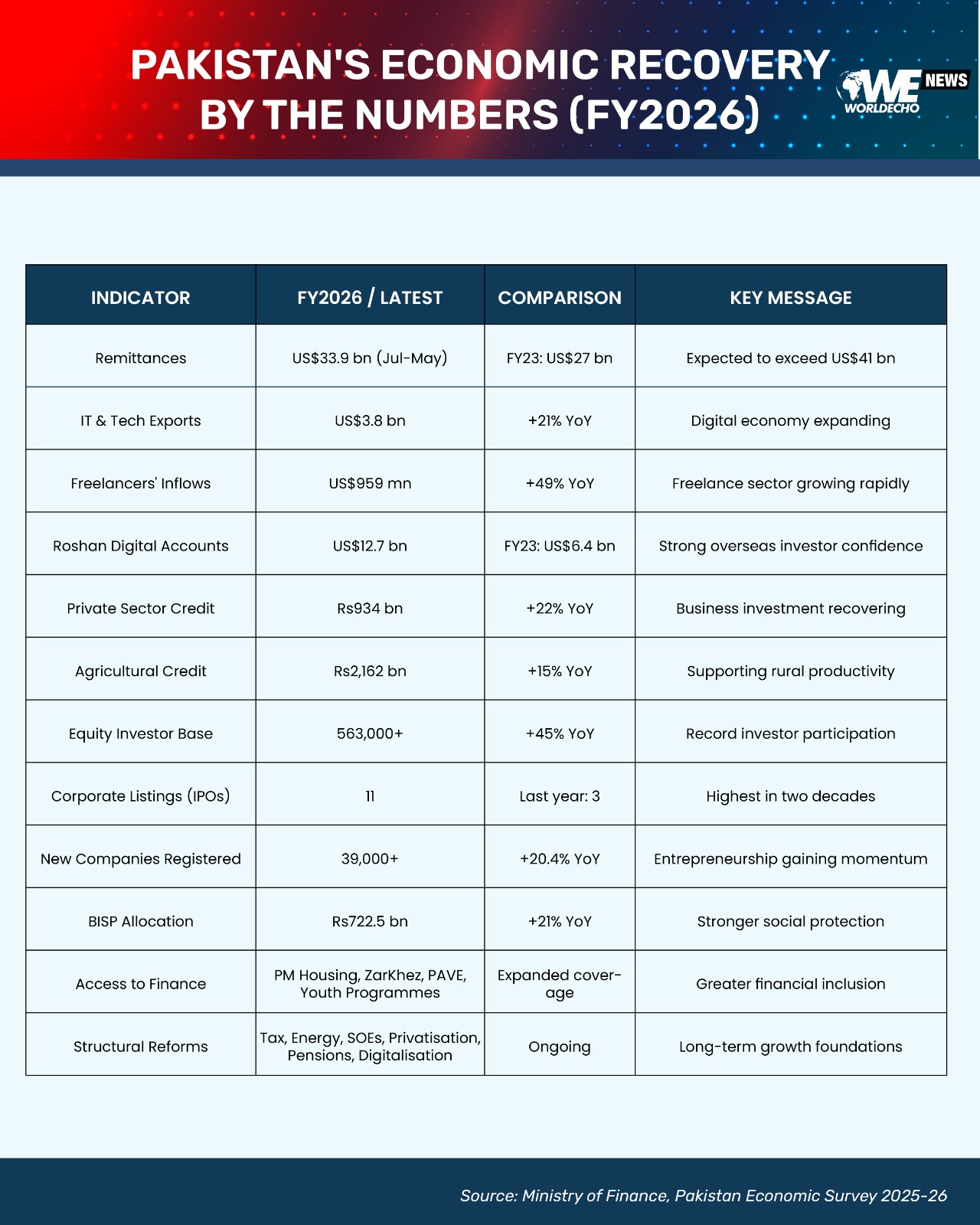
Remittances from overseas Pakistanis remained a major source of support, reaching US$33.9 billion during July-May and projected to exceed US$41 billion by the end of the fiscal year.
The digital economy also continued to expand, with IT and technology exports reaching US$3.8 billion. Freelancers’ earnings approached the US$1 billion mark, highlighting the growing contribution of Pakistan’s technology sector.
Investment and Reform Momentum
Investor confidence has strengthened alongside economic stability. The number of investors in the equity market surpassed 563,000, marking a 45 per cent increase from the previous year.
Corporate activity also accelerated, with 11 companies launching initial public offerings this year compared with three during the previous year. More than 39,000 new companies were registered, nearly all through digital processes, reflecting growing entrepreneurial activity.
Private-sector credit expanded by 22 per cent year-on-year, while agricultural lending increased by 15 per cent, supporting business expansion and rural productivity.
The government also increased allocations for the Benazir Income Support Programme to Rs722.5 billion, providing greater assistance to vulnerable households.
Officials say ongoing reforms in taxation, energy, state-owned enterprises, privatisation, pensions and digital governance are helping transform economic stability into long-term growth. Combined with stronger fiscal and external indicators, rising investment and expanding exports, the latest figures suggest Pakistan is building a more resilient foundation for future economic development.