
Key Points
- Foreign firms could store and re-export petroleum
- Islamabad would gain emergency access to fuel stocks
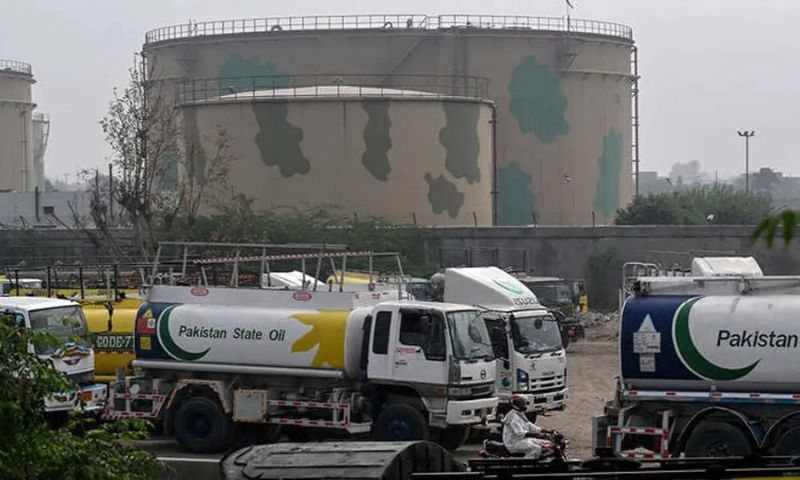
ISLAMABAD: Pakistan is planning to establish a bonded oil storage network to attract Gulf producers and international energy companies to maintain inventories for re-export.
The proposed facility would enable Gulf producers to store petroleum products in Pakistan for regional distribution and re-export. It would also ensure the country’s own energy security.
According to Petroleum Minister Ali Pervez Malik, the country’s apex economic body would take up the proposal later today (Monday) for approval.
The initiative is also intended to strengthen Pakistan’s fuel security by giving the government access to stored supplies during formally declared emergencies, without requiring it to finance and own the entire inventory.
The Economic Coordination Committee (ECC) of the Cabinet is considering revisions to the country’s bonded oil storage framework as the government seeks to make the scheme commercially attractive to foreign suppliers.
The proposed arrangement would allow foreign companies to retain ownership of petroleum products held in customs-bonded facilities in Pakistan.
Duties and taxes would generally become payable only when products are released into the domestic market.
The government hopes the arrangement will encourage Gulf producers, particularly companies from Saudi Arabia, Kuwait and Qatar, to use Pakistan as a storage and distribution base.
The scheme would cover crude oil and a range of refined and liquefied petroleum products, including petrol, high-speed diesel, jet fuel, fuel oil, liquefied petroleum gas (LPG) and liquefied natural gas (LNG).
Strategic location for oil storage
Pakistan’s ports and existing petroleum infrastructure could provide Gulf producers with access to a large domestic market and onward distribution routes.
Potential locations identified for bonded storage include Port Qasim, Karachi Port and Keamari, Hub, Gwadar, Mahmood Kot and Machike.
The proposed network could also use Pakistan’s petroleum pipeline infrastructure to move products between coastal and inland storage facilities.
For Gulf producers, the arrangement could offer a location close to major Asian markets for holding inventory before domestic sale or re-export.
READ ALSO: Pakistan to Partner with Saudi Arabia, Kuwait, Qatar on Oil Storage Scheme: Minister
For Pakistan, the government sees the project as an opportunity to develop its petroleum logistics infrastructure and attract foreign investment without requiring public financing for all the stored oil.
Disruptions to shipping through the Strait of Hormuz can affect global oil and gas markets and pose particular risks for countries heavily dependent on imported energy.
Pakistan imports a substantial share of its petroleum requirements and remains exposed to international supply and price shocks.
Emergency oil access
The proposed framework would also give Pakistan a mechanism to access foreign-owned stocks during an officially declared emergency.
Under the arrangement being considered, foreign suppliers would remain free to trade their inventories.
However, authorities would receive advance notification before the final portion of a consignment could be exported. It would allow Pakistan an opportunity to purchase the required supplies at prevailing international prices.
The mechanism would not replicate a conventional strategic petroleum reserve because ownership of most of the stored inventory would remain with foreign companies.
However, officials believe it could provide an additional buffer against sudden disruptions in international supplies and reduce the time needed to secure emergency cargoes from overseas.
Pakistan currently does not maintain a dedicated government-owned strategic petroleum reserve comparable with those operated by several major energy-consuming countries.
Existing stock requirements are largely imposed on refineries and oil marketing companies, leaving the country vulnerable to prolonged disruption in imported supplies.
Major issue of taxation.
The Federal Board of Revenue has raised concerns over provisions governing tax registration and treatment of foreign suppliers. The petroleum ministry has argued that companies should not face domestic tax liabilities on petroleum products merely because those products are being held temporarily in bonded storage for re-export.
Taxes and duties would instead become applicable when products are cleared from bonded storage for domestic consumption.