


ISLAMABAD: Pakistan’s government on Monday announced that markets and shopping malls across the country will close by 8:00 PM as part of an energy conservation initiative, with the exception of the southern Sindh province.
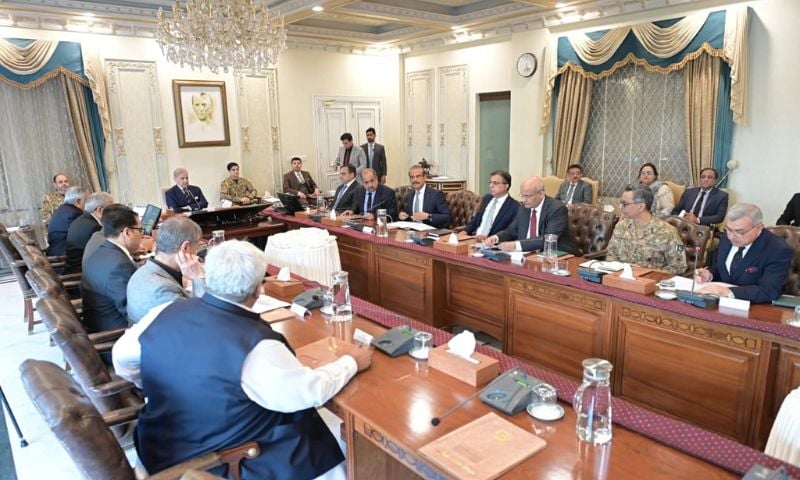
The decision was made during a meeting chaired by Prime Minister Shehbaz Sharif, according to a statement released by the Prime Minister’s Office.
Under the new regulations, markets in the divisional headquarters of Khyber Pakhtunkhwa will be permitted to stay open until 9:00 PM.
Meanwhile, consultations are still underway to determine the business hours for markets in Sindh.
The government also reviewed the closing times for markets and shopping centres in other areas of Khyber Pakhtunkhwa and Punjab as part of a broader strategy to cut down energy consumption.
اسلام آباد: 6 اپریل 2026
وزیراعظم محمد شہباز شریف نے پیٹرولیم مصنوعات ، توانائی کی بچت اور کفایت شعاری کے اقدامات کے نفاذ کے حوالےسے اہم جائزہ اجلاس کی صدارت کی. صوبہء پنجاب، خیبر پختونخوا، بلوچستان ، اسلام آباد کیپیٹل ٹیریٹری ، گلگت بلتستان اور آزاد جموں و کشمیر میں بازار،… pic.twitter.com/BEsPreuQWa
— Prime Minister’s Office (@PakPMO) April 6, 2026
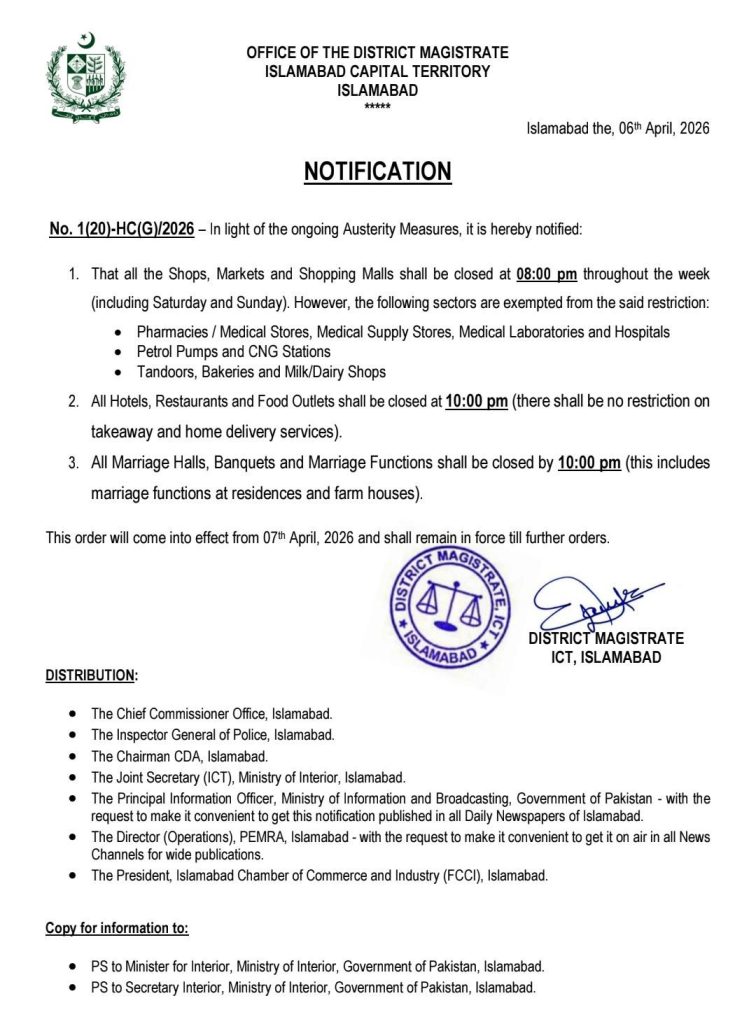
“According to the new rules, general stores, department stores, and all types of shopping malls must close by 8:00 PM.
However, bakeries, restaurants, tandoors, and other food outlets will be allowed to operate until 10:00 PM,” the statement read.
The Prime Minister’s Office further stated that the government has decided to ban weddings and other events at marriage halls, marquees, and commercial venues after 10:00 PM as part of these energy-saving measures.
“Private properties and homes will also be prohibited from hosting weddings or social gatherings past 10:00 PM.
Nevertheless, medical stores and pharmacies will remain exempt from these restrictions,” the statement added.
These measures are set to take effect from April 7.
“However, the Sindh government is still in the consultation phase regarding market timings and other operational hours.
The prime minister expressed optimism that the Sindh government, after consulting relevant stakeholders, will soon join the nationwide effort,” the statement continued.
“The meeting also provided an update on the government’s initiative to transfer subsidies for petroleum products through digital wallets. So far, a total of 100,000 transactions have been successfully processed under this program,” it said.
“PM Shehbaz further expressed confidence that the Sindh chief minister will align with the federal government’s decision after completing consultations,” the PMO statement noted.
Tensions in the Middle East have escalated dramatically following recent US and Israeli airstrikes that killed Iran’s Supreme Leader Ayatollah Ali Khamenei along with several senior officials.
In response, Iran launched attacks on US military bases across several Gulf states, significantly heightening the confrontation and raising fears of a broader regional crisis.
Amid the escalating situation, Iran also closed the Strait of Hormuz, a critical global oil transit route.
This move has disrupted fuel supplies and driven up international oil prices—developments that have severely impacted Pakistan’s economy.
In reaction, the government has introduced a series of austerity measures, including an additional weekly holiday, a reduction in free petrol allocations for ministers, restrictions on the use of protocol vehicles, and proposals for subsidised fuel schemes for students.
Last month, Prime Minister Shehbaz Sharif also announced a four-day work week and a work-from-home policy as part of broader efforts to manage the ongoing fuel crisis and ease economic pressure.