


KEY POINTS
- Engro-Vopak terminal at Port Qasim highlighted as key energy infrastructure
- Government signals support for a transparent framework for foreign investors
- Discussions include regional tensions and energy supply chain risks
- Islamabad seeks to reinforce investor confidence amid global volatility
ISLAMABAD: Pakistan and the Netherlands have reaffirmed their commitment to expanding bilateral economic cooperation, with a focus on sustaining foreign investment in critical energy and industrial infrastructure amid heightened regional uncertainty.
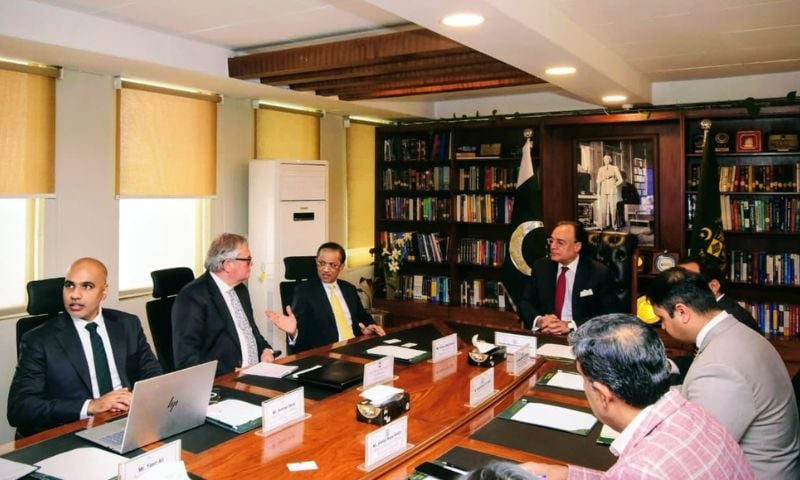
Finance Minister Muhammad Aurangzeb met Dutch Ambassador Robert Jan Siegert, along with senior executives from Engro Corporation and Engro Vopak Terminal Limited, on Wednesday, according to an official statement by the Finance Ministry.
The delegation included Engro President Ahsan Zafar Syed and EVTL Chief Executive Ammar Shah, who briefed the minister on the terminal’s operations and its role in Pakistan’s energy and industrial supply chains.
Engro Vopak Terminal Limited is a joint venture between Engro Corporation and Royal Vopak of the Netherlands.
Operating at Port Qasim since 1996, the terminal handles key chemical imports used by downstream industries and a significant share of marine liquefied petroleum gas supporting household energy demand.
Aurangzeb said Pakistan attaches importance to strengthening economic cooperation with the Netherlands.
“Partnerships with reputable international investors contribute to economic development, facilitate trade and investment and reinforce confidence within the global business community,” he noted.
The Dutch ambassador reaffirmed his country’s commitment to expanding bilateral economic ties and pointed to the presence of Dutch enterprises in Pakistan as evidence of the potential for deeper collaboration.
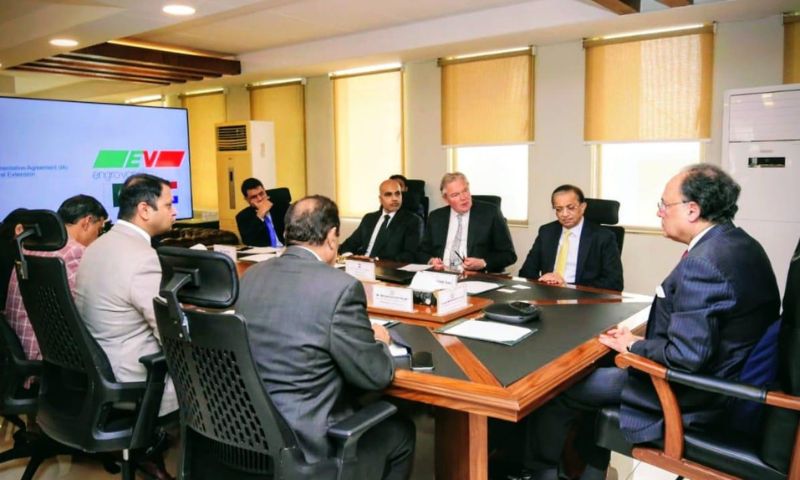
During the meeting, the Engro delegation discussed the future operating terminal arrangements.
They highlighted the importance of maintaining continuity in specialised infrastructure that underpins industrial production and supply-chain stability.
They highlighted the long-standing collaboration between Pakistani and Dutch partners and the broader contribution of such investments to Pakistan’s economic landscape.
The finance minister acknowledged the importance of ensuring that investments supporting Pakistan’s industrial ecosystem operate within a transparent and efficient framework.
He reaffirmed the government’s commitment to facilitating a supportive environment for credible foreign investment and assured cooperation in addressing matters related to ongoing economic partnerships.
The two sides also exchanged views on the evolving regional situation and its implications for energy markets and logistics.
Aurangzeb noted that the government is closely monitoring developments and remains engaged with stakeholders to ensure adequate availability of petroleum products and manage potential supply disruptions.
The engagement comes at a time when global energy markets are facing volatility linked to geopolitical tensions and strained maritime routes, prompting import-dependent economies such as Pakistan to strengthen ties with established international partners.