Key Points
- Bilal Bin Saqib meets Mastercard’s East Arabia president to discuss modernising Pakistan’s financial infrastructure.
- Discussions cover faster cross-border payments, remittances and tokenisation of financial assets.
- Pakistan seeks international partnerships to promote secure digital finance and attract investment in emerging technologies.
ISLAMABAD: Pakistan is exploring opportunities to modernise its financial infrastructure through blockchain technology and digital-asset innovation following talks between Minister of State Bilal Bin Saqib and a senior Mastercard executive.
The meeting focused on improving cross-border payments, making remittances more efficient and developing digital infrastructure to support the country’s growing economy.
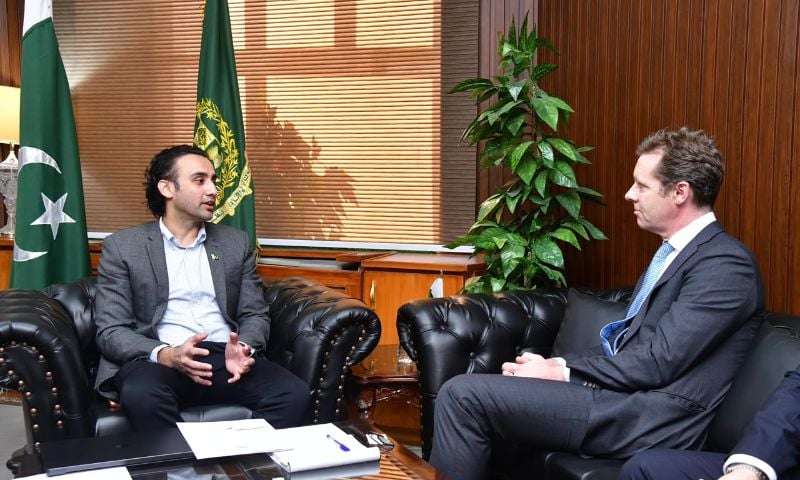
Bilal Bin Saqib, who also chairs the Pakistan Virtual Assets Regulatory Authority (PVARA), met Mark Elliott, Mastercard’s Division President for East Arabia, on Thursday to discuss cooperation between traditional financial institutions and emerging digital-asset technologies.
The discussions covered blockchain-enabled financial systems, the tokenisation of financial assets and opportunities to expand access to modern financial services.
With Pakistan receiving more than $40 billion in annual remittances, the two sides examined how next-generation payment technologies could improve the efficiency of international money transfers, particularly benefiting overseas Pakistanis, freelancers and small businesses.
Tokenisation, assets’ representation through digital tokens on a blockchain, was another area of discussion.
The technology could create new ways of issuing, transferring and managing financial assets, subject to appropriate regulatory safeguards.
Cybersecurity
The meeting also addressed cybersecurity, financial integrity and the need for regulatory frameworks that encourage technological innovation while protecting consumers and maintaining financial stability.
Speaking about his country’s ambitions, Bilal said the next generation of global financial infrastructure was being developed, and the country had an opportunity to help shape how emerging economies benefited from the transformation.
“Pakistan has an opportunity not merely to participate in this transformation, but to help shape how emerging economies benefit from it,” he said.
He added that the government’s priority was to translate technological innovation into economic benefits for citizens, businesses and the wider economy.
Bilal also stressed that the future of finance would increasingly depend on cooperation among established financial institutions, technology providers and regulators.
The engagement reflects PVARA’s efforts to develop an internationally connected, transparent and secure regulatory environment for virtual assets in Pakistan.
The authority is also seeking to build institutional capacity and promote responsible innovation in coordination with relevant national authorities, as digital financial services become an increasingly important part of the global financial system.
Pakistan’s engagement with international payment companies and technology providers could help strengthen its digital financial infrastructure, particularly in cross-border transactions and services for overseas workers and businesses.