Key Points
- Muhammad Aurangzeb holds kick-off meeting with IMF mission in Islamabad
- Review covers Pakistan’s economic performance and reform commitments through June 2026
- Talks will examine taxation, energy, fiscal policy, state enterprises and climate reforms
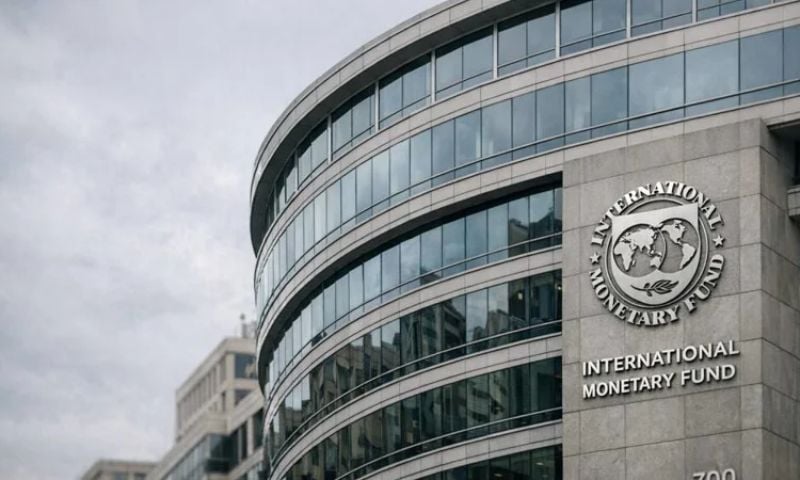
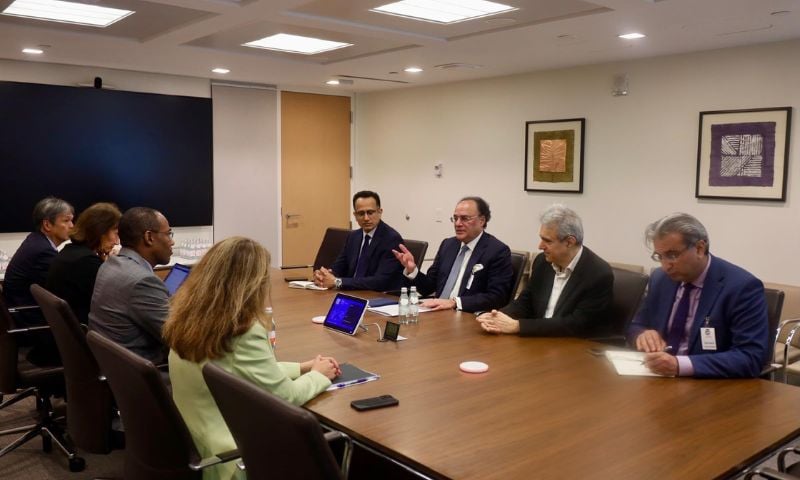
ISLAMABAD: Finance Minister Muhammad Aurangzeb on Tuesday opened the latest review of Pakistan’s IMF programmes with a kick-off meeting with the Fund mission led by Iva Petrova, as the two sides begin detailed discussions on economic performance and outstanding reform commitments.
The IMF mission is conducting the fourth review of Pakistan’s $7 billion Extended Fund Facility (EFF) and the third review of the Resilience and Sustainability Facility (RSF).
The Finance Ministry said Aurangzeb held the kick-off meeting with Petrova and her team in Islamabad, marking the start of the latest phase of discussions.
The review will assess Pakistan’s performance through June 2026 against commitments under both programmes, including fiscal targets, tax reforms, monetary policy, energy-sector measures and structural benchmarks.
Federal Minister for Finance and Revenue, Senator Muhammad Aurangzeb, today held a kick-off meeting with the International Monetary Fund (IMF) mission, led by Ms. Iva Petrova. The IMF mission is in Islamabad for the fourth review of Pakistan’s Extended Fund Facility (EFF)… pic.twitter.com/Ka0CVizrTm
— Ministry of Finance, Government of Pakistan (@Financegovpk) September 29, 2026
The mission is expected to remain in Pakistan until the first week of October. It had already met with the State Bank of Pakistan in Karachi before moving to Islamabad for talks with the Finance Ministry, Federal Board of Revenue (FBR) and other government institutions.
The review outcome will determine whether Pakistan has met the conditions for the next scheduled disbursements. Successful completion could make about $1 billion available under the EFF and another $200 million under the RSF, subject to approval by the IMF Executive Board.
Legislative agenda
Legislative and structural reforms are a significant part of the discussions
Finance Secretary Imdadullah Bosal told the National Assembly Standing Committee on Finance and Revenue last week that the IMF had sought about 174 amendments to various laws.
The proposed amendments cover taxation, energy, privatisation, state-owned enterprises, the Sovereign Wealth Fund, sugar policy, Islamic banking, remittances and climate-related reforms.
The government said it will present the proposed amendments to Parliament for consideration, with lawmakers retaining the authority to approve or reject legislative changes.
READ ALSO: Pakistan, IMF begin Talks for $1.2bn Tranche
The Sovereign Wealth Fund is expected to remain an important issue. The IMF wants governance and financial reporting arrangements for the fund, and state-owned companies under its control aligned more closely with those applicable to other government-owned entities.
Tax and fiscal reforms
Revenue mobilisation will be another major area of the review, with the FBR’s performance and tax-policy reforms expected to come under scrutiny.
The IMF programme places particular emphasis on strengthening tax administration, broadening the tax base and improving compliance as Pakistan seeks to maintain fiscal consolidation.
The review will also examine progress on the Tax Policy Office and other measures aimed at improving the structure and administration of taxation.
The National Assembly committee has previously urged the government to assess the actual economic and social impact of IMF-linked reforms rather than focusing solely on compliance with programme benchmarks.
Pakistan energy and state enterprises
The two sides would also discuss energy-sector reforms, including the power sector and its financial viability, subsidies and measures to improve the performance of state-owned enterprises.
The government’s plans for privatising power distribution companies are also expected to be reviewed.
Sugar-sector reforms could prove another area of discussion. The federal government has circulated a draft policy of liberalising the sector. However, provincial positions on the proposed framework have not been fully aligned.
Remittances are also on the agenda. The government has withdrawn subsidies that had previously exceeded Rs120 billion to facilitate remittance flows and is discussing measures with the IMF to reduce payment-system costs.
RSF and climate reforms
Alongside the EFF assessment, the IMF mission will conduct the third review of Pakistan’s RSF arrangement, which supports reforms designed to strengthen the economy against climate-related risks.
The RSF review will examine Pakistan’s progress on agreed climate-related policy measures and institutional reforms.
The IMF Executive Board completed Pakistan’s third EFF review and second RSF review in May, releasing about $1.1 billion under the EFF and $220 million under the RSF. Cumulative disbursements under the two programmes had reached about $4.8 billion at that stage.
Pakistan is implementing a 37-month EFF programme approved in September 2024 alongside a 28-month RSF arrangement focused on climate resilience.
The current review will now move into detailed technical discussions on quantitative targets, structural benchmarks and legislative commitments.
If the two sides reach a staff-level agreement, the IMF management will submit the review to the Executive Board for approval. Any resulting financing would be released only after that approval.