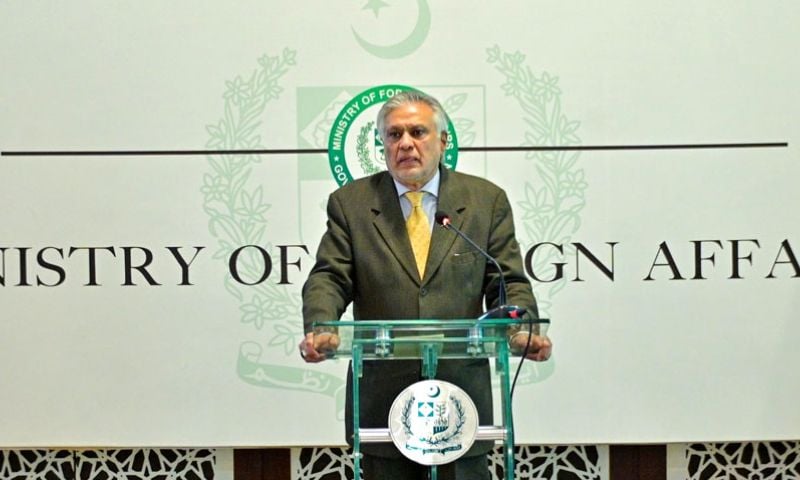
ISLAMABAD: Pakistan’s Deputy Prime Minister and Foreign Minister Ishaq Dar has said that the Shanghai Cooperation Organisation (SCO) remains a key platform for advancing peace, security, economic connectivity and shared prosperity across the Eurasian region.
The Deputy PM made the remarks while commemorating the SCO’s Silver Jubilee, marking 25 years since the organisation’s establishment, a Foreign Office statement said on Tuesday.
To celebrate the milestone, Dar joined resident ambassadors of SCO member states in Pakistan at a cake-cutting ceremony held at the Ministry of Foreign Affairs.
Reaffirming Pakistan’s commitment to multilateral cooperation, the deputy prime minister extended his congratulations to the SCO member states and underscored the importance of the organisation’s role in fostering regional stability, collaboration and sustainable development.
To commemorate the Silver Jubilee of the Shanghai Cooperation Organization #SCO, Deputy Prime Minister / Foreign Minister Senator Mohammad Ishaq Dar @MIshaqDar participated in a cake-cutting ceremony marking the SCO’s 25th Anniversary at the Ministry of Foreign Affairs… pic.twitter.com/e6AukE7NRl
— Ministry of Foreign Affairs – Pakistan (@ForeignOfficePk) June 9, 2026
He also expressed confidence that the SCO would continue to strengthen regional cooperation and contribute to the collective progress and prosperity of its member countries.
Founded in 2001, the Shanghai Cooperation Organisation (SCO) is a leading regional bloc that promotes cooperation in security, economic development, trade and connectivity across Eurasia.
The SCO comprises ten member countries, including Pakistan, China, Russia, India, Kazakhstan, Kyrgyzstan, Tajikistan, Uzbekistan, Iran, and Belarus.
Since its inception, the organisation has served as an important platform for enhancing cooperation in areas such as counterterrorism, trade, connectivity, energy, culture, and regional security.
Pakistan became a full member of the SCO in 2017, reflecting its commitment to regional cooperation and multilateral engagement.
Over the years, the organisation has expanded its agenda beyond security cooperation to include economic integration, infrastructure development, and people-to-people exchanges.