Key Points
- Pakistan’s business community warns that wind power curtailment is causing heavy financial losses for renewable energy investors.
- Grid transmission constraints are preventing low-cost wind electricity from reaching consumers.
- Federation calls for urgent government intervention to protect clean energy investments and strengthen energy security.
ISLAMABAD: Wind power is facing bottlenecks in Pakistan, as the business federation has warned that persistent curtailment of wind power generation is threatening the viability of the country’s renewable energy sector.
According to the Pakistani chambers federation, the wind power buyback rate and generation curtailment are increasing electricity system costs and undermining efforts to strengthen energy security through indigenous clean energy resources.
The Federation of Pakistan Chambers of Commerce and Industry (FPCCI) said its Central Standing Committee on Renewable Energy has expressed serious concern over the growing suppression of electricity generation from wind power plants.
They pointed out, particularly, a crisis brewing in the country’s main wind energy corridor located in southern Pakistan.
FPCCI President Atif Ikram Sheikh said transmission infrastructure constraints and delays in grid upgrades were causing substantial financial losses for investors.
The situation is also preventing some of the country’s cheapest electricity from reaching consumers.
“Grid infrastructural failures are inflicting billions in revenue losses, driving green energy investors toward bankruptcy,” Sheikh said. “By discouraging wind energy, the government was forcing inflation-weary consumers to bear the burden of expensive imported fuel,” he added.
Power transmission bottlenecks
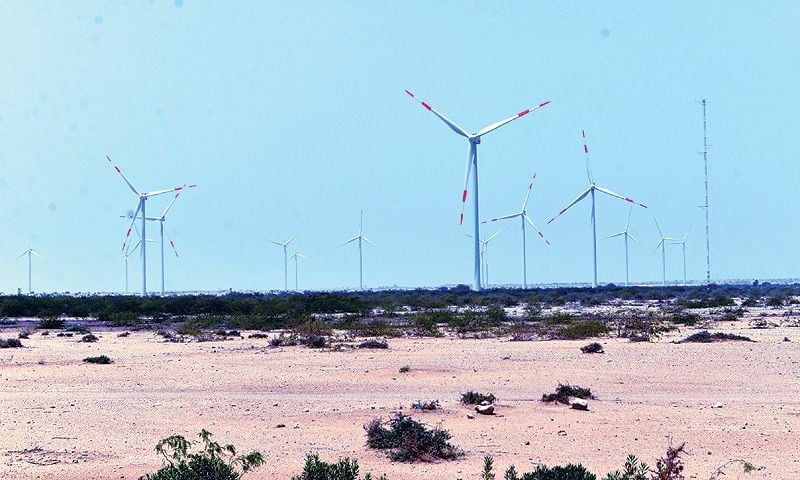
Pakistan’s principal wind power projects are concentrated in the Gharo-Jhimpir corridor in Sindh province. This is an area which is regarded as one of South Asia’s most promising wind energy zones.
Over the past decade, the country has attracted significant domestic and foreign investment into wind farms as part of efforts to diversify its energy mix and reduce dependence on imported fossil fuels.
According to FPCCI, sovereign commitments had been made to remove transmission bottlenecks and expand evacuation infrastructure to accommodate growing renewable energy capacity.
However, the federation said the National Grid Company and the Independent System and Market Operator have repeatedly failed to complete the required network upgrades.
As a result, wind power plants are frequently instructed to reduce generation despite being fully operational and capable of supplying electricity to the national grid.
The federation argued that these constraints are particularly troubling at a time when Pakistan continues to face power shortages in some regions. The country remains heavily dependent on imported fuels, including liquefied natural gas and coal, for electricity generation.
Low-cost electricity being rejected
FPCCI highlighted what it described as a major contradiction in the country’s power sector management.
According to the federation, electricity generated from wind projects costs around Rs 14 per unit, making it one of the most affordable sources of power available to the national grid.
It added that under regulatory tariff mechanisms, electricity produced beyond benchmark generation levels can fall to less than Rs 1 per kilowatt-hour.
Despite these low costs, the business body said system operators continue to curtail renewable generation and rely on more expensive thermal power sources that often require imported fuel.
Energy analysts have long argued that maximising the use of domestic renewable resources could help Pakistan reduce its import bill, ease pressure on foreign exchange reserves and lower overall electricity costs for consumers.
Investor confidence at risk
The federation warned that continued curtailment is eroding investor confidence in Pakistan’s renewable energy sector. The country is already seeking new investment to meet growing electricity demand and climate-related commitments.
It also criticised the existing Non-Project Missed Volume compensation mechanism, saying it allows renewable energy producers to recover only a fraction of losses incurred when generation is curtailed despite plants being fully available to produce electricity.
According to FPCCI, the current framework compensates only about 38 per cent of lost revenues, leaving project developers exposed to significant financial risks.
The business body cautioned that prolonged uncertainty could discourage future investment in renewable energy projects and undermine Pakistan’s transition toward a cleaner and more sustainable energy system.
Calls for immediate government action
FPCCI urged the Prime Minister’s Office, the Ministry of Energy and the National Electric Power Regulatory Authority to intervene immediately to address the issue.
The federation called for the enforcement of “must-run” status for wind power plants. It is a policy mechanism commonly used in many countries to ensure that renewable energy generation receives priority dispatch whenever available.
It also demanded accountability for delays in transmission upgrades, reforms to compensation mechanisms for curtailed projects and measures to redirect available renewable electricity into the national grid.
Additionally, FPCCI warned that plans to expand electricity market liberalisation through the Competitive Trading Bilateral Contract Market and wheeling arrangements could face serious challenges if transmission constraints remain unresolved.
The federation maintained that resolving grid bottlenecks would not only support investor confidence but also strengthen Pakistan’s energy security, reduce dependence on imported fuels and help lower electricity consumer prices.