Monitoring Desk
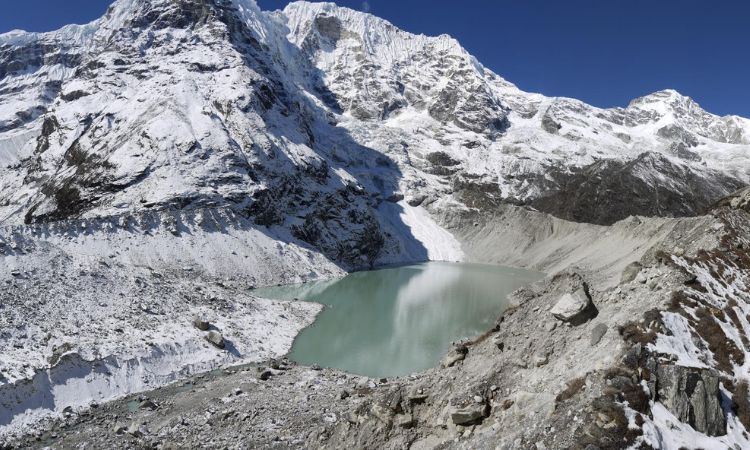
ISLAMABAD/WASHINGTON: Researched have warned that glaciers were melting at an alarming rate across the globe, including in Pakistan’s Gilgit-Baltistan region, risking glacial lack outburst flood (GLOF).
“This is known as a glacial lake flood outburst, and the roughly 15 million people who live within 30 miles of a glacial lake are at risk,” according to a study published Tuesday in the journal Nature Communications.
It said that more than half were concentrated in four countries: India, Pakistan, Peru and China.
Impact of glacial lake outbursts
It is the first study to examine the potential impact of glacial lake outbursts, which experts say must be balanced. According to Tom Robinson, a study’s co-author and senior lecturer at the University of Canterbury in New Zealand, a glacial lake outburst is similar to a “inland tsunami.” He compared the effect to a sudden collapse.
According to Robinson, glacial dams are no different than constructed dams. Take the Hoover Dam, for example, which has a massive lake behind it. If the Hoover Dam is removed completely, that water has to go somewhere, cascading down a valley in huge flood waves.
These floods occur with little to no warning. Thousands of people have been killed in previous glacial lake outbursts, and property and critical infrastructure have been destroyed. The Cordillera Blanca in Peru is a hotspot for this dangerous phenomenon. Researchers discovered that the mountain range had experienced more than 30 glacier disasters, ranging from avalanches to glacial lake outbursts that have claimed more than 15,000 lives since 1941.
Pakistan’s G-B at high risk
While it is unclear how much of last year’s flooding in Pakistan was caused by glacial melt, the country has more glaciers than any other country outside of the Polar Regions. According to scientists, at least 16 glacial lake outburst incidents occurred in the country’s northern Gilgit-Baltistan region in 2022, significantly more than the five or six events seen in previous years.
According to the study, High-Mountains Asia is most vulnerable to these outbursts, including Nepal, Pakistan, and Kazakhstan. According to scientists, every person in this region lives within six miles of a glacial lake.
However, Robinson stated that the Andes region, which includes Peru and Bolivia, was one of the most concerning due to the need for more research in the area. According to the study, glaciers in the Andes have melted rapidly due to the climate crisis over the last two decades, leaving behind massive glacial lakes and increasing the threat of outburst flooding.
Because fewer people live in the vicinity of glacial catchments, North America and the European Alps could stand out more vulnerable, according to Robinson. Despite the hazards in these areas being relatively high, he claims that the lack of exposed populations gives them a “low danger score.”
David Rounce, a glaciologist at Carnegie Mellon University who was not involved in the study, said the study’s global comparison is “powerful,” and it will be fascinating to see how the risk from glacial lake meltdowns, as well as emergency management strategies, evolve over time.
Robinson added that once investments are made in the most vulnerable countries, such as India, Pakistan, Peru, and China, “we can work our way down that list and keep working our way down” to save even more lives from bursting glacial lakes.