WASHINTON: Oil prices climbed to a four-year high after US President Donald Trump warned that a blockade of the Strait of Hormuz could last for months, raising fears of prolonged global supply disruptions.
Speaking after a meeting with oil executives, President Donald Trump said a United States naval blockade of Iran could continue for months, sending oil prices to their highest level in more than four years.
Trump described the blockade of Iranian ports as more effective than direct military strikes. A White House official said discussions focused on stabilising global energy markets while sustaining pressure on Tehran with minimal impact on US consumers, reports AFP.
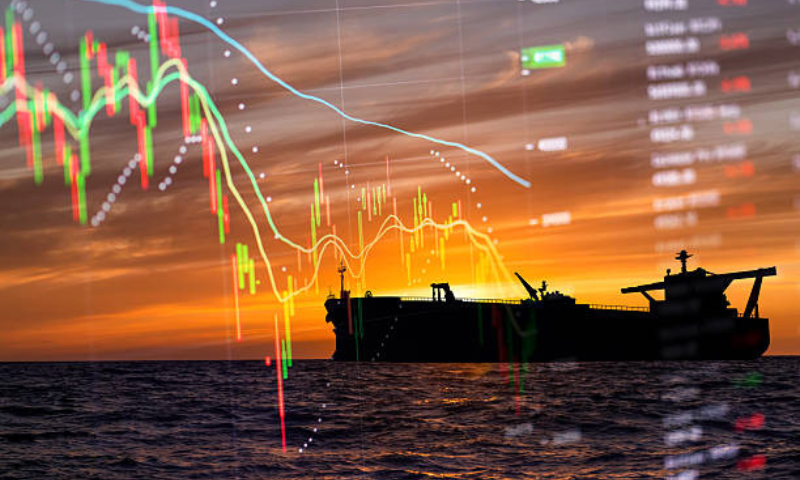
International oil prices surged sharply in real-time trading on Thursday, with Brent crude rising above $125 per barrel as markets reacted to escalating supply disruption risks linked to the Strait of Hormuz.
Brent crude climbed to around $125.3 per barrel in the latest session, marking a gain of more than 6% from the previous close and hitting its highest level since 2022.
US West Texas Intermediate (WTI) advanced to near $109–110 per barrel, reflecting strong upward momentum across global benchmarks, according to Reuters.
Iran has also restricted shipping through the strait, which has been effectively disrupted for weeks since the conflict began on February 28 following US and Israeli strikes.
Tehran has warned that vessels approaching the strait could be targeted, while Washington has said its forces would intercept or turn back ships travelling to or from Iranian ports.
Oil markets have experienced sharp swings since the onset of the conflict.
Trump held a phone call with Russian President Vladimir Putin, who warned of “damaging consequences” if the United States and Israel escalate military action against Iran.
Tehran has demanded an end to the blockade as a precondition for any negotiations. In response, Washington has expressed scepticism over Iran’s proposals, including easing its grip on the Strait of Hormuz — a critical oil transit route through which roughly one-fifth of global supply passes.
Mounting pressure at home and abroad
The conflict has intensified political pressure on Trump domestically, with rising fuel prices weighing on American consumers and unease growing among US allies.
Trump also criticised German Chancellor Friedrich Merz, threatening to reduce US troop deployments in Germany over Berlin’s refusal to support military efforts or contribute to a maritime peacekeeping mission.
The United Nations Development Programme (UNDP) has warned that the conflict could push more than 30 million people into poverty across 160 countries, citing rising energy and fertiliser costs.
“It’s development in reverse,” UNDP chief Alexander De Croo said.
Inside Iran, the national currency has plunged to record lows against the US dollar, compounding economic hardship.
Regional tensions persist
Iran’s parliament speaker, Mohammad Bagher Ghalibaf, accused the United States of attempting to destabilise the country internally through the blockade.
Meanwhile, violence has continued along Lebanon’s southern front despite a ceasefire between Israel and Hezbollah. The Lebanese army reported casualties from Israeli strikes, while President Joseph Aoun called for a return to negotiations, stressing that security cannot be achieved through continued attacks.
A UN-backed report warned that more than 1.2 million people in Lebanon could face acute hunger as the conflict’s humanitarian impact deepens.