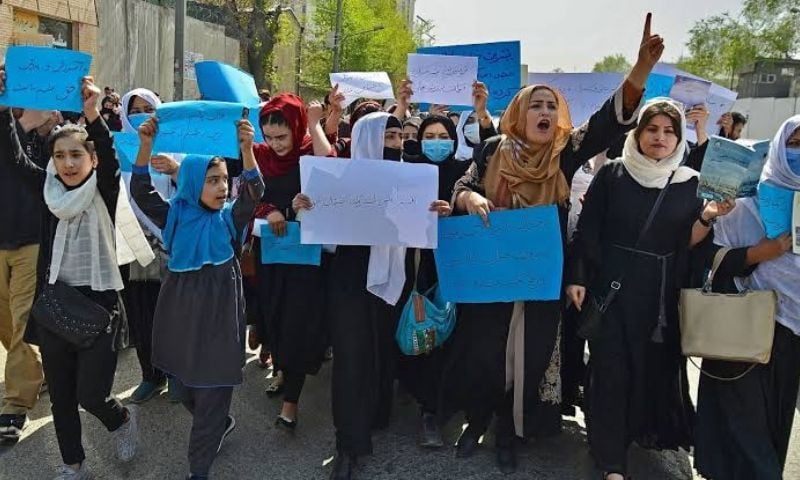
KABUL, Afghanistan: More than 2.6 million girls in Afghanistan have been denied secondary education since the Taliban returned to power five years ago, UNICEF said, as Amnesty International described the Taliban regime as “five years of injustice” for Afghan girls.
UNICEF said Afghanistan remains the only country in the world where secondary and higher education is effectively closed to girls and women. It called on the Taliban regime to immediately lift restrictions and allow girls and women to return to schools and universities.
Afghan girls have been barred from formal education beyond sixth grade since September 2021, shortly after the Taliban returned to power in August of that year. The Taliban regime later barred women from universities in December 2022.
“Five years may be brief in a country’s history, but it is a defining period in a girl’s life,” UNICEF Executive Director Catherine Russell said.
UNICEF warned that keeping girls out of classrooms increases their exposure to child labour, early marriage, violence and abuse. The consequences also extend to Afghanistan’s health, education and economy, the agency said.
A UNICEF analysis released in April estimated that restrictions on girls’ education and women’s employment are costing Afghanistan at least $84 million a year in lost economic output. It also projected that the country could lose as many as 20,000 women teachers and 5,400 female health workers by 2030 if the restrictions continue.
Amnesty International, meanwhile, described the five years since the Taliban’s return as a period of repression and worsening restrictions on women and girls.
The rights group has documented their exclusion from secondary and university education, restrictions on employment and public life, and limits on freedom of movement and expression.
In a statement marking five years of the education restrictions, Amnesty called the period “five years of injustice,” saying millions of girls have been denied an education and seen their aspirations disrupted.
The group said Afghan girls have continued to resist the restrictions, including by pursuing alternative forms of education, and called for international pressure on the Taliban regime to reopen schools.
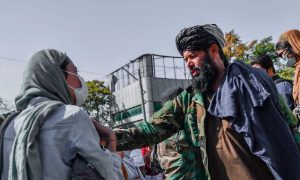
The education restrictions are part of a broader series of the Taliban regime’s measures affecting Afghan women and girls. Women have also been excluded from many forms of employment and face extensive restrictions on their movement and participation in public life.
UNICEF said restoring access to education is essential not only for Afghan girls but also for the country’s long-term development.
“Denying Afghan girls access to secondary education robs an entire nation of its potential,” Russell said in an earlier UNICEF assessment, warning that the restrictions risk deepening poverty and weakening Afghanistan’s health and education systems.