
Key Points
- Opium production surged nearly fivefold to almost 1,500 tonnes.
- Poppy cultivation expanded 330 per cent to 43,000 hectares.
- Three-quarters of poppy cultivation shifted to northeastern Afghanistan.
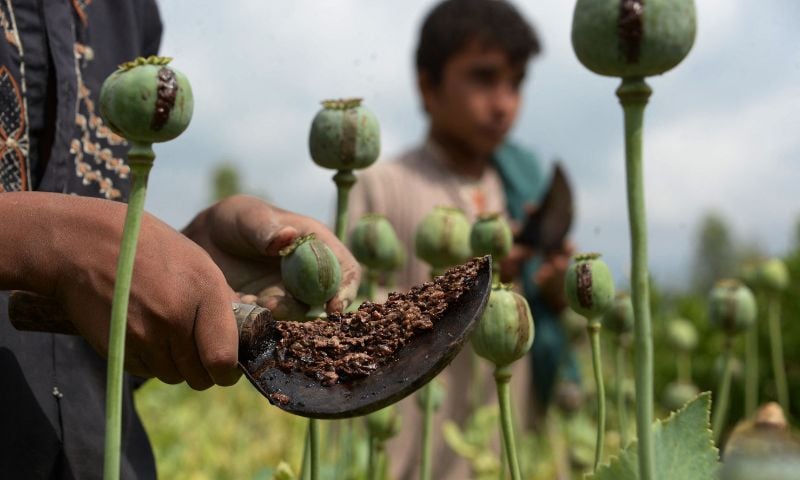
ISLAMABAD: Afghanistan’s opium production increased nearly fivefold in 2026 as farmers returned to poppy cultivation despite the Taliban’s nationwide ‘narcotics ban’, with growing economic hardship and inadequate alternative livelihoods undermining efforts to eliminate the country’s illicit drug trade, the United Nations Office on Drugs and Crime (UNODC) has reported.
The area under opium poppy cultivation increased by 330 per cent to more than 43,000 hectares in 2026, compared with approximately 10,200 hectares in 2025, according to the UNODC’s Afghanistan Opium Survey 2026. Estimated opium production rose by 400 per cent to just under 1,500 metric tonnes, up from approximately 300 tonnes in the previous year.
Although the latest figures remain substantially below pre-ban levels, the sharp increase represents the first significant resurgence in cultivation since the Taliban imposed its nationwide prohibition in April 2022. Afghanistan was the world’s largest source of illicit opium for decades, accounting for approximately 80 per cent of global supply before the Taliban returned to power in August 2021.
Despite a Taliban ban on opium production in Afghanistan since 2022, production has risen fivefold in a year, says a new @UNODC survey.
https://t.co/5bxtPsVSsW
— UN News (@UN_News_Centre) October 29, 2026
The Taliban announced a ban on poppy cultivation and narcotics in April 2022, citing religious grounds. The restrictions prohibited the cultivation, production, trafficking and use of narcotics. The crackdown initially produced a dramatic decline in cultivation. According to UNODC, the area under poppy cultivation fell by approximately 95 per cent in 2023, from around 232,000 hectares in 2022 to just 10,800 hectares.
Opium production also collapsed from approximately 6,200 tonnes in 2022 to 333 tonnes in 2023, marking one of the most dramatic contractions of an illicit agricultural industry in recent decades. Cultivation subsequently increased to 12,800 hectares in 2024 before declining to approximately 10,200 hectares in 2025. The latest increase, therefore, marks a significant reversal of the downward trend that had characterised the first three years of the Taliban’s anti-narcotics campaign.
Farmers evade ban
The UNODC said farmers appeared to have adapted their cultivation methods to circumvent enforcement efforts, increasingly concealing smaller poppy plots within cereal fields or inside walled compounds.
Some farmers have also staggered their planting and harvesting schedules to reduce the likelihood of their crops being detected and destroyed during eradication operations. The de facto authorities reported eradicating approximately 22,000 hectares of poppy cultivation during 2026. However, the UN agency said the latest figures demonstrated the difficulty of sustaining reductions in illicit cultivation when farming communities lacked viable alternative sources of income.
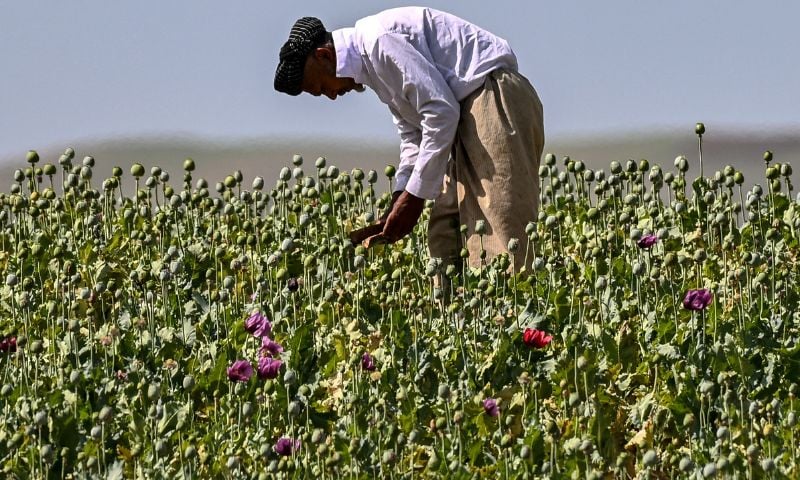
UNODC Executive Director Monica Juma said the fourfold increase in cultivation highlighted the economic challenges confronting poor farmers who had no alternative means of supporting their families. She urged the Afghan authorities and the international community to strengthen support for farming communities through investment in alternative livelihoods, agricultural infrastructure and access to markets.
Northeast becomes hub
Opium poppy cultivation spread to 16 of Afghanistan’s 34 provinces in 2026, five more than the previous year, according to the UNODC survey. Approximately three-quarters of the total cultivated area was concentrated in the northeastern region, which has emerged as the country’s principal poppy-growing zone.
This represents a significant geographical shift from the pre-ban period, when most cultivation was concentrated in southwestern provinces, particularly Helmand and Kandahar. The geographical shift also has implications for regional trafficking routes, particularly as northeastern Afghanistan borders Central Asian countries.
Farm-gate opium prices declined to approximately $500 per kilogramme in 2026, compared with $570 in 2025. However, prices remained substantially higher than the pre-ban level of less than $100 per kilogramme.
UNODC said significant differences in prices across regions could encourage trafficking from northeastern Afghanistan towards the southwest.
Stockpiles running low
The UNODC survey also raised concerns about the possible depletion of opium stockpiles accumulated before the 2022 ban.
Traffickers appear to have relied on existing reserves to maintain supplies following the sharp reduction in cultivation, helping cushion international markets against an immediate shortage of opium and heroin. However, recent drug seizure data suggest these stockpiles may be running down. The 2026 World Drug Report also identified early signs of declining heroin supplies in Europe.
UNODC warned that shrinking reserves, coupled with sustained demand and elevated prices, could provide further incentives for farmers to expand poppy cultivation.
UNODC Executive Director Juma called for stronger international cooperation to investigate and dismantle transnational drug-trafficking networks operating in Afghanistan and elsewhere. She also stressed the need to combine law-enforcement measures with sustainable economic opportunities for farming communities.
The UNODC said continued monitoring would be necessary to establish whether the 2026 increase represented a temporary reversal or the beginning of a broader resurgence in opium and heroin production.