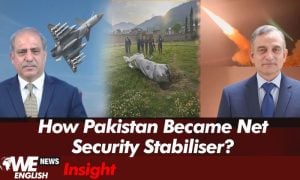



A year after Maarka-e-Haq altered the trajectory of South Asian geopolitics, Pakistan appears to have strengthened its regional and international standing through a combination of military preparedness, diplomatic engagement, and strategic recalibration.
The events surrounding Maarka-e-Haq not only highlighted Pakistan’s operational preparedness but also opened new diplomatic, economic, and strategic avenues that continue to shape the country’s regional standing today.
What makes this transformation remarkable is the difficult environment in which it occurred. Pakistan spent the past year battling simultaneous crises. Economic instability, rising inflation, political polarization, governance challenges, and fiscal pressures created a difficult domestic landscape.
Alongside these internal issues, the country continued facing persistent security threats from TTP militants operating from Afghan territory, while also countering Indian hostility and alleged support for separatist proxies in Balochistan.
Under such conditions, most states struggle merely to preserve stability. Pakistan, however, managed to reposition itself internationally. One of the clearest outcomes of Maarka-e-Haq was the restoration of strategic balance in the region.
India had spent years cultivating the image of uncontested regional superiority through military modernization and aggressive posturing. Pakistan’s calibrated response challenged that perception and reaffirmed the credibility of its deterrence structure.
The message delivered was not simply military in nature; it was geopolitical. Pakistan demonstrated that it remains a decisive factor in South Asian stability and cannot be sidelined in regional calculations.
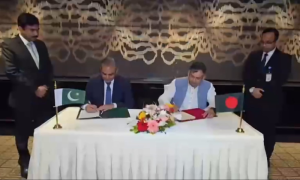
Yet the broader significance emerged through diplomacy. Over the last year, Islamabad has increasingly appeared as a state capable of maintaining dialogue with multiple competing powers at the same time.
Pakistan strengthened ties with China, improved engagement with Gulf countries, maintained communication with Western capitals, and played a constructive role during periods of heightened Iran-US tensions. This diplomatic balancing reflected a growing shift toward multi-directional foreign policy rather than dependence on a single bloc.
Pakistan’s relationship with Saudi Arabia also gained new momentum. Strategic coordination expanded beyond traditional defence cooperation into investment, security consultation, and regional coordination.
Gulf countries increasingly viewed Pakistan as a stabilizing partner capable of contributing to regional security during uncertain times.
At the same time, the progress of CPEC 2.0 added a new economic dimension to Pakistan’s strategic relevance. The initiative moved beyond roads and infrastructure toward industrial cooperation, mining development, agricultural modernization, technology transfer, and energy connectivity.
China’s continued confidence in Pakistan despite regional instability reinforced Islamabad’s importance within broader Asian economic integration plans.
Another major development during the year was Pakistan’s expanding engagement with Europe. The EU-Pakistan Business Forum reflected renewed international interest in economic cooperation with Islamabad.
In a world facing energy crises, disrupted trade routes, and economic uncertainty, Pakistan’s geographic position once again became strategically valuable. Increasingly, Pakistan is being viewed not merely as a security state, but as a potential commercial and connectivity hub linking South Asia, Central Asia, the Middle East, and beyond.
Equally important was the strengthening of Pakistan’s indigenous defence capabilities. Advances in drone systems, electronic warfare, cyber preparedness, and domestic military production demonstrated resilience despite financial limitations.
This helped project an image of self-reliance and operational adaptability.
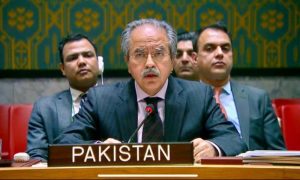
The past year also reshaped international perceptions. For decades, discussions about Pakistan in global forums often revolved around instability, extremism, or economic dependence. Maarka-e-Haq helped create a different narrative- one in which Pakistan appeared as a state capable of restraint, strategic planning, and diplomatic engagement under pressure.
Despite these gains, Pakistan’s challenges remain serious. Economic recovery is still incomplete, political divisions continue, and terrorism remains a constant threat.
However, the significance of the last year lies in Pakistan’s ability to maintain strategic relevance despite these obstacles. Pakistan’s biggest achievement may not simply be deterrence or military success.
It is the fact that amid regional confrontation, internal disorder, and global uncertainty, the country succeeded in reintroducing itself to the world as an indispensable geopolitical actor.