
Key Points
- Brent settles at $101.21 a barrel, up $3.29
- WTI gains 3.25 per cent to settle at $96.05
- Iran claims attacks on 10 vessels near Hormuz
- Gulf oil flows remain well below pre-war levels
ISLAMABAD: Brent crude oil jumped 3.4 per cent on Wednesday to settle at $101.21 a barrel as escalating US-Iran attacks on shipping around the Strait of Hormuz heightened fears of prolonged disruption to Middle Eastern oil supplies.
The international benchmark gained $3.29 during the session after reaching $101.58, while US West Texas Intermediate (WTI) rose $3.02, or 3.25 per cent, to $96.05. Both benchmarks closed at their highest levels since May 22.
The latest rally followed a sharp escalation in attacks on shipping from both the US and Iran.
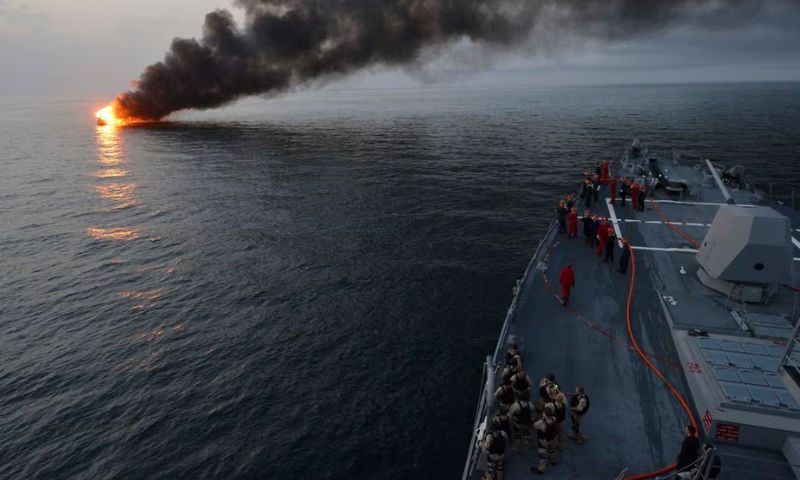
Tehran claims it had attacked 10 vessels near the Strait of Hormuz after the United States destroyed five Iranian oil tankers.
The two sides have also issued warnings against further provocation and escalation. The exchange of strikes and warnings has heightened concerns that commercial shipping and oil exports through the waterway could face additional disruption.
Hormuz oil flow
The Strait of Hormuz handled roughly one-fifth of global oil and gas supplies before the war. Current flows remain substantially below pre-war levels, leaving refiners and traders increasingly dependent on alternative supplies and existing inventories.
The supply concerns are also being reinforced by attacks on energy infrastructure elsewhere in the region. Iran-backed Houthi forces have targeted Saudi energy facilities, raising the prospect of further disruption to Gulf production and alternative shipping routes.
READ ALSO: Brent Crude Rises Above $100 a Barrel as Middle East Conflict Intensifies
Physical crude markets have already reflected the tightening supply situation, while fuel markets are facing additional pressure. In the United States, diesel prices have reached record levels, highlighting how disruptions to crude supplies and refining capacity are feeding through to consumers.
The latest increase comes after oil prices had remained below the $100 mark for much of the period following a temporary reduction in hostilities between Washington and Tehran. The renewed attacks have erased much of that earlier market confidence and revived concerns about the longevity of the supply disruption.
For major oil-importing economies, sustained higher crude prices could raise petrol, diesel, freight and production costs while adding to inflationary pressure. A prolonged disruption around Hormuz would also make it harder for global inventories and producers outside the Gulf to compensate for lost supplies.
The market will now focus on the scale of further attacks, the safety of commercial shipping and whether oil flows through Hormuz can recover. Until those risks ease, geopolitical developments are likely to remain the dominant driver of crude prices.
Oil prices have followed a highly volatile trajectory in 2026, moving from relatively subdued levels at the start of the year to historic highs after the US-Israel military operation against Iran began in late February.
Brent crude climbed from around $60 a barrel in early January to a 2026 peak near $114 a barrel in early May, passing through a highly volatile trajectory during March and April as the conflict disrupted regional production and shipping.
Prices then retreated sharply after the June 18 US-Iran Islamabad memorandum and the brief reopening of the Strait of Hormuz. Brent fell below $70 by mid-June after partial recovery in supply flows and weakened demand.
The decline continued into July, but prices rebounded during August as renewed hostilities disrupted Gulf shipments.
Brent moved from an August low near $79 to above $100 in September as attacks on tankers and energy infrastructure revived supply concerns.
The US Energy Information Administration now expects Brent to average about $91 a barrel in 2026, reflecting global inventories depletion and continuing disruptions to Middle Eastern supplies.