Key Points
- Oli resigns after three ministers quit and protests spiral nationwide
- Kathmandu airport shut down; curfews imposed across country
- 19 killed, hundreds injured as police open fire on crowds
- Social media ban lifted after it fueled mass mobilisation
KATHMANDU: Nepal’s Prime Minister Khadga Prasad Sharma Oli has resigned after days of escalating unrest and mounting pressure on his government, following deadly protests over alleged corruption.
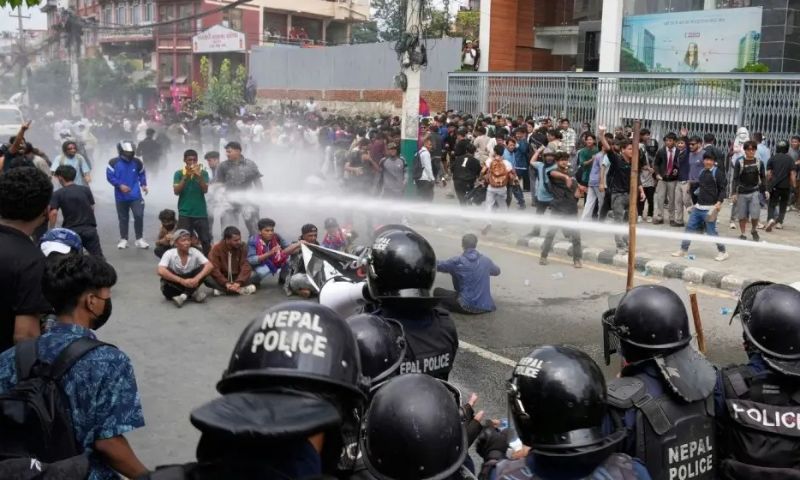
BBC News reported that the resignation came hours after three of his ministers quit in protest against the government’s handling of the crisis. Demonstrations have gripped the country since last week, culminating in violence that left at least 19 people dead when security forces opened fire on crowds defying a curfew.
Earlier in the day, Nepal’s civil aviation authority ordered the immediate closure of Kathmandu International Airport, citing security risks as protests spread near the capital. Flights were suspended indefinitely, adding to the chaos as demonstrators defied curfews and clashed with security forces.
On Monday night, the government lifted its sweeping social media ban—which had blocked Facebook, YouTube, X, WhatsApp and others—after it failed to contain mobilisation. The restriction had instead intensified anger among young people, with protesters flooding the streets across Kathmandu, Pokhara and other cities, according to Reuters.
That same evening, enraged crowds stormed the headquarters of the opposition Nepali Congress party—the country’s largest political force—and set ablaze the private residences of several senior leaders, including the prime minister’s own home, the president’s residence, and the home minister’s house. Homes of multiple cabinet ministers were also attacked, AP reported.
On Monday afternoon, security forces opened fire on crowds defying an emergency curfew, killing at least 19 and injuring hundreds more, according to health officials cited by AP. Human rights groups condemned the use of live ammunition and urged restraint, while videos of the clashes spread widely online despite restrictions.
Protests had erupted the previous week after Oli’s government announced a blanket ban on 26 social media platforms, justifying it as an attempt to regulate online content. But the move was seen by many—particularly the country’s Gen Z youth—as an assault on free expression and a shield for corruption. Demonstrators, dubbing themselves the “Gen Z Protest,” demanded both the reversal of the ban and greater accountability for alleged graft scandals.
As unrest mounted, Home Minister Ramesh Lekhak resigned on September 8, acknowledging the government’s failure to contain the crisis. His exit foreshadowed the wider collapse of Oli’s administration.
Before resigning, Oli promised state compensation for victims’ families. He also announced free medical care for the injured and the formation of a 15-day investigative commission. But these assurances were quickly drowned out by the fury on Nepal’s streets.
Oli’s resignation ends his fourth term as prime minister, which began in July 2024, and deepens Nepal’s long-standing political instability. The Himalayan nation, which transitioned from monarchy to republic in 2008 and adopted a new constitution in 2015, has experienced a rapid turnover of governments. With Oli’s exit, the question of who can restore order and credibility now looms large over Nepal’s fragile democracy.