
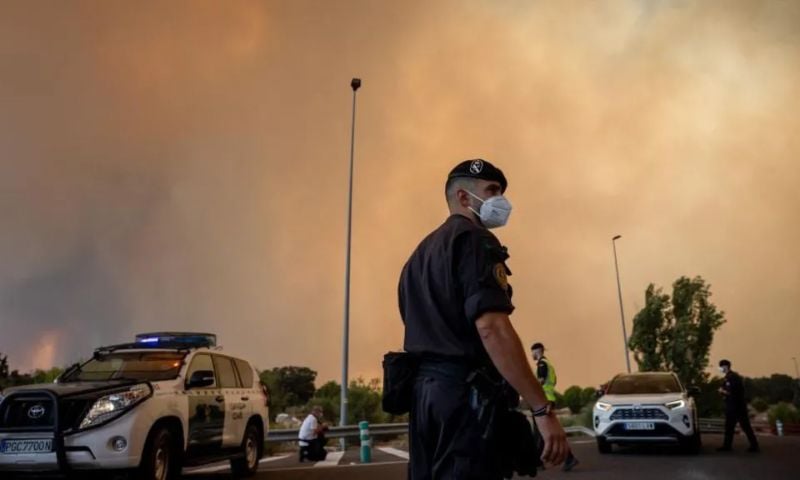
PARIS: More than 220,000 people have been evacuated across France and Spain as massive wildfires, fuelled by extreme heat, drought and strong winds, swept through forests and residential areas, forcing authorities to declare emergencies and deploy military resources.
In southwestern France, around 200,000 people were evacuated from the Gironde and Landes regions, including nearly 60,000 residents from towns near Bordeaux.

French authorities described the Gironde blaze as an “XXL fire” after it burned more than 19,000 hectares of forest and destroyed around 80 homes. President Emmanuel Macron mobilised the military and activated the European Union’s civil protection mechanism to strengthen firefighting efforts.
The entire Cap Ferret peninsula was evacuated, with hundreds of residents and holidaymakers escaping by boat as flames advanced across the popular coastal destination.
Fire officials said conditions were more severe than those experienced during the devastating 2022 wildfires, with prolonged drought allowing the fire to spread rapidly.
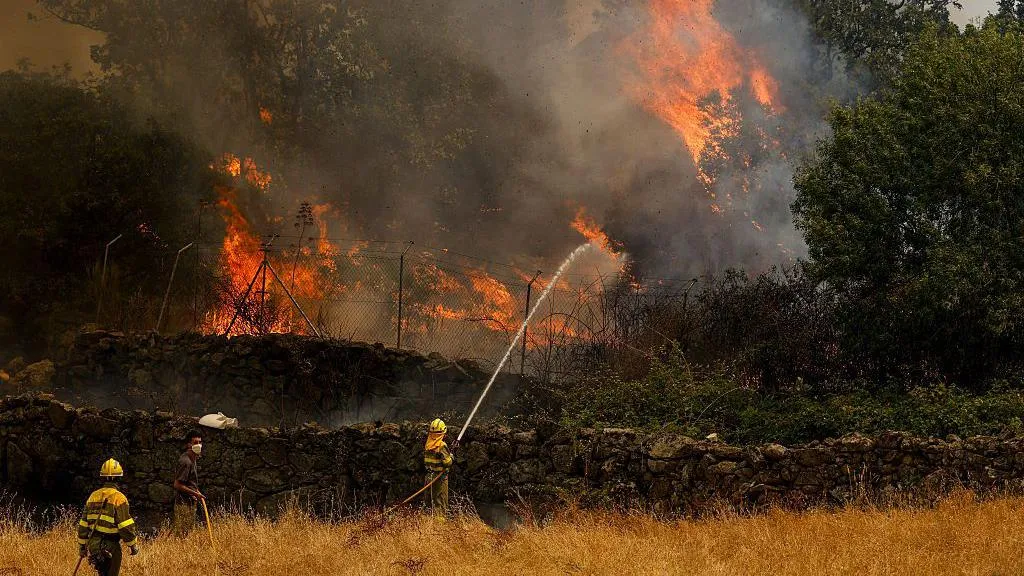
In neighbouring Spain, the government declared a national emergency after wildfires west of Madrid merged into a single massive blaze.
Around 25,000 people were evacuated while nearly 40,000 others were ordered to remain indoors as firefighters struggled to contain the flames.
Madrid regional authorities described the incident as the worst wildfire in the region’s history, citing a combination of extreme temperatures, powerful winds and multiple fire fronts.
ALSO READ: Spain, France Battle Deadly Wildfires as Intense Heat Grips Southern Europe
More than 15,000 hectares have been burned in the Madrid and nearby Ávila regions, with several municipalities evacuated and others placed under lockdown.
Spain’s Military Emergency Unit has been deployed to protect threatened communities, while Prime Minister Pedro Sánchez is expected to visit the emergency coordination centre.
The European Union has also dispatched aircraft and helicopters to assist firefighting operations in both countries as southern Europe continues to experience repeated heatwaves and prolonged drought.
According to European climate agencies, hotter and drier conditions linked to climate change have increased wildfire risks across the continent, making fires spread more rapidly and become increasingly difficult to contain.