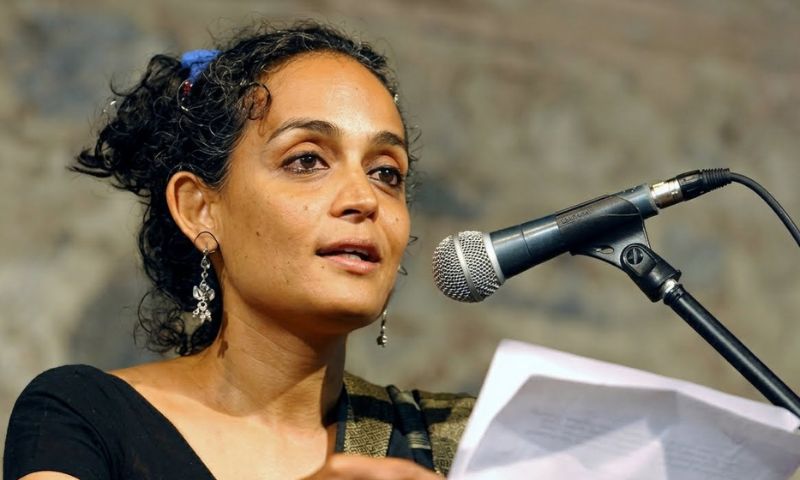
NEW DELHI: Indian author and activist Arundhati Roy has accused Prime Minister Narendra Modi’s government of relying on false-flag attacks, engineered communal violence and mass repression to counter dissent, as youth-led protests challenge the government over electoral roll revisions and the detention of activists.
In an interview with Democracy Now!, Roy said India had a long history of resistance but warned that the government was capable of responding to opposition with severe repression.
“This government is capable — I mean, it has three things in its playbook: One is false-flag attacks, two is engineering communal riots, and the third is massive repression,” Roy said. “And I don’t think we’ve seen its hand yet.”
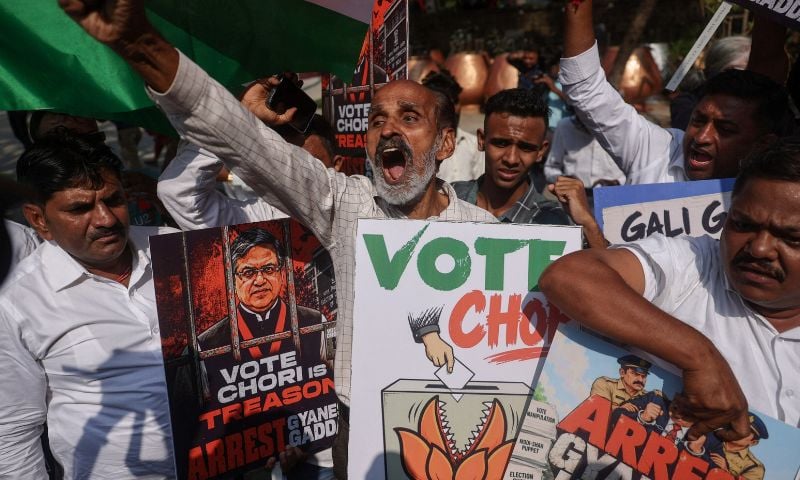
Her remarks came as a court ordered the release of two leaders of the youth-led Cockroach Janta Party, Ashutosh Ranka and Saurav Das, who had been detained during protests the previous week.
The movement has emerged amid demonstrations against electoral roll revisions overseen by Chief Election Commissioner Gyanesh Kumar, which opposition parties say have disproportionately affected Muslims and other minorities.
Voter Roll Dispute
According to the report, India’s electoral rolls have lost around 130 million names since June last year. Opposition parties allege that the deletions have primarily affected Muslims and other minority groups considered less likely to support the ruling Bharatiya Janata Party (BJP), led by Modi.
The issue has become central to protests demanding Kumar’s resignation.
Roy said concerns about India’s electoral process had been growing for years, particularly following the BJP’s loss of its parliamentary majority in the 2024 election.
She referred to election results in Maharashtra, Haryana and other states, arguing that local reporting had raised questions about the outcomes.
She also pointed to an investigation by The Indian Express, which reported that two election commissioners had repeatedly raised internal concerns about the voter roll revisions.
Roy compared the process to earlier citizenship-related controversies in Assam, where people had been designated as doubtful voters. She argued that the current revisions risked leaving millions of people uncertain about their legal status and access to public services.
However, Roy acknowledged that the reported figure of 130 million deletions could include people who had died but remained on the rolls, as well as other discrepancies. She said the precise number of affected people required consideration.
Protest Leaders Released
The court ordered the release of Cockroach Janta Party leaders Ashutosh Ranka and Saurav Das on Wednesday, according to the report.
The two had been detained after scaling a barricade to enter a protest site, unfurling the national flag and calling for the resignation of Chief Election Commissioner Gyanesh Kumar.
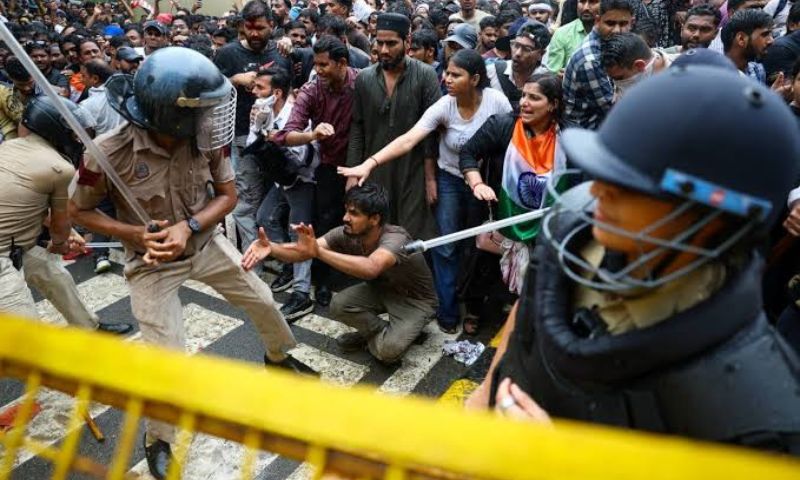
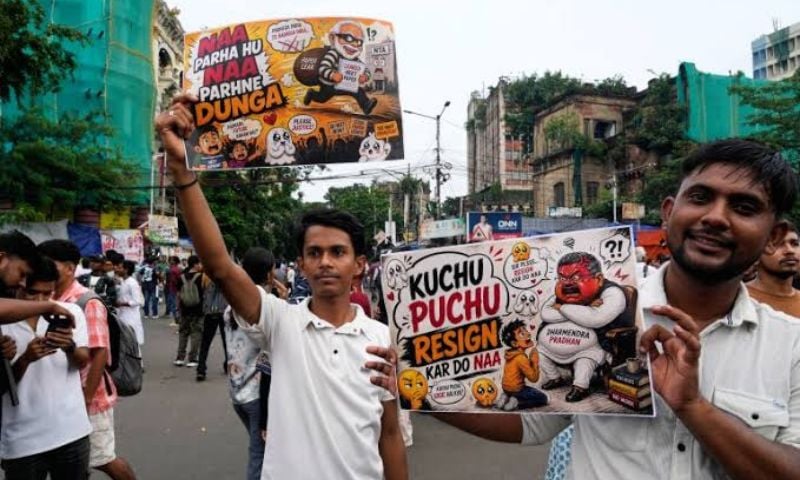
The movement began as a youth-led campaign using satire to challenge the government. Roy said the name “Cockroach Janta Party” was adopted after a judge had described unemployed young people and activists as cockroaches.
She said young people initially mobilised without formal links to political parties, but left-wing student groups later helped sustain the protests through organised demonstrations, songs and slogans. Opposition parties subsequently joined the movement.
Roy described the protests as a broader confrontation with the government, saying spontaneous youth activism alone would not be enough to challenge what she characterised as a hard-line administration.
Repression And Surveillance
Roy said that the government had responded to the protests with extensive police deployments, repression and digital surveillance.
She said authorities had used facial-recognition and surveillance software to identify individual protesters, describing the practice as illegal.
Roy also said the government had restricted internet access and that online videos associated with the protests had become harder to find. She described social media as both a tool for mobilising protesters and a means through which authorities could restrict communications or misinformation could spread.
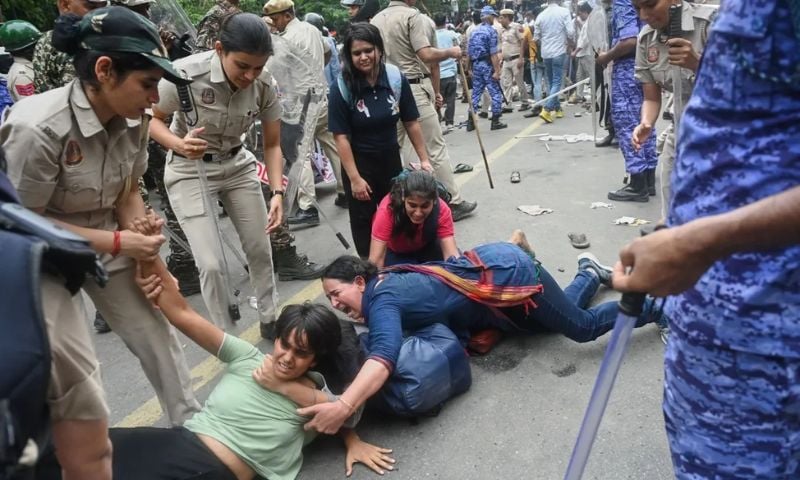
During the interview, Roy referred to earlier protests against India’s citizenship amendment law, recalling violence against demonstrators and the deaths of Muslim men who, she said, had been assaulted and forced to sing the national anthem.
She argued that the government was now facing a different kind of challenge because many of the young protesters came from families that had previously supported the ruling party.
A Long Confrontation
Roy said the protests had developed from a satirical youth movement into a broader campaign involving student organisations and opposition parties.
She credited the initial wave of satire with undermining Modi’s political image, arguing that the movement had mocked the prime minister in ways that conventional political opposition had not achieved.
At the same time, she warned that the government could escalate its response.
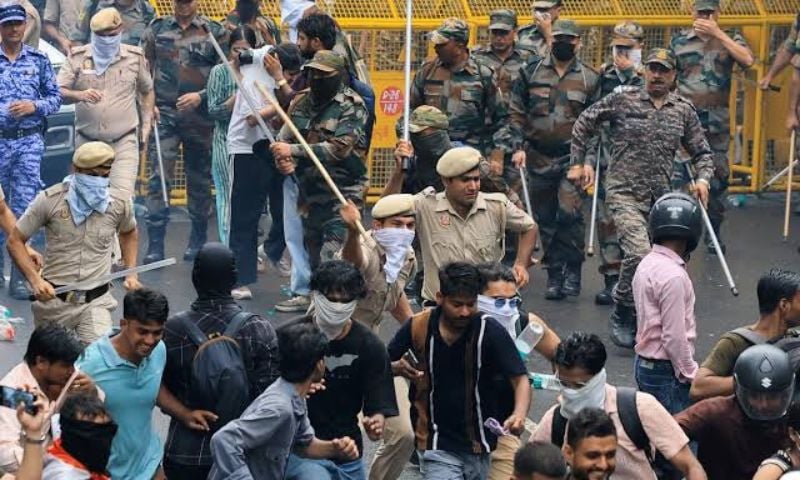
Roy said the ruling party and organisations associated with its ideological network had closed ranks in support of Modi. She also criticised what she described as efforts to portray the protests as violent, saying there had been no violence by the young demonstrators in the incidents she was discussing.
She cautioned against predicting the outcome of the confrontation, describing the movement as new and still developing.
“It’s going to be a long confrontation,” Roy said. “The script is still being written.”
The protests have brought electoral roll revisions, the treatment of demonstrators and the use of digital surveillance into a wider debate over political dissent in India